
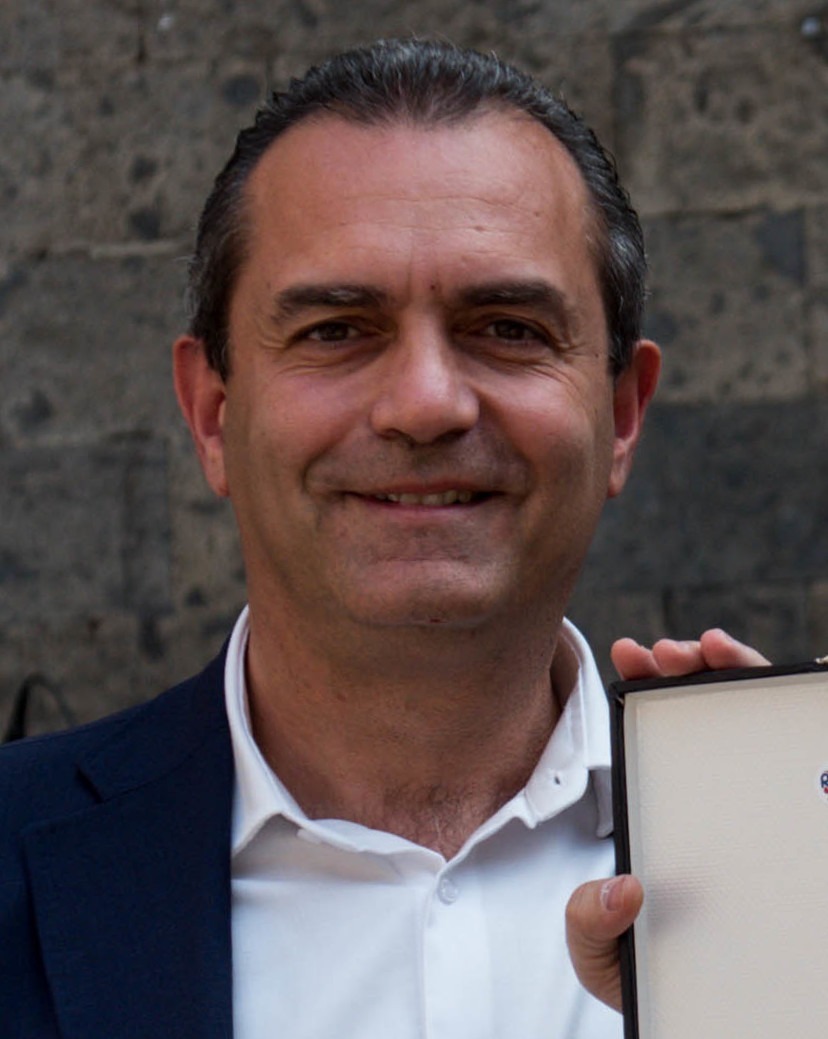
Luigi De Magistris, born on June 20, 1967, in Naples, Italy, is a prominent figure in Italian politics and law, known for his staunch commitment to justice and his significant impact as a public servant. De Magistris’s career spans multiple arenas, including his work as a magistrate, his foray into politics, and his tenure as the Mayor of Naples. This article delves into the life, career, and key moments that have shaped Luigi De Magistris’s journey, highlighting his contributions to Italian society and his influence on the political landscape.
Early Life and Educational Background
Luigi De Magistris was born into a family deeply rooted in the legal profession. His father was a magistrate, and this early exposure to the world of law and justice significantly influenced De Magistris’s career path. The legacy of public service runs deep in his family, as even his great-grandfather was a magistrate who, during his career, was targeted for his efforts to combat brigandage and corruption in the early years of Italy’s unification.
De Magistris attended the prestigious Liceo Classico Adolfo Pansini in Naples, where he developed an early interest in social justice and political activism. His involvement in left-wing political movements during his high school years laid the foundation for his future political career.
After completing his secondary education, De Magistris enrolled in the Faculty of Law at the University of Naples Federico II, where he excelled academically. He graduated with honors at the age of 22, with a thesis in criminal law. This achievement marked the beginning of his legal career and set the stage for his future endeavors in the field of justice.
Career as a Magistrate: Fighting Corruption and Organized Crime
Luigi De Magistris began his career in the judiciary in 1998, when he was appointed as a magistrate at the Naples Public Prosecutor’s Office. His early work focused on investigating cases of corruption within public administration and the complex relationships between organized crime and politics. De Magistris quickly gained a reputation for his thoroughness, integrity, and unwavering commitment to uncovering the truth, no matter how powerful the individuals involved might be.
In 2002, De Magistris was appointed as Deputy Public Prosecutor at the Court of Catanzaro, a role that further solidified his standing as a fearless prosecutor. It was here that he led several high-profile investigations that would eventually catapult him into the national spotlight.
One of the most notable cases De Magistris worked on was the “Toghe Lucane” investigation, which exposed deep-seated corruption involving magistrates, police officials, and politicians in the Basilicata region. His relentless pursuit of justice in this case revealed the complex and often murky relationships between the state and organized crime, highlighting the systemic issues plaguing the Italian legal and political systems.
Another major investigation led by De Magistris was the “Why Not” case, named after a temporary employment agency that was central to the investigation. This case delved into allegations of widespread corruption, embezzlement, and misuse of public funds in Calabria. The investigation implicated several high-profile figures, including politicians and business leaders, and brought to light the endemic corruption in the region.
The “Why Not” case became a turning point in De Magistris’s career, but it also led to significant controversy. His decision to wiretap phone conversations involving the then-Minister of Justice, Clemente Mastella, and businessman Antonio Saladino, sparked a political firestorm. Mastella, who was implicated in the investigation, responded by requesting the urgent transfer of De Magistris from his post.
In 2007, the Italian Superior Council of the Judiciary (CSM) ordered De Magistris’s transfer from Catanzaro and removed him from his position as a public prosecutor. This decision was met with widespread criticism and was seen by many as an attempt to silence a magistrate who had come too close to uncovering the truth. The case garnered national attention, with even the President of Italy at the time, Giorgio Napolitano, weighing in on the matter.
Despite the setbacks, De Magistris was later acquitted of all charges related to the alleged mishandling of the “Why Not” investigation, including accusations of leaking information to the press. His acquittal was a vindication of his work and further solidified his reputation as a champion of justice.
Transition to Politics: A New Arena for Justice
In 2009, after more than a decade of service in the judiciary, Luigi De Magistris made the pivotal decision to leave the magistracy and enter the political arena. His decision was driven by a desire to continue his fight for justice on a broader platform. De Magistris joined the Italy of Values (Italia dei Valori) party, led by Antonio Di Pietro, another former magistrate known for his role in the Mani Pulite (Clean Hands) anti-corruption investigations of the early 1990s.
De Magistris ran as a candidate in the 2009 European Parliament elections and was elected with a significant number of votes. His success in the election underscored the public’s support for his anti-corruption stance and his commitment to transparency and accountability in politics.
During his time as a Member of the European Parliament (MEP), De Magistris focused on issues related to justice, civil liberties, and the fight against organized crime. His work in the European Parliament allowed him to continue his advocacy for systemic reforms, not only in Italy but across the European Union.
Mayor of Naples: Leadership and Challenges
Luigi De Magistris’s most significant political achievement came in 2011 when he decided to run for Mayor of Naples, his hometown. The city, plagued by years of corruption, mismanagement, and a waste management crisis, was in desperate need of strong and effective leadership. De Magistris ran on a platform of transparency, accountability, and a promise to restore dignity to the city.
In the mayoral election, De Magistris faced Gianni Lettieri, the candidate for the center-right People of Freedom (PdL) party. Despite being considered an underdog, De Magistris’s message resonated with the people of Naples. In the runoff election, held on May 30, 2011, he won a decisive victory, securing over 65% of the vote.
As Mayor of Naples, De Magistris embarked on an ambitious program of reforms aimed at tackling the city’s most pressing issues. His administration focused on improving waste management, enhancing public transportation, and promoting sustainable urban development. De Magistris also sought to strengthen the city’s cultural and historical heritage, launching initiatives to revitalize Naples’s historic center and promote tourism.
One of the most significant challenges De Magistris faced as mayor was the ongoing waste management crisis that had plagued Naples for years. The city’s streets were often filled with uncollected garbage, leading to public health concerns and tarnishing Naples’s image both nationally and internationally. De Magistris worked tirelessly to address the crisis, implementing measures to improve waste collection and recycling rates, and seeking long-term solutions to the city’s waste disposal problems.
De Magistris’s tenure as mayor was also marked by his efforts to combat organized crime in Naples. He took a strong stance against the Camorra, the city’s powerful mafia organization, and implemented policies aimed at reducing the influence of criminal networks on local businesses and politics.
In 2016, De Magistris successfully ran for re-election as Mayor of Naples, once again defeating Gianni Lettieri with over 66% of the vote. His re-election was a testament to the public’s confidence in his leadership and his ability to deliver on his promises.
Personal Life and Legacy
Throughout his career, Luigi De Magistris has been known for his unwavering commitment to justice, his principled stance against corruption, and his dedication to serving the public. His personal life has been characterized by the same values of integrity and dedication that have defined his professional career.
De Magistris’s leadership style is often described as direct and uncompromising. He is known for his ability to connect with ordinary citizens and his willingness to take on powerful interests, regardless of the personal or political risks involved. His work as a magistrate and a politician has earned him both admiration and controversy, but there is no doubt that his contributions have left a lasting impact on Italian society.
As a figure in Italian public life, De Magistris has been both a symbol of hope for those who seek justice and transparency and a target for those who resist change. His legacy is one of courage, determination, and a relentless pursuit of the truth.
Conclusion
Luigi De Magistris’s life and career offer a compelling narrative of a man committed to justice and public service. From his early days as a magistrate fighting corruption and organized crime to his role as Mayor of Naples, De Magistris has consistently demonstrated his dedication to the principles of fairness, accountability, and transparency.
His work has not only influenced the city of Naples but has also had a broader impact on Italian politics and society. De Magistris’s legacy will be remembered as one of integrity, resilience, and an unwavering commitment to the public good. As he continues to play a role in Italy’s political landscape, Luigi De Magistris remains a powerful voice for justice and reform in a country that continues to grapple with challenges both old and new.


