
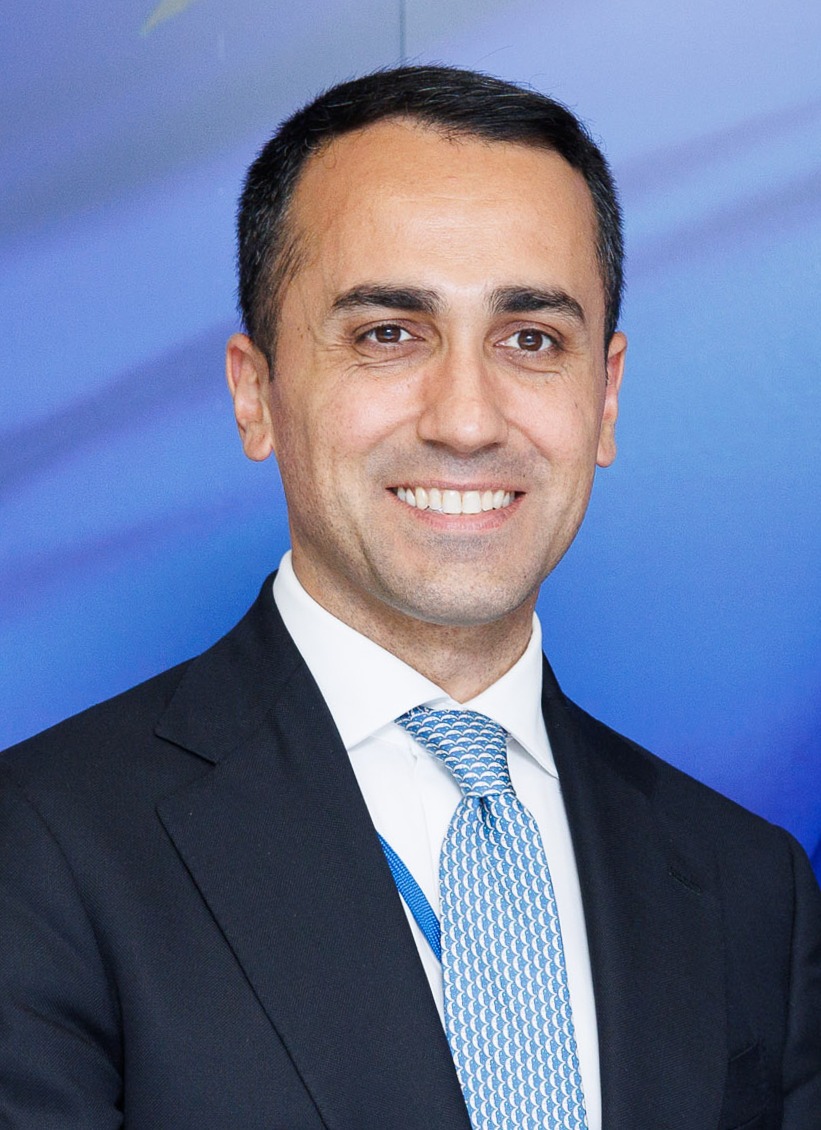
Luigi Di Maio is a prominent figure in Italian politics, known for his rapid rise to power and his significant influence within the Movimento 5 Stelle (M5S) or Five Star Movement. Born on July 6, 1986, in Avellino, Italy, Di Maio’s journey from a young activist to one of Italy’s most powerful political leaders is a testament to his resilience, adaptability, and political acumen. This article delves into the life and career of Luigi Di Maio, offering detailed insights into his background, political achievements, and the challenges he faced along the way.
Early Life and Education
Luigi Di Maio was born into a politically active family in Avellino, a town in the Campania region of southern Italy. His father, Antonio Di Maio, was a former leader of the Movimento Sociale Italiano (MSI) and later a member of Alleanza Nazionale, both of which were right-wing political parties. This early exposure to politics undoubtedly influenced Di Maio’s future career.
Di Maio’s academic journey began at the Liceo Classico “Vittorio Imbriani” in Pomigliano d’Arco, near Naples, where he earned his high school diploma in 2004. Following his graduation, Di Maio enrolled at the University of Naples Federico II to study engineering. However, after some time, he decided to switch his focus to law, a move that would eventually align more closely with his political ambitions. During his time at university, Di Maio was active in student politics, founding the Associazione Studenti di Ingegneria (ASSI) and later StudentiGiurisprudenza.it, organizations aimed at representing student interests.
Entry into Politics and the Five Star Movement
Luigi Di Maio’s formal entry into politics came in 2007 when he joined the nascent Five Star Movement, a populist political party founded by comedian Beppe Grillo and digital entrepreneur Gianroberto Casaleggio. The movement, which started as a grassroots protest against the traditional political establishment, quickly gained traction across Italy, especially among younger voters who were disillusioned with the status quo.
In 2010, Di Maio made his first bid for public office by running for a seat on the municipal council in his hometown of Pomigliano d’Arco. Despite his efforts, he received only 59 votes and was not elected. However, this setback did not deter him from pursuing a career in politics.
The 2013 General Election: A Turning Point
The 2013 general election marked a significant turning point in Luigi Di Maio’s political career. As a candidate for the Campania 1 constituency, Di Maio participated in the M5S’s internal primaries, known as “parlamentarie,” where he secured the second spot on the party’s list. His strong showing in the primaries paved the way for his election to the Italian Chamber of Deputies at the age of 26.
Shortly after his election, Di Maio was appointed Vice President of the Chamber of Deputies, making him the youngest person to ever hold this position in Italian history. His appointment was a clear indication of the trust and confidence that the M5S leadership had in him, and it signaled the beginning of his rapid ascent within the party.
Legislative Achievements and Political Influence
During his first term in parliament, Luigi Di Maio quickly established himself as a key figure within the M5S. He co-sponsored several legislative initiatives, including a proposal to abolish public funding for political parties and movements, as well as reforms to the rules governing electoral expenses. His legislative focus was aligned with the core principles of the Five Star Movement, which emphasized transparency, anti-corruption, and reducing the influence of traditional political elites.
Di Maio also served on the XIV Commission, which was responsible for European Union policies, and he was appointed president of the Committee for Oversight of Documentation Activities. His legislative work during this period demonstrated his commitment to the M5S’s platform and his ability to navigate the complexities of parliamentary politics.
Rise to Leadership: The Road to the 2018 General Election
By 2017, Luigi Di Maio had emerged as one of the leading figures within the Five Star Movement. His growing influence was evident when, in September 2017, he was officially announced as the M5S’s candidate for Prime Minister in the upcoming 2018 general election. This nomination was a significant milestone in Di Maio’s career, as it positioned him as the public face of the movement and a potential leader of Italy.
The 2018 general election was a watershed moment for the M5S. The party won the largest share of the vote, securing over 32% of the total, making it the single largest party in the Italian parliament. However, no party or coalition achieved an outright majority, leading to a protracted period of political negotiations. After 80 days of intense discussions, the M5S and the right-wing Lega party, led by Matteo Salvini, reached an agreement to form a coalition government.
The First Conte Government: A New Era in Italian Politics
On June 1, 2018, the first Conte government was officially formed, with Giuseppe Conte, a law professor with no prior political experience, serving as Prime Minister. Luigi Di Maio was appointed Deputy Prime Minister and Minister of Economic Development, Labor, and Social Policies, while Matteo Salvini took on the role of Deputy Prime Minister and Minister of the Interior.
Di Maio’s portfolio as Minister of Economic Development and Labor was particularly significant, as it placed him at the center of the government’s efforts to address Italy’s economic challenges. One of his key initiatives was the implementation of the “Reddito di Cittadinanza” (Citizens’ Income), a form of universal basic income aimed at reducing poverty and providing financial support to unemployed and low-income individuals. This policy was a cornerstone of the M5S’s platform and was seen as a fulfillment of one of the movement’s most important campaign promises.
The Collapse of the First Conte Government and the Formation of the Second Conte Government
The first Conte government was marked by frequent tensions between the M5S and the Lega, particularly over issues such as immigration and fiscal policy. These tensions came to a head in August 2019 when Matteo Salvini called for a vote of no confidence in the government, effectively triggering its collapse.
In the aftermath of the government’s collapse, Luigi Di Maio and the M5S made the strategic decision to form a new coalition with the center-left Democratic Party (PD), thereby sidelining Salvini and the Lega. This move led to the formation of the second Conte government, with Di Maio taking on the role of Minister of Foreign Affairs.
Di Maio as Minister of Foreign Affairs: Challenges and Achievements
As Minister of Foreign Affairs, Luigi Di Maio faced a number of significant challenges, both domestically and internationally. One of his primary tasks was to navigate Italy’s relationships with key global powers, including the European Union, the United States, China, and Russia. Di Maio’s tenure as Foreign Minister coincided with several critical events, including the COVID-19 pandemic, which required coordinated international responses and presented significant challenges to global diplomacy.
Di Maio played a key role in managing Italy’s response to the pandemic, particularly in terms of securing international aid and medical supplies. He also sought to strengthen Italy’s ties with the European Union, advocating for greater solidarity and cooperation among EU member states in the face of the crisis.
Departure from the Five Star Movement and Formation of “Insieme per il Futuro”
In June 2022, Luigi Di Maio made a dramatic departure from the Five Star Movement, announcing that he would be leaving the party to form a new political group called “Insieme per il Futuro” (Together for the Future). This move came after months of internal disagreements within the M5S, particularly over the party’s direction and its stance on key issues such as Italy’s relationship with the European Union and its foreign policy.
Di Maio’s decision to leave the M5S marked the end of an era for the movement, which had seen him rise from a young activist to one of Italy’s most powerful politicians. “Insieme per il Futuro” sought to position itself as a centrist, pro-European party, with a focus on economic reform and international cooperation.
The 2022 General Election: A Setback
The October 2022 general election proved to be a challenging moment for Luigi Di Maio. Running under the banner of “Insieme per il Futuro,” Di Maio was unable to secure re-election to the Italian parliament. This defeat marked a significant setback in his political career and raised questions about his future role in Italian politics.
Legacy and Influence
Luigi Di Maio’s political career is marked by both remarkable achievements and significant challenges. As a leading figure in the Five Star Movement, Di Maio played a crucial role in transforming a grassroots protest movement into a major political force in Italy. His work as a legislator, Deputy Prime Minister, and Minister of Foreign Affairs demonstrated his ability to navigate the complexities of government and international diplomacy.
However, Di Maio’s career has also been marked by controversy and internal party conflicts, culminating in his departure from the M5S and the formation of a new political group. Despite the setbacks he faced in the 2022 general election, Di Maio’s influence on Italian politics, particularly in the context of the rise of populism and the challenges of governing in a coalition, remains significant.
Conclusion
Luigi Di Maio’s journey from a young activist in the Five Star Movement to one of Italy’s most prominent political leaders is a story of ambition, resilience, and adaptability. His career reflects the broader shifts in Italian politics over the past decade, particularly the rise of populist movements and the challenges of governing in a complex and often polarized political landscape.
As Di Maio continues to navigate his political future, his legacy will be defined by both his successes and the challenges he faced. Whether as a leader within the Five Star Movement or as the founder of “Insieme per il Futuro,” Luigi Di Maio’s impact on Italian politics is undeniable, and his story continues to be one of the most compelling in contemporary Italian political history.


