
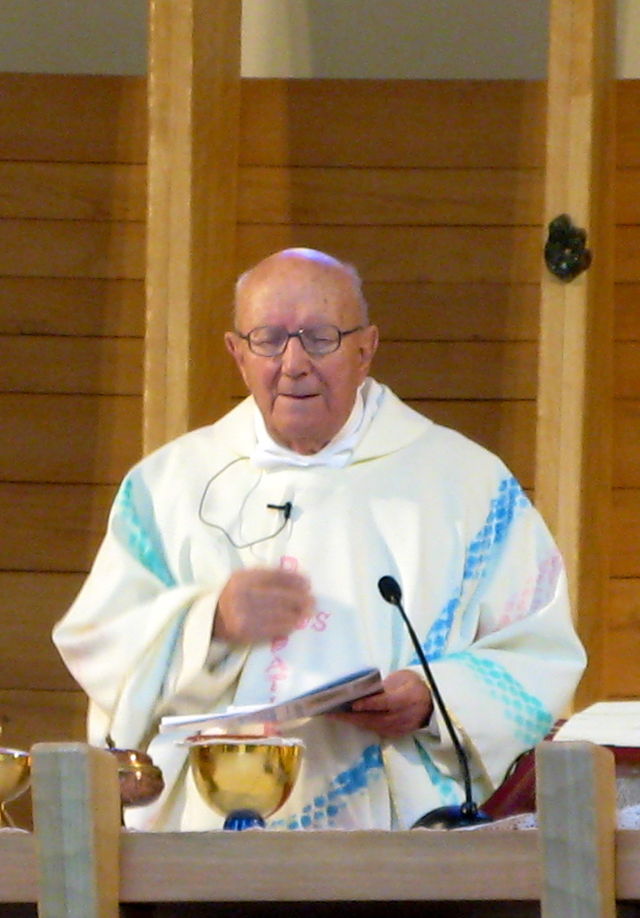
Luigi Maria Verzé was a prominent Italian Catholic priest, scholar, and visionary leader who left an indelible mark on the fields of healthcare and education. Born on March 14, 1920, in Illasi, a small town in the province of Verona, Italy, Verzé’s life was characterized by a relentless pursuit of his ideals, which were deeply rooted in his Christian faith and commitment to human welfare. Over the course of his 91 years, he not only founded one of the most significant healthcare institutions in Italy but also established a legacy that continues to influence both medical practice and academic education.
Early Life and Education
Luigi Maria Verzé’s early life was steeped in academia and religious devotion. He completed his classical studies in Verona, where he earned his diploma in 1938. Following this, he pursued a degree in Letters and Philosophy at the University of Milan, graduating in 1947. The following year, Verzé was ordained as a priest, a vocation that would deeply influence his life’s work. His early years as a priest were marked by a commitment to education and the betterment of youth. In 1948, he founded the first Vocational Training Center for boys, a pioneering initiative aimed at providing young people with the skills and education necessary to succeed in life.
The Foundation of San Raffaele: A Visionary Achievement
One of Luigi Maria Verzé’s most significant contributions to society was the founding of the San Raffaele Hospital in Milan in 1971. This institution quickly became a beacon of excellence in healthcare, integrating medical care, research, and education under one roof. The hospital, which began with a mandate inspired by the Gospel precept “Heal the sick,” grew to become one of Italy’s leading medical centers, recognized as an Institute for Scientific Research and Healthcare by the Italian government.
The San Raffaele Hospital’s rapid expansion under Verzé’s leadership was nothing short of remarkable. By 1980, the hospital had added a second facility, followed by the DIMER center for rehabilitative medicine in 1985, and the Department of Neuropsychiatric Sciences in 1988. In 1991, the hospital opened the San Luigi Gonzaga Center, dedicated to the treatment and research of AIDS, reflecting Verzé’s commitment to addressing the most pressing health challenges of the time. The following year, the San Raffaele Biomedical Science Park was established, further cementing the hospital’s reputation as a leader in medical research.
Expanding the San Raffaele Model: Global Impact
Luigi Maria Verzé’s vision for healthcare was not confined to Italy. He believed in the universal applicability of his model and sought to extend its benefits to people around the world. In 1974, Verzé founded the Monte Tabor – Centro Italo Brasileiro de Promoçao Sanitaria in Salvador-Bahia, Brazil. This institution, which opened in 1990, was modeled closely after the San Raffaele Hospital in Milan and aimed to provide high-quality healthcare to a broader international community.
Verzé’s commitment to global healthcare did not stop there. He established similar institutions and collaborative efforts in various countries, including Poland, China, India, Israel, and several developing nations such as Uganda, Nicaragua, and Mozambique. His efforts were not just about building hospitals; they were about creating a network of healthcare facilities that adhered to the highest standards of medical care and research, irrespective of the patient’s nationality, religion, or economic status.
The Creation of a Medical and Educational Empire
Beyond healthcare, Luigi Maria Verzé was deeply committed to education. In 1992, he founded the Department of Biotechnology (DIBIT), which became renowned worldwide for its cutting-edge research in genomics, proteomics, and gene therapy. The DIBIT, under Verzé’s leadership, employed over 300 scientists and focused on major research areas such as cancer gene therapy, multiple sclerosis, muscular dystrophy, diabetes, and organ transplantation.
In 1996, Verzé expanded his influence in education by founding the Vita-Salute San Raffaele University in Milan. This institution quickly gained a reputation for excellence in various fields, including psychology, medicine, philosophy, and communication sciences. The university was a natural extension of Verzé’s belief in the integration of medical practice with academic study, ensuring that future generations of healthcare professionals would be well-equipped to meet the challenges of their time.
Controversies and Financial Troubles
Despite his many achievements, Luigi Maria Verzé’s life was not without controversy. By 2010, the San Raffaele Foundation, which oversaw the hospital and its related institutions, was facing significant financial difficulties. The foundation ended the year with a staggering debt of 900 million euros and losses amounting to 60 million euros. These financial woes led to the intervention of the Vatican in an attempt to stabilize the situation.
In July 2011, amidst growing scrutiny and financial pressure, Verzé stepped down from all his positions within the foundation. Shortly thereafter, investigations began into allegations of fraudulent bankruptcy, further tarnishing Verzé’s legacy. These investigations were sparked by documents found in the office of Mario Cal, Verzé’s right-hand man, who had tragically taken his own life.
Legacy and Death
Luigi Maria Verzé passed away on December 31, 2011, at the age of 91 due to heart problems. Despite the controversies that marred his later years, Verzé’s contributions to healthcare and education remain significant. His work in establishing the San Raffaele Hospital and the Vita-Salute San Raffaele University continues to benefit countless individuals, both in Italy and around the world.
Verzé’s legacy is a complex one, characterized by visionary achievements in healthcare and education, as well as the challenges and controversies that often accompany such grand ambitions. His life story serves as a testament to the impact that one individual can have on society, even as it also serves as a cautionary tale about the perils of overextension and financial mismanagement.
Conclusion
Luigi Maria Verzé was a man of vision, dedication, and, ultimately, controversy. His contributions to the fields of healthcare and education have left a lasting impact, particularly in Italy, where the institutions he founded continue to operate and innovate. Verzé’s life was a blend of triumphs and challenges, reflecting the complexities of managing large-scale projects that seek to integrate faith, medicine, and education. As we look back on his life, it is clear that Luigi Maria Verzé was a figure who profoundly influenced the course of modern healthcare and education, leaving behind a legacy that will be studied and debated for years to come.


