
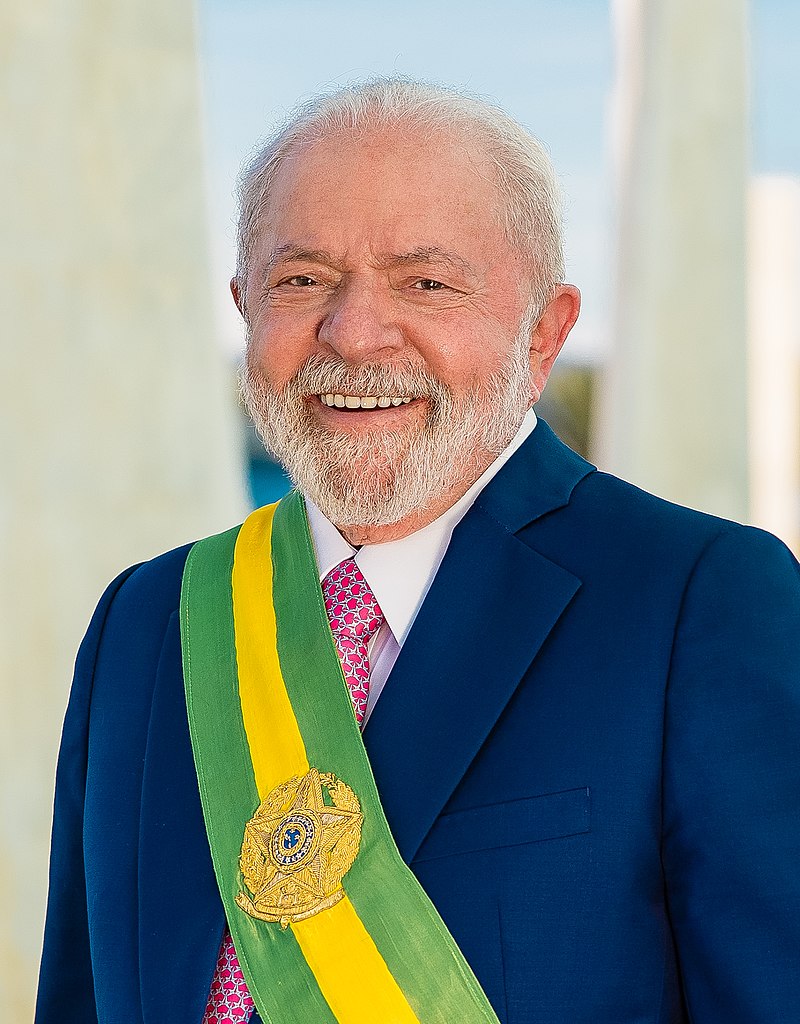
Luiz Inácio Lula da Silva, popularly known as Lula, is a figure whose life story is as compelling as his political career. Born on October 27, 1945, in Garanhuns, a small town in the impoverished northeastern region of Brazil, Lula’s journey from a working-class background to becoming one of the most influential leaders in Brazilian history is a testament to his resilience, determination, and deep connection with the Brazilian people. As a leader of the Workers’ Party (Partido dos Trabalhadores, PT), Lula served as the President of Brazil from 2003 to 2011 and was re-elected in 2022, marking a remarkable return to power after years of political and legal battles.
Early Life: Humble Beginnings in Northeastern Brazil
Lula was born into a poor family, the seventh of eight children. His father, Aristides Inácio da Silva, was a sharecropper and a laborer, while his mother, Eurídice Ferreira de Melo, known as Dona Lindu, was the backbone of the family, raising the children in extremely challenging conditions. Lula’s early life was marked by hardship. At the age of seven, his family migrated to São Paulo, like many others from the Northeast, seeking better economic opportunities in Brazil’s industrial heartland.
In São Paulo, Lula’s childhood continued to be shaped by poverty. He started working at a young age, first shining shoes and later as a factory worker. At 14, he became an apprentice in a metalworking plant, an experience that would profoundly influence his political views and future career. A workplace accident in which he lost the little finger on his left hand further deepened his commitment to workers’ rights.
Rise in the Labor Movement: The Making of a Leader
Lula’s involvement in the labor movement began in earnest during the 1960s. He joined the metalworkers’ union in São Bernardo do Campo, an industrial city in São Paulo’s metropolitan area. His leadership skills quickly became apparent, and by 1975, he was elected president of the union. During his tenure, Lula led major strikes in the late 1970s, challenging Brazil’s military dictatorship and advocating for better wages and working conditions.
These strikes were pivotal not only for Lula’s career but also for Brazil’s political landscape. The strikes gained national attention, and Lula became a symbol of resistance against the dictatorship. His leadership in these labor movements laid the groundwork for the founding of the Workers’ Party in 1980, a party that would become a major force in Brazilian politics.
The Birth of the Workers’ Party: A New Political Force
The Workers’ Party (PT) was officially founded in 1980 by a coalition of labor leaders, intellectuals, and activists, with Lula as one of its key figures. The PT aimed to represent the interests of the working class and promote social justice, democracy, and workers’ rights. Lula’s charisma and ability to connect with ordinary Brazilians made him the natural leader of the party.
Throughout the 1980s, Lula and the PT gained significant traction in Brazilian politics, particularly as Brazil transitioned from military dictatorship to democracy. Lula ran for president three times—in 1989, 1994, and 1998—before finally winning the presidency in 2002. Each campaign strengthened his image as a man of the people, someone who understood the struggles of the working class because he had lived them.
Lula’s First Presidency: Transforming Brazil
Lula’s election in 2002 was a historic moment for Brazil. He became the first working-class president in the country’s history, representing a significant shift in the political landscape. His presidency was marked by efforts to address the deep inequalities in Brazilian society.
One of Lula’s most significant achievements during his first term was the creation of the Bolsa Família program in 2004. This social welfare program provided financial aid to low-income families, with the condition that they send their children to school and ensure regular health check-ups. Bolsa Família became a cornerstone of Lula’s social policies, lifting millions of Brazilians out of poverty and significantly reducing income inequality. By the end of Lula’s presidency in 2010, more than 11 million families were benefiting from the program.
Economically, Lula’s government maintained a careful balance between social spending and fiscal responsibility. Despite initial concerns from international investors, his administration delivered economic stability, achieved budget surpluses, and significantly reduced Brazil’s debt. This approach reassured financial markets and led to a period of sustained economic growth, with Brazil emerging as a significant player on the global stage.
Challenges and Controversies: Scandals and Political Resilience
Despite the successes of his first term, Lula’s presidency was not without challenges. In 2005, his government was rocked by a major corruption scandal known as the “Mensalão” scandal. The scandal involved allegations that members of the Workers’ Party were paying monthly bribes to legislators in exchange for their support in Congress.
Lula responded to the crisis by addressing the nation in a televised speech, where he expressed his dismay and claimed ignorance of the corruption within his party. His emotional appeal and continued popularity with the Brazilian people helped him weather the storm. In the 2006 presidential election, Lula was re-elected with 60% of the vote, demonstrating his resilience and the deep connection he had with the electorate.
During his second term, Lula continued to focus on reducing poverty and inequality. He also played a more assertive role in international affairs, positioning Brazil as a leader in Latin America and a voice for developing nations in global forums like the G20. His government’s efforts in diplomacy and trade helped strengthen Brazil’s global standing.
The Aftermath of the Presidency: Health Struggles and Legal Battles
Lula left office in 2011 with high approval ratings, having lifted millions out of poverty and presided over a period of economic growth. However, his post-presidential years were marked by significant challenges. In 2011, Lula was diagnosed with throat cancer, a battle he ultimately won after undergoing treatment.
In 2014, Brazil was shaken by the Lava Jato (Car Wash) investigation, a massive corruption probe that uncovered widespread bribery involving state oil company Petrobras, construction firms, and politicians. Although Lula was initially not a target, the investigation eventually implicated him, leading to charges of corruption and money laundering.
In 2017, Lula was convicted and sentenced to prison, a ruling that polarized Brazil. His supporters argued that the charges were politically motivated, designed to prevent him from running for president again, while his detractors saw the conviction as proof of widespread corruption. Lula began serving his sentence in April 2018, but he maintained his innocence and continued to exert significant influence over Brazilian politics from behind bars.
Lula’s Return to Politics: The 2022 Presidential Election
Lula’s imprisonment did not end his political career. In 2021, Brazil’s Supreme Court annulled his corruption convictions, ruling that the court in Curitiba, where he was tried, lacked jurisdiction. This decision restored Lula’s political rights, allowing him to run for president once again.
In the 2022 presidential election, Lula made a stunning political comeback, challenging the incumbent president, Jair Bolsonaro. The election was highly contentious, reflecting the deep divisions within Brazilian society. Lula campaigned on a platform of restoring democracy, protecting the environment, and addressing the economic and social inequalities exacerbated by Bolsonaro’s policies.
Lula won the election in October 2022, marking a dramatic return to power. His victory was seen as a rejection of Bolsonaro’s far-right policies and a reaffirmation of Brazil’s commitment to democracy. Lula’s return to the presidency was also a personal triumph, symbolizing his resilience and enduring appeal to the Brazilian people.
Lula’s Legacy: A Complex and Enduring Influence
Lula’s legacy is one of both admiration and controversy. He is celebrated for his efforts to reduce poverty, improve social welfare, and bring Brazil onto the global stage. His policies, particularly Bolsa Família, are credited with lifting millions out of poverty and reducing income inequality in one of the world’s most unequal societies.
However, his legacy is also tainted by the corruption scandals that plagued his administration and the broader political system in Brazil. The Lava Jato investigation, although it implicated many politicians across the political spectrum, has left a lasting stain on Brazilian politics and on Lula’s image.
Despite these controversies, Lula remains a deeply influential figure in Brazil. His life story—from a poor, illiterate boy in Brazil’s Northeast to the presidency—resonates with many Brazilians, particularly those who have benefited from the social programs he implemented. His return to power in 2022 suggests that his influence on Brazilian politics is far from over.
Final Thoughts: Lula’s Enduring Impact on Brazil
Lula’s life and career are emblematic of Brazil’s complex political and social landscape. He is a figure who has transcended his humble origins to become a symbol of hope, change, and resilience. While his presidency was not without flaws, his achievements in reducing poverty and improving social welfare have had a profound and lasting impact on Brazil.
As Lula embarks on his third term as president, the challenges he faces are immense. Brazil is grappling with economic instability, political polarization, and environmental crises. Yet, Lula’s return to power reflects the enduring trust and hope that many Brazilians place in him. His legacy, while complex, is one of transformation—a legacy that will continue to shape Brazil’s future for years to come.


