
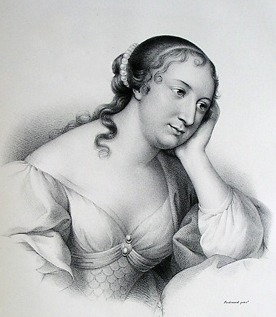
Madame de La Fayette, born Marie-Madeleine Pioche de La Vergne on March 16, 1634, in Paris, France, is widely regarded as the inventor of the modern novel. Her contributions to French literature, particularly through her groundbreaking work La Princesse de Clèves, have cemented her legacy as one of the most important literary figures of the 17th century. This article delves into the life of Madame de La Fayette, exploring her rise to fame, significant life events, and her enduring impact on literature.
Early Life and Education
Marie-Madeleine Pioche de La Vergne was born into a family of minor nobility with close ties to the French court. Her mother served as a lady-in-waiting to the Duchess Rose-Madeleine d’Aiguillon, while her father, Marc Pioche de La Vergne, held the position of squire to the king. Growing up in this environment, young Marie-Madeleine was exposed to the cultural and intellectual life of the French court from an early age.
Tragically, Marie-Madeleine lost her father when she was just fifteen years old. Her mother remarried Renaud de Sévigné, linking Marie-Madeleine to another illustrious family, as her stepfather was an uncle to the famous letter writer, Marie de Sévigné. This connection would prove significant in Marie-Madeleine’s life, as she and Marie de Sévigné formed a close and lifelong friendship.
Marie-Madeleine received an exceptional education for a woman of her time. She became proficient in Latin and Italian, languages that were essential for accessing the literary and philosophical works that influenced her own writing. Her intellectual pursuits were further cultivated in the salons of Paris, particularly those hosted by Madeleine de Scudéry and Catherine de Rambouillet. These salons were hubs of intellectual and literary activity, where ideas about love, honor, and morality were passionately debated, and they played a crucial role in shaping Marie-Madeleine’s literary sensibilities.
Marriage and Early Literary Work
In 1655, Marie-Madeleine married François Motier, the Comte de La Fayette, a nobleman who was nearly twenty years her senior. The marriage was more of a practical alliance than a romantic union, as was typical in the aristocracy of the time. Despite the lack of passion in her marriage, Marie-Madeleine had two sons with her husband. However, after spending the early years of their marriage in the countryside, she eventually moved back to Paris, where she lived separately from her husband, though they maintained a cordial relationship.
Upon her return to Paris, Madame de La Fayette became a central figure in the city’s literary circles. It was during this period that she met and formed a close intellectual bond with François de La Rochefoucauld, the author of the famous Maxims. Their relationship, characterized by mutual respect and intellectual exchange, would significantly influence her writing. Together, they frequented the most important literary salons in Paris, where they engaged with leading intellectuals such as Nicolas Boileau and Jean Racine.
Madame de La Fayette’s literary career began with works like Portrait de M.me De Sévigné and La Princesse de Montpensier. These early works showcased her skill in portraying complex emotional and psychological states, laying the groundwork for her later masterpieces.
The Publication of La Princesse de Clèves
Madame de La Fayette’s most significant contribution to literature came in 1678 with the publication of La Princesse de Clèves, a novel that is often credited as the first psychological novel in French literature. The novel is set in the court of Henry II of France and tells the story of a young noblewoman, the Princess of Clèves, who is caught in a web of love, duty, and societal expectations.
The plot revolves around the Princess’s love for the Duke of Nemours, a man who is not her husband. Despite her feelings, the Princess remains loyal to her husband, even confessing her love for another man to him in an act of extreme honesty. After her husband’s death, she chooses to retire from court life and live in solitude rather than marry her love, the Duke. This decision, which defies the expectations of romantic and societal norms, sparked considerable debate among contemporary readers.
La Princesse de Clèves was a revolutionary work for its time. It broke away from the conventions of the heroic romance, a genre dominated by long, idealized tales of chivalry and adventure, and introduced a more realistic portrayal of human emotions and social dynamics. The novel’s exploration of inner conflict, moral dilemmas, and the complexity of human emotions laid the foundation for the development of the modern novel.
The novel’s success was also due to the vibrant literary culture of the time, particularly the salons of the précieuses, where topics of love, honor, and virtue were frequently discussed. Madame de La Fayette’s portrayal of a woman’s struggle between passion and duty resonated deeply with the themes debated in these salons. The novel’s ending, where the protagonist chooses a life of solitude over a marriage based on passion, reflected the growing influence of the précieuses’ ideals on French literature and society.
Later Works and Life
After the success of La Princesse de Clèves, Madame de La Fayette continued to write, though often under pseudonyms, as the idea of a noblewoman engaging in literary pursuits was still considered somewhat controversial. Her subsequent works include La Comtesse de Tende, Histoire de madame Henriette d’Angleterre, première femme de Philippe de France, Duc d’Orléans, and Mémoires de la cour de France pour les années.
These later works, like her earlier ones, are marked by their psychological depth and their keen observations of court life. La Comtesse de Tende is a tragic story of love and jealousy, while her historical writings provide a detailed and insightful look at the French court during a tumultuous period in history.
The deaths of her close friend François de La Rochefoucauld in 1680 and her husband in 1683 marked a turning point in Madame de La Fayette’s life. After these losses, she gradually withdrew from the social life of the Parisian salons. She spent her final years in relative seclusion, dedicating herself to her children and to religious reflection.
Madame de La Fayette passed away on May 25, 1693, at the age of 59. Her death marked the end of an era in French literature, but her influence would continue to be felt for centuries.
Legacy and Influence
Madame de La Fayette’s contribution to literature, particularly through La Princesse de Clèves, cannot be overstated. She pioneered the use of psychological realism in fiction, influencing the development of the modern novel. Her focus on the inner lives of her characters, particularly the moral and emotional struggles of women, set her apart from her contemporaries and established her as a forerunner of later novelists such as Jane Austen and George Eliot.
Her works are not only important for their literary innovation but also for their reflection of the social and cultural dynamics of 17th-century France. Through her novels, Madame de La Fayette provided a nuanced and critical perspective on the roles and expectations of women in her society. Her portrayal of female characters who navigate the complexities of love, duty, and societal expectations challenged the traditional narratives of her time and opened up new possibilities for the representation of women in literature.
Madame de La Fayette’s legacy is also evident in the ongoing popularity of La Princesse de Clèves, which continues to be studied and admired for its psychological depth and literary craftsmanship. The novel remains a staple of French literature courses and has been adapted into numerous films, plays, and other media.
In addition to her literary achievements, Madame de La Fayette’s life and work offer valuable insights into the cultural and intellectual life of 17th-century France. Her connections with prominent figures such as La Rochefoucauld, Boileau, and Racine place her at the heart of the vibrant literary and philosophical debates of her time. Her participation in the salons of Paris, where ideas about love, honor, and morality were hotly debated, reflects the importance of these social spaces in the development of French literature and thought.
Conclusion: The Enduring Impact of Madame de La Fayette
Madame de La Fayette’s life and work are a testament to her intelligence, creativity, and courage. As a woman writing in a male-dominated literary world, she broke new ground by exploring the psychological complexities of her characters and by addressing themes that were often considered taboo. Her ability to navigate the intricacies of court life while producing works of profound literary and intellectual significance makes her a key figure in the history of French literature.
Today, Madame de La Fayette is celebrated not only as the author of La Princesse de Clèves but also as a pioneer of the modern novel. Her influence can be seen in the works of countless writers who followed in her footsteps, and her novels continue to inspire readers and scholars around the world. Madame de La Fayette’s legacy is a reminder of the power of literature to explore the depths of the human experience and to challenge the conventions of its time.


