
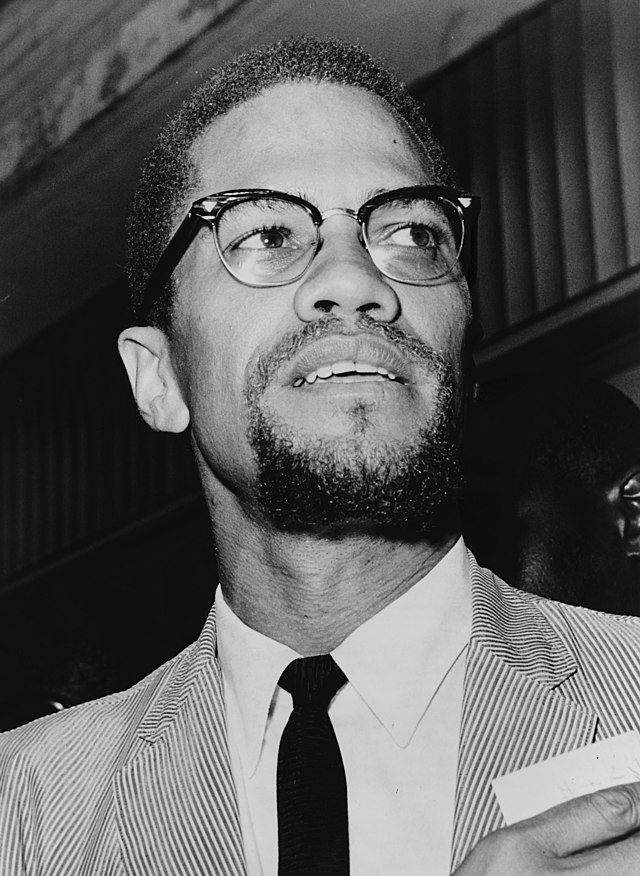
Malcolm X, born Malcolm Little on May 19, 1925, in Omaha, Nebraska, is one of the most significant and influential figures in the history of the American Civil Rights Movement. His life was a journey of transformation, from a troubled youth to a leader who challenged the status quo and advocated for the empowerment and liberation of African Americans. This article delves into the life of Malcolm X, exploring his rise to fame, his ideological evolution, and his enduring legacy.
Early Life and Family Background
Malcolm X was born into a family deeply involved in the struggle for African American rights. His father, Earl Little, was a Baptist minister and an outspoken supporter of Marcus Garvey’s Universal Negro Improvement Association, which advocated for the return of African Americans to Africa and the establishment of an independent Black nation. His mother, Louise Norton, was from Grenada, an island in the Caribbean that was then part of the British Empire. The family’s involvement in Black activism made them a target of racist groups, including the Ku Klux Klan.
Tragedy struck the Little family early in Malcolm’s life. In 1931, Earl Little was killed in what was widely believed to be an act of racial violence, although officially ruled an accident. This event had a profound impact on Malcolm, shaping his perception of the racial injustices in America.
Challenges of Youth
Following the death of his father, Malcolm’s family struggled financially. His mother, overwhelmed by grief and the burden of raising eight children, was eventually institutionalized in a mental hospital in 1939. Malcolm and his siblings were dispersed among foster homes and orphanages.
Malcolm’s early education was marked by academic success, but also by experiences of racial discrimination. Despite his intelligence, he was discouraged from pursuing his dream of becoming a lawyer because of his race. This disillusionment led him to drop out of school and move to Boston, where he began a life of crime. He became involved in gambling, drug dealing, and burglary, activities that eventually led to his arrest in 1946.
Transformation in Prison
Malcolm’s six-year prison sentence proved to be a turning point in his life. It was during this time that he was introduced to the teachings of the Nation of Islam, a religious and political organization that advocated for Black empowerment and the separation of Black and white Americans. Influenced by his brothers, who had already joined the Nation, Malcolm began corresponding with the group’s leader, Elijah Muhammad.
In prison, Malcolm underwent a profound transformation. He spent his time reading extensively, educating himself on a wide range of subjects, from history and philosophy to religion. By the time he was released in 1952, he had renounced his former life and adopted the name Malcolm X. The “X” symbolized the African surname he would never know, as he believed “Little” was a slave name imposed on his ancestors by white slave owners.
Rise to Prominence
After his release from prison, Malcolm X quickly rose to prominence within the Nation of Islam. He became one of Elijah Muhammad’s most trusted and effective spokespeople, known for his fiery oratory and uncompromising stance on racial issues. Unlike other civil rights leaders of the time, Malcolm X rejected the idea of integration and nonviolent resistance. Instead, he advocated for Black self-reliance, self-defense, and the establishment of separate Black communities.
Malcolm’s speeches resonated with many African Americans, particularly those in urban areas who felt that the mainstream civil rights movement did not fully address their experiences of poverty and police brutality. His message of Black pride and empowerment struck a chord, and he quickly became one of the most visible and controversial figures in the movement.
The Split with the Nation of Islam
Despite his success, Malcolm X’s relationship with the Nation of Islam began to deteriorate in the early 1960s. He became increasingly disillusioned with Elijah Muhammad, particularly after learning of Muhammad’s moral failings, including allegations of infidelity. Malcolm also began to question the Nation’s strict separatist ideology and its reluctance to engage with other civil rights organizations.
The breaking point came in 1964 when Malcolm made a pilgrimage to Mecca, known as the Hajj. This journey had a profound effect on him, leading to a significant shift in his worldview. In Mecca, Malcolm encountered Muslims of all races, which led him to reconsider his views on race and racism. He returned to the United States with a new perspective, advocating for racial unity and human rights on a global scale.
Founding the Organization of Afro-American Unity
After leaving the Nation of Islam, Malcolm X founded the Organization of Afro-American Unity (OAAU) in 1964. The OAAU aimed to unite all people of African descent and to promote their economic, political, and social independence. Inspired by his travels in Africa and the Middle East, Malcolm sought to internationalize the struggle for Black rights, connecting it with the broader anti-colonial movements in the Third World.
Malcolm X’s new vision was more inclusive and less separatist than his earlier views. He began to reach out to other civil rights leaders, including Martin Luther King Jr., whom he had previously criticized. Although he still believed in the right to self-defense, Malcolm’s rhetoric became less militant, focusing more on human rights than on racial separation.
Assassination and Legacy
On February 21, 1965, Malcolm X was assassinated while giving a speech at the Audubon Ballroom in New York City. He was shot multiple times by three gunmen in front of his wife and children. His assassination has been the subject of much speculation and controversy. While members of the Nation of Islam were convicted of the murder, there have been persistent rumors of involvement by government agencies such as the FBI.
Malcolm X’s death was a tragic loss, but his ideas and legacy have continued to influence generations of activists and thinkers. His autobiography, written with the help of journalist Alex Haley, has become a classic work, offering insights into his life and the evolution of his ideas. The book remains a powerful testament to his journey from a criminal to a leader who inspired millions to fight for their rights and dignity.
Historical Impact and Modern Relevance
Malcolm X’s influence extends far beyond his lifetime. His ideas about Black pride, self-reliance, and human rights have had a lasting impact on the Civil Rights Movement and beyond. While his approach was often contrasted with that of Martin Luther King Jr., the two leaders shared a common goal: the liberation and empowerment of African Americans.
In the years since his death, Malcolm X has become a symbol of Black resistance and a voice for those who reject compromise in the face of injustice. His life and work have inspired a wide range of movements, from the Black Power movement of the 1960s to contemporary social justice activism.
Malcolm’s message of self-respect, empowerment, and global solidarity remains relevant today. In an era where racial inequalities persist, his call for dignity, self-defense, and pride in one’s identity continues to resonate with new generations.
Conclusion
Malcolm X’s life was one of transformation, struggle, and unwavering commitment to the cause of Black liberation. From his early years as Malcolm Little, a young man shaped by the harsh realities of racism and violence, to his rise as a powerful voice for African American rights, Malcolm X’s journey is a testament to the power of self-education, resilience, and conviction.
His legacy is one of empowerment, challenging not only the racial injustices of his time but also inspiring future generations to continue the fight for equality and human rights. As we reflect on his life, we are reminded that the struggle for justice is ongoing, and the lessons of Malcolm X’s life are as vital today as they were during his time.
Malcolm X’s story is not just a chapter in history; it is a call to action for those who seek to create a more just and equitable world. His life and work continue to inspire, challenge, and guide us in the ongoing pursuit of freedom and dignity for all.


