
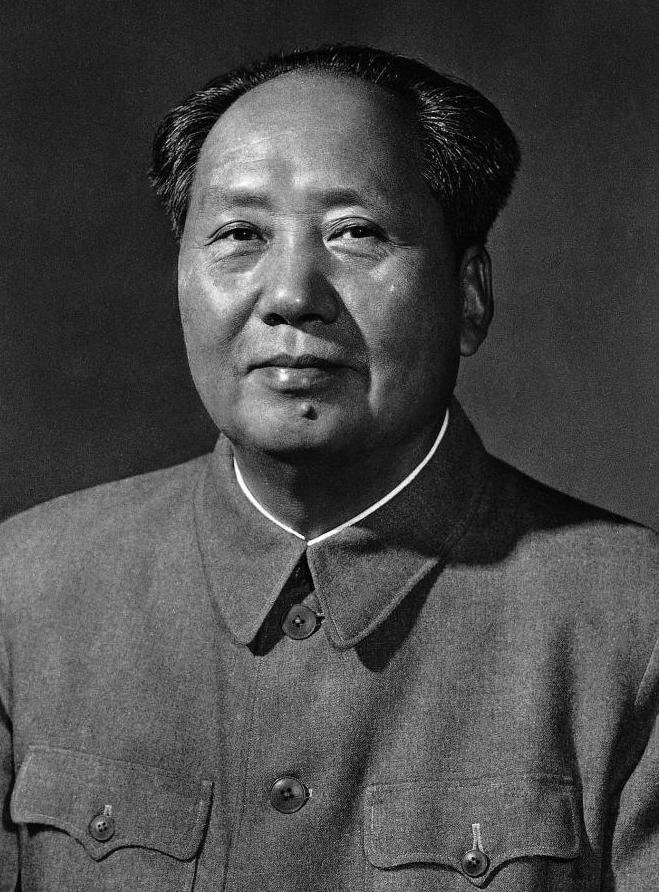
Mao Zedong, also known as Mao Tse-Tung, was born on December 26, 1893, in Shaoshan, Hunan Province, China. His life and career were marked by his pivotal role in transforming China into a communist state, making him one of the most influential and controversial figures of the 20th century. As the founding father of the People’s Republic of China, Mao’s legacy is deeply intertwined with the complex history of modern China, marked by both revolutionary triumphs and tragic failures. This article explores Mao Zedong’s life, his rise to power, and the key events that shaped his legacy.
Early Life and Education
Mao Zedong was born into a relatively prosperous peasant family in Shaoshan, a small village in Hunan Province. His early life was influenced by the traditional Confucian values of rural China, but he was also exposed to new ideas through his education. Mao was an avid reader and developed an early interest in Chinese history and literature. His formal education began at a local school, where he studied Confucian classics, but it was his exposure to Western ideas that would profoundly shape his worldview.
In 1911, at the age of 17, Mao became involved in the anti-imperial revolution that eventually led to the fall of the Qing Dynasty. This revolution marked the beginning of Mao’s lifelong commitment to political activism. After the revolution, he continued his education, moving to Changsha, the capital of Hunan Province, where he studied at the Hunan Provincial Library. It was during this time that Mao began to develop his revolutionary ideas, influenced by the works of Western philosophers such as Jean-Jacques Rousseau, Montesquieu, and Karl Marx.
The Rise of a Revolutionary
Mao’s political career began in earnest during the May Fourth Movement in 1919, a cultural and political movement that was a reaction against foreign imperialism and traditional Chinese values. The movement galvanized Chinese intellectuals and activists, leading to the founding of the Chinese Communist Party (CCP) in 1921. Mao was a founding member of the CCP and quickly rose through the ranks due to his organizational skills and ideological commitment.
In the early years of the CCP, Mao’s vision for revolution was shaped by the unique conditions in China. Unlike the industrialized nations of Europe, China was predominantly agrarian, with a vast peasant population. Mao recognized that the traditional Marxist focus on the urban proletariat was not applicable in China. Instead, he believed that the rural peasants could be the driving force behind a socialist revolution. This idea became the cornerstone of Mao’s revolutionary strategy.
The Long March and the Establishment of the People’s Republic of China
The 1920s and 1930s were turbulent years in China, marked by internal strife and foreign invasion. The CCP initially allied with the Kuomintang (KMT), the nationalist party led by Sun Yat-sen, to fight against warlords and imperialist forces. However, after Sun’s death, the alliance broke down under the leadership of Chiang Kai-shek, leading to a bloody civil war between the KMT and the CCP.
Mao’s leadership was tested during the Long March of 1934-1935, a strategic retreat by the Red Army, the military wing of the CCP, to escape the encirclement by KMT forces. The Long March covered over 6,000 miles and resulted in massive casualties, but it also solidified Mao’s leadership within the CCP. His ability to inspire and lead his troops through such a harrowing ordeal earned him the unwavering loyalty of the Red Army and the Chinese peasants who supported them.
The Long March was a turning point in Chinese history. It allowed the CCP to regroup and eventually gain the upper hand in the civil war against the KMT. After Japan’s defeat in World War II, the civil war resumed, culminating in the CCP’s victory in 1949. On October 1, 1949, Mao Zedong proclaimed the founding of the People’s Republic of China (PRC) in Beijing’s Tiananmen Square. This marked the beginning of a new era in Chinese history, with Mao at the helm of the world’s most populous nation.
The Great Leap Forward and the Cultural Revolution
With the establishment of the PRC, Mao set out to transform China into a socialist state. His vision for China was one of rapid industrialization and modernization, aimed at catching up with the Western powers and the Soviet Union. However, the implementation of Mao’s policies often led to disastrous consequences.
One of the most infamous of these policies was the Great Leap Forward, launched in 1958. The Great Leap Forward was an ambitious campaign to rapidly industrialize China by mobilizing the entire population to work on massive infrastructure projects and increase agricultural production through collectivization. Mao believed that by harnessing the power of the masses, China could achieve economic miracles. However, the reality was far from Mao’s expectations.
The Great Leap Forward led to widespread famine, as agricultural production plummeted due to poor planning, lack of expertise, and unrealistic targets. Millions of people died as a result of starvation and related causes, making the Great Leap Forward one of the deadliest famines in human history. The exact number of deaths is still debated, with estimates ranging from 15 to 45 million. The failure of the Great Leap Forward severely damaged Mao’s reputation and led to his temporary withdrawal from the forefront of Chinese politics.
Despite this setback, Mao remained a dominant figure in Chinese politics. In 1966, he launched the Cultural Revolution, a decade-long campaign aimed at reasserting his control over the CCP and purging the party of elements he considered to be bourgeois or counter-revolutionary. The Cultural Revolution was characterized by widespread chaos, as Mao encouraged China’s youth to form Red Guard units and attack the “Four Olds”: old customs, old culture, old habits, and old ideas.
The Cultural Revolution had devastating effects on Chinese society. Intellectuals, teachers, and perceived “enemies of the revolution” were persecuted, tortured, and even killed. Cultural artifacts were destroyed, and the education system was disrupted. The Cultural Revolution also led to power struggles within the CCP, with many of Mao’s rivals being purged or sidelined. The campaign caused untold suffering and left deep scars on Chinese society that are still felt today.
Mao’s Legacy and Impact
Mao Zedong’s death on September 9, 1976, marked the end of an era in Chinese history. His legacy is complex and multifaceted, reflecting both the transformative changes he brought to China and the suffering caused by his policies. On one hand, Mao is credited with unifying China, ending a century of foreign domination, and laying the foundations for China’s emergence as a global power. He is revered as the father of modern China and a symbol of Chinese nationalism and independence.
On the other hand, Mao’s policies, particularly the Great Leap Forward and the Cultural Revolution, resulted in immense human suffering and economic setbacks. The death toll from these campaigns is staggering, and the social and cultural damage inflicted during the Cultural Revolution has had lasting repercussions. Mao’s leadership style, characterized by his cult of personality and intolerance of dissent, also set a precedent for authoritarian governance in China.
Mao’s influence extended beyond China’s borders, inspiring communist movements and revolutionary leaders around the world. His writings, particularly the “Little Red Book,” became a symbol of communist ideology and were widely studied by leftist movements in Asia, Africa, and Latin America. However, the brutal reality of his policies also served as a cautionary tale about the dangers of unchecked power and ideological extremism.
Conclusion
Mao Zedong remains one of the most polarizing figures in modern history. His vision and leadership reshaped China, turning it from a fragmented, semi-colonial state into a unified, sovereign nation. However, the cost of his revolution was extraordinarily high, both in terms of human lives and the long-term consequences for Chinese society.
Mao’s legacy is a subject of ongoing debate in China and around the world. For some, he is a hero who liberated China from foreign domination and laid the groundwork for its rise as a global power. For others, he is a tyrant whose policies led to immense suffering and stifled China’s development for decades.
As China continues to evolve in the 21st century, the legacy of Mao Zedong remains an integral part of its national identity. Understanding Mao’s life, his policies, and their impact is crucial for anyone seeking to comprehend the complexities of modern China and its place in the world.


