
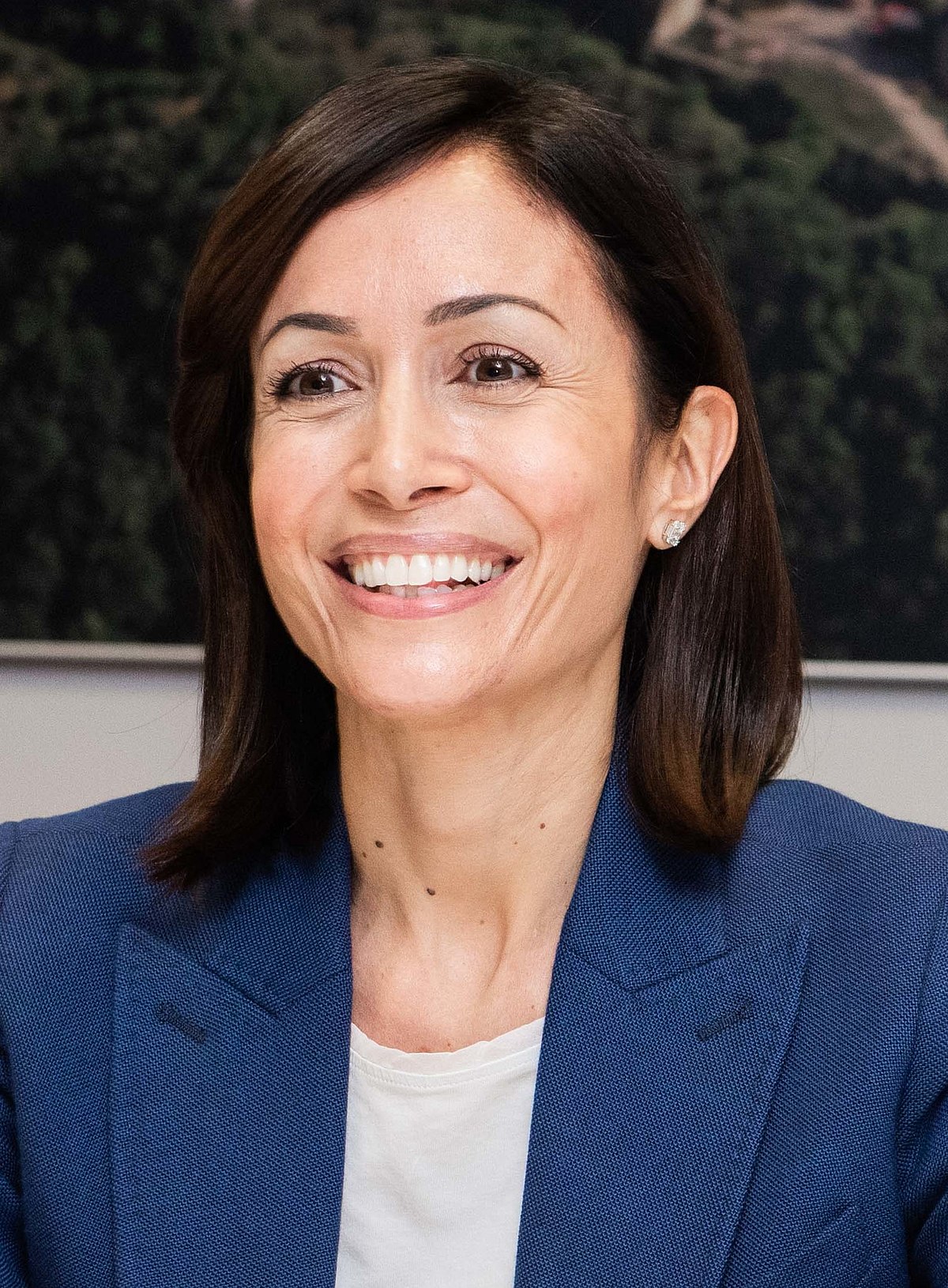
Mara Carfagna, a prominent Italian politician, and former television personality, has had a remarkable career that spans various fields, from law and television to politics. Born on December 18, 1975, in Salerno, Italy, she has become one of the most influential figures in contemporary Italian politics. This article provides an in-depth look at Mara Carfagna’s life, career, and contributions, exploring her rise to fame, her political achievements, and her personal life.
Early Life and Education
Mara Carfagna, whose full name is Maria Rosaria Carfagna, was born and raised in Salerno, a city in southern Italy. From a young age, Carfagna showed an inclination towards both academics and the arts. She attended the Liceo Scientifico “Giovanni da Procida” in Salerno, where she excelled academically, earning a scientific high school diploma. Alongside her studies, Carfagna pursued various artistic interests, including swimming, dance, acting, and piano. Her talent and beauty led her to work as a model, a career that would eventually propel her into the public eye.
In 1997, Carfagna entered the Miss Italy beauty pageant, where she achieved a respectable sixth place. This experience brought her national attention and opened doors for her in the entertainment industry. However, Carfagna was not content with just a career in modeling and television. She was determined to pursue higher education, and in 2001, she graduated with honors in Law from the University of Fisciano in Salerno. Her thesis focused on Information Law and the Broadcasting System, reflecting her interest in the intersection of law, media, and communication.
Early Television Career
Mara Carfagna’s television career began in 2000 when she made her debut as a co-host on the popular Italian TV show “La domenica del villaggio,” alongside Davide Mengacci. The show, which aired on Rete 4, was a major success and ran until 2006, establishing Carfagna as a familiar face on Italian television. During this period, she also appeared on other well-known programs, such as “I cervelloni,” “Vota la voce,” and “Domenica In.” Her charisma and poise made her a popular figure on Italian television, and she quickly became a household name.
In 2006, Carfagna co-hosted “Piazza grande” with Giancarlo Magalli, further cementing her status as a prominent television personality. However, it was in the same year that Carfagna’s life took a significant turn towards politics, a decision that would redefine her career and public image.
Political Ascent
Mara Carfagna’s entry into politics was met with both interest and skepticism, given her background in television. However, she quickly proved her mettle in the political arena. Carfagna joined Forza Italia, a center-right political party founded by Silvio Berlusconi, and began her political career by taking on the role of head of the women’s movement in the Campania region.
In the 2006 Italian general elections, Carfagna was elected to the Chamber of Deputies, the lower house of the Italian Parliament, representing Forza Italia. Her election marked the beginning of her rise in Italian politics. In 2007, she was appointed Secretary of the Constitutional Affairs Committee, a significant position that allowed her to influence important legislative matters. She also became the national coordinator of Azzurro Donna, the women’s wing of Forza Italia.
Carfagna’s political career gained further momentum in 2008 when she was re-elected to the Chamber of Deputies, this time representing the newly formed People of Freedom (PdL) party, which was a merger of Forza Italia and other center-right parties. Following the election, she was appointed Minister for Equal Opportunities in the fourth Berlusconi government, a position she held from May 2008 to November 2011.
Minister for Equal Opportunities
As Minister for Equal Opportunities, Mara Carfagna was responsible for addressing issues related to gender equality, anti-discrimination policies, and the rights of women and minorities in Italy. Her tenure as minister was marked by several key initiatives and legislative actions aimed at improving the status of women in Italy.
One of Carfagna’s most notable achievements was the introduction of legislation to combat human trafficking and prostitution, issues that had long plagued Italy. She championed laws that imposed stricter penalties on those involved in human trafficking and sought to protect the rights and dignity of women who were victims of exploitation. Carfagna’s efforts were widely recognized, and she was praised for her commitment to advancing women’s rights in a traditionally conservative society.
In addition to her work on human trafficking, Carfagna also focused on promoting gender equality in the workplace. She supported policies that encouraged the employment of women in traditionally male-dominated industries and advocated for measures to close the gender pay gap. Her work in this area helped to raise awareness about the challenges faced by women in the workforce and laid the groundwork for future reforms.
Personal Life and Controversies
Mara Carfagna’s public life has not been without its share of controversies. In 2007, she found herself at the center of a media storm following a comment made by then-Prime Minister Silvio Berlusconi during a televised award ceremony. Berlusconi, in a seemingly joking manner, remarked that if he were not already married, he would marry Carfagna. The comment sparked outrage, particularly from Berlusconi’s wife, Veronica Lario, who publicly demanded an apology from her husband.
The incident highlighted the challenges faced by women in politics, particularly those with a background in entertainment. Despite the media attention, Carfagna remained focused on her political career and continued to work on behalf of the Italian people.
In her personal life, Carfagna married Roman builder Marco Mezzaroma on June 25, 2011, in a ceremony that garnered significant media coverage. The wedding was attended by numerous political figures, including Silvio Berlusconi, who served as Carfagna’s witness. However, the marriage was short-lived, and the couple separated after just one year.
In 2013, Carfagna began a relationship with former deputy Alessandro Ruben. The couple welcomed their first child, a daughter named Vittoria, on October 26, 2020. The birth of her daughter marked a new chapter in Carfagna’s life, as she balanced the demands of motherhood with her ongoing political responsibilities.
The 2020s and a New Political Role
The 2020s have brought new opportunities and challenges for Mara Carfagna. In February 2021, she was appointed Minister for the South and Territorial Cohesion in the government led by Prime Minister Mario Draghi. This position is particularly significant, as it focuses on addressing the economic disparities between northern and southern Italy, a longstanding issue that has plagued the country for decades.
As Minister for the South, Carfagna has been tasked with overseeing initiatives aimed at revitalizing the southern regions of Italy, promoting economic development, and improving infrastructure. Her role is crucial in ensuring that the government’s recovery plans, particularly those funded by the European Union’s Next Generation EU program, are implemented effectively in the South.
Carfagna’s appointment to this key ministerial role reflects her growing influence within Italian politics and her ability to navigate complex political landscapes. It also underscores the trust placed in her by Prime Minister Draghi and other senior figures within the government.
Legacy and Future Prospects
Mara Carfagna’s journey from a television personality to a prominent political figure is a testament to her determination, intelligence, and resilience. Over the years, she has demonstrated her ability to transcend the stereotypes often associated with women in the public eye, particularly those with backgrounds in entertainment. Her work as Minister for Equal Opportunities and now as Minister for the South and Territorial Cohesion has positioned her as a key player in Italian politics, with the potential to shape the country’s future.
As Carfagna continues to build her legacy, she faces the ongoing challenge of balancing her political ambitions with her personal life. The birth of her daughter has added a new dimension to her life, and it will be interesting to see how she navigates the demands of motherhood alongside her ministerial responsibilities.
Looking ahead, Mara Carfagna’s influence is likely to continue growing, particularly as Italy grapples with issues of economic inequality, gender equality, and regional disparities. Her experience, coupled with her commitment to public service, positions her as a potential leader in Italy’s political landscape for years to come.
Conclusion
Mara Carfagna’s life and career exemplify the complexities and challenges of modern politics. From her early days as a television personality to her current role as a key government minister, Carfagna has navigated a path that few could have predicted. Her contributions to Italian society, particularly in the areas of gender equality and regional development, have left a lasting impact, and her story serves as an inspiration to women in politics and beyond.
As Italy continues to evolve, so too will Carfagna’s role in shaping its future. Whether through her work in government or her advocacy for women’s rights, Mara Carfagna remains a significant figure in Italian public life, and her journey is far from over.


