
Early Life and Education
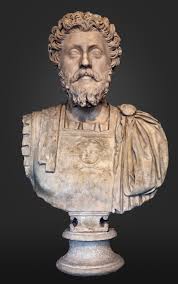
Marcus Aurelius, born Marcus Annius Verus on April 26, 121 AD in Rome, came from a prestigious family originally from the province of Baetica in Spain. His father was a consul, which was a significant position in Roman society. Young Marcus received an education from the esteemed rhetorician Fronto, who taught him the art of rhetoric. Additionally, Marcus had a profound interest in Stoic philosophy, which would later shape his approach to leadership and governance.
In 138 AD, the emperor Antoninus Pius adopted Marcus, marking a turning point in his life. With this adoption, Marcus took on the name Marcus Aurelius Valerius. A year later, he was proclaimed heir to the imperial throne and assumed the name Aurelius Caesar, son of Pius Augustus. In 140 AD, at the age of 19, Marcus held the consular office for five years and married Faustina, the daughter of Antoninus Pius, with whom he had several children.
Rise to Power
Marcus Aurelius’ path to becoming emperor involved accumulating essential titles and responsibilities. Over the next two years, he obtained the tribunicia potestas and the imperium proconsulare, key titles that positioned him to eventually take the throne. Upon the death of Antoninus Pius in 161 AD, Marcus Aurelius ascended to the position of emperor alongside his adopted brother, Lucius Verus. This marked the first time in Roman history that two emperors ruled simultaneously, though Marcus held a more dominant role in the administration.
Governance and Philosophy
Under his reign, Marcus Aurelius adopted a governance style that respected the Roman Senate and avoided absolute rule. He allowed the Senate to express opinions on political matters, including decisions on declarations of war. His respect for traditional Roman institutions and his consultative approach helped maintain stability and earned him the Senate’s support.
Marcus Aurelius also extended opportunities to men from all Roman provinces to hold significant administrative positions, fostering inclusivity within the empire. He aimed to establish new trade routes and sought to engage diplomatically with distant lands, including China.
Reforms and Policies
Marcus Aurelius implemented several important reforms aimed at improving the administration and welfare of the empire. He created a registry system requiring families to register their children within 30 days of birth, divided Italy into four districts each overseen by juridici, and established the role of the praetor to oversee guardianships. He also managed imperial finances to ensure funds were available for public works, such as repairing the empire’s road network.
His humanitarian reforms were noteworthy. Marcus Aurelius worked to improve conditions for slaves, recognizing natural rights concerning inheritance, and providing food funds for children. He sought to eliminate the practice of torture, both for important Romans and free men within the empire, and granted asylum rights to slaves seeking refuge.
Military Campaigns and Challenges
The majority of Marcus Aurelius’ reign was marked by military campaigns aimed at defending and stabilizing the empire’s borders. The eastern provinces were under constant threat from the Parthians. In response, he sent Lucius Verus to lead the Roman forces in the east. Verus successfully defeated the Parthians in 166 AD, restoring stability to the region and proving his loyalty to Marcus.
While the eastern front was secured, Marcus faced significant challenges along the Danubian frontier. Numerous Germanic tribes, including the Quadi, Marcomanni, Vandals, Buri, and Iazyges, launched incursions into Roman territory. These tribes sought new lands and were attracted by the wealth of the Roman Empire. The situation was further complicated by the departure of Roman legions to the eastern provinces and a devastating plague that drastically reduced the population.
Marcus Aurelius, with the help of his brother, managed to stabilize the situation for a time. However, after Verus’ death, the pressure from northern tribes intensified. Marcus personally led military campaigns to defend the empire, spending considerable time on the front lines in regions such as Raetia, Noricum, and Gallia Cisalpina. He achieved temporary peace with the Germanic tribes, but conflicts resumed, leading him to once again take command of the Roman army.
Later Life and Legacy
In 175 AD, Marcus managed to stabilize the northern frontier, but this peace was short-lived. He returned to the battlefield in 179 AD, leading the Roman army in what would be his final campaign. Marcus Aurelius died on March 17, 180 AD, in Vindobona (modern-day Vienna), likely from the plague. His death marked the end of a principled and philosophical reign, as he was succeeded by his son Commodus, whose mismanagement contributed to the empire’s decline.
Contributions to Philosophy
Beyond his political and military achievements, Marcus Aurelius is renowned for his contributions to philosophy. His work, “Meditations,” written during his military campaigns, is a series of personal reflections on Stoic philosophy. These writings offer insights into his thoughts on duty, virtue, and the nature of human existence. “Meditations” remains a significant philosophical text, revered for its wisdom and practical guidance on living a principled life.
Marcus Aurelius’ Stoic philosophy emphasized the importance of reason, self-discipline, and virtue. He believed in the interconnectedness of all things and the necessity of accepting one’s fate with equanimity. His philosophical outlook influenced his approach to governance, as he sought to lead with justice, temperance, and wisdom.
Historical Context and Impact
Marcus Aurelius’ reign came during a period of relative stability known as the Pax Romana, which spanned the first two centuries of the Roman Empire. His efforts to maintain this peace were challenged by external threats and internal strife, yet he managed to uphold the integrity of the empire through strategic military actions and thoughtful governance.
The challenges Marcus faced, including the Antonine Plague and continuous border conflicts, tested his resilience and leadership. Despite these difficulties, his reign is often regarded as a high point in the history of the Roman Empire, characterized by a commitment to philosophical ideals and the well-being of his subjects.
Personal Life
Marcus Aurelius married Faustina the Younger, daughter of Antoninus Pius, in 145 AD. They had several children, though many did not survive to adulthood. Their surviving children included Commodus, who would later become emperor, and Lucilla. Marcus’ marriage to Faustina was marked by both personal and political significance, strengthening his ties to the imperial family.
Despite his philosophical inclinations, Marcus Aurelius faced personal and familial challenges, including the loss of several children and the responsibilities of imperial rule. His personal writings reveal a man deeply committed to his duties, both as a philosopher and an emperor.
Conclusion
Marcus Aurelius’ life and reign exemplify the integration of philosophy and leadership. His commitment to Stoic principles guided his approach to governance, military strategy, and personal conduct. As a philosopher-king, he sought to embody the virtues of wisdom, justice, courage, and temperance, striving to lead by example.
His legacy endures through his writings, particularly “Meditations,” which continues to inspire readers with its timeless insights into human nature and ethical living. Marcus Aurelius remains a symbol of enlightened leadership, his reign representing a period of intellectual and cultural flourishing in the Roman Empire.
His efforts to maintain stability, promote justice, and uphold the principles of Stoicism have left an indelible mark on history. Marcus Aurelius’ life story is a testament to the enduring power of philosophical thought and principled leadership in shaping the course of history.


