
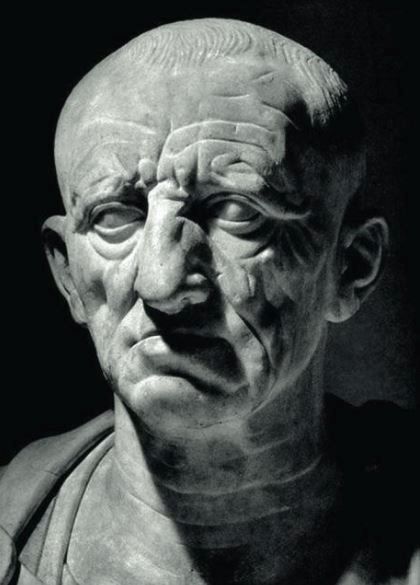
Marco Porcio Catone, often referred to as Cato the Elder or Cato the Censor, was a towering figure in the history of ancient Rome. Born in 234 BC in Tusculum, near Rome, Cato’s life and legacy were marked by his staunch traditionalism, moral rigor, and fervent nationalism. He became one of the most influential statesmen, orators, and writers of the Roman Republic. This article explores the life, achievements, and lasting impact of Marco Porcio Catone, offering insights into his contributions to Roman society and the historical context in which he lived.
Early Life and Military Career
Marco Porcio Catone was born into a plebeian family, a fact that would shape much of his worldview and political stance throughout his life. His early years were spent in the rugged Sabine countryside, where he developed a deep connection to the land and a commitment to the values of hard work, discipline, and simplicity. These formative experiences would later influence his staunch advocacy for traditional Roman virtues.
At the age of 17, Cato began his military career, serving as a tribunus militum (military tribune) under the command of the famous Roman general Fabius Maximus during the Second Punic War. This war, which pitted Rome against the Carthaginian general Hannibal, was one of the most challenging conflicts in Rome’s history. Cato’s service in the war not only honed his military skills but also solidified his deep-seated animosity towards Carthage, which would later define much of his political career.
Political Ascent: From Quaestor to Censor
Cato’s passion for public service and the welfare of the Roman state led him to pursue a political career. He first held the position of quaestor in 204 BC, a role that involved overseeing financial matters. His tenure as quaestor was marked by his integrity and strict adherence to financial discipline, traits that would characterize his entire career.
In 199 BC, Cato was elected aedile, and in 195 BC, he ascended to the prestigious office of consul, the highest elected position in the Roman Republic. As consul, Cato continued his crusade against corruption and luxury, championing the values of frugality and discipline that he believed were essential to the survival of the Roman Republic. His consulship also included a successful military campaign in Spain, where he displayed both military prowess and administrative skill, further cementing his reputation as a capable and principled leader.
Cato’s most significant political role came in 184 BC when he was elected censor. The office of censor was one of the most important in the Roman Republic, responsible for maintaining the census, overseeing public morality, and managing public finances. It was during his tenure as censor that Cato earned the nickname “Cato the Censor” due to his rigorous enforcement of traditional Roman values and his relentless efforts to curb moral decay.
Defender of Traditional Roman Values
Cato’s tenure as censor was marked by his unwavering commitment to the preservation of what he saw as the traditional Roman way of life, known as the mos maiorum. He viewed the increasing influence of Greek culture, with its emphasis on luxury, intellectualism, and individualism, as a direct threat to the moral fabric of Roman society. Cato believed that these foreign influences were corrupting the Roman youth and undermining the values that had made Rome great.
To counteract this perceived threat, Cato took drastic measures. He imposed strict regulations on public behavior, censured senators who indulged in excessive luxury, and even expelled individuals from the Senate who he deemed morally unfit. One famous example of his strictness was when he expelled a senator for kissing his wife in public in front of their daughter, an act Cato considered indecent.
Cato’s resistance to Greek influence extended to the realm of medicine, as he famously warned that Greek doctors would corrupt Roman society. Despite this, in his later years, Cato recognized the importance of Greek rationalism and even took the time to learn the Greek language, demonstrating a more complex relationship with Greek culture than his public rhetoric suggested.
The Battle Against Carthage: “Carthago delenda est”
Perhaps the most enduring aspect of Cato’s legacy is his unwavering hostility towards Carthage. Throughout his political career, Cato was a vocal advocate for the complete destruction of Rome’s rival, Carthage. His famous phrase, “Carthago delenda est” (“Carthage must be destroyed”), became a rallying cry in the Senate, reflecting his belief that as long as Carthage existed, it posed an existential threat to Rome.
Cato’s obsession with Carthage stemmed from his experiences during the Second Punic War and his conviction that Rome could not be secure as long as Carthage remained a power in the Mediterranean. His persistent lobbying eventually contributed to the outbreak of the Third Punic War, which culminated in the complete destruction of Carthage in 146 BC, three years after Cato’s death. This event fulfilled what had been Cato’s most fervent desire, solidifying his reputation as a staunch defender of Rome’s security and supremacy.
Literary Contributions and Intellectual Legacy
In addition to his political and military achievements, Cato was a prolific writer and intellectual, making significant contributions to Roman literature and thought. His most famous work, De Agri Cultura (On Agriculture), is the earliest surviving prose work in Latin and serves as both a practical guide to farming and a reflection of Cato’s values. In this treatise, Cato extols the virtues of agriculture as the foundation of Roman society, advocating for the preservation of small farms and warning against the rise of large estates, or latifundia, which he believed threatened the social fabric of Rome.
De Agri Cultura is not only a technical manual but also a moral treatise, reflecting Cato’s belief that the hard work and simplicity associated with farming were essential to maintaining the strength and virtue of the Roman people. The work provides insights into Cato’s views on a wide range of topics, from the management of slaves to the proper conduct of a Roman citizen.
Cato’s literary output also included the Origines, a seven-book history of Rome and Italy, which, although now lost, was highly influential in its time. The Origines was notable for being one of the first works to narrate Roman history from a Roman perspective, emphasizing the importance of Rome’s Italian allies and the collective identity of the Italian peoples. Cato’s decision to write in Latin, rather than Greek, was a deliberate effort to assert the cultural independence of Rome and promote Latin as a literary language.
Additionally, Cato composed numerous speeches, orations, and writings aimed at educating his son, known collectively as the Praecepta ad Filium and the Epistolae ad Filium. These works provided moral guidance and practical advice, encapsulating Cato’s philosophy of life and his belief in the importance of education, discipline, and moral integrity.
The Legacy of Cato the Elder
Cato’s influence extended far beyond his lifetime, shaping the political and cultural landscape of Rome for generations. His relentless advocacy for traditional values and his opposition to foreign influences left an indelible mark on Roman society. Later figures, such as Cicero, hailed Cato as a paragon of Roman virtue and often cited his example in their own writings and speeches.
However, Cato’s legacy is also complex and multifaceted. While he is often celebrated for his moral rigor and dedication to the Republic, his views and actions also reflect the tensions and contradictions of his time. His resistance to change and his suspicion of foreign cultures, particularly Greek, can be seen as both a defense of Roman identity and a reflection of the anxieties that accompanied Rome’s rapid expansion and increasing cosmopolitanism.
Cato’s life and career serve as a lens through which we can better understand the challenges faced by the Roman Republic in the second century BC. His efforts to preserve the traditional values of the Republic were driven by a genuine concern for the well-being of Rome, even as they sometimes led him to adopt extreme positions.
Conclusion
Marco Porcio Catone, or Cato the Elder, was a man of immense influence and lasting significance in the history of Rome. His life, marked by military service, political leadership, and intellectual contributions, exemplified the values of the Roman Republic. Cato’s unwavering commitment to the mos maiorum, his advocacy for the destruction of Carthage, and his literary achievements have cemented his place as one of Rome’s most memorable and revered figures.
Cato’s legacy, both as a defender of tradition and a complex, sometimes contradictory figure, continues to resonate in discussions of Roman history and political thought. His life story offers valuable insights into the challenges and dynamics of the Roman Republic, providing a rich tapestry of lessons and reflections that remain relevant to this day.


