
Early Life and Beginnings in Racing
Marco Simoncelli was born on January 20, 1987, in Cattolica, a town in the province of Rimini, Italy. Raised in Coriano, a small town in the hills above Cattolica, Simoncelli showed an early passion for speed and motorcycles. He started riding minibikes at the tender age of seven, showcasing a natural talent that would later define his career.
By the age of 12, Simoncelli had already become the Italian Minimoto Champion, a testament to his early prowess on two wheels. His rapid progression through the ranks continued, and by 2000, he had competed in the European Minimoto Championship, where he secured a second-place finish, highlighting his growing potential on the international stage.
At 14, Simoncelli moved on to compete in the Honda NR Trophy and the Italian 125cc Championship. His performances in these competitions were impressive, earning him podium finishes and further solidifying his reputation as a rising star in the world of motorcycle racing.
Entry into the World Championship
Marco Simoncelli’s professional career began in earnest in 2002 when he made his debut in the 125cc World Championship. He joined the Aprilia CWF – Matteoni Racing team and participated in the Czech Grand Prix, stepping in for Jaroslav Huleš, who had moved up to the 250cc class. Simoncelli’s debut season was modest, finishing 33rd in the standings with just three points. However, it was clear that he had the raw talent necessary to compete at the highest level.
In 2003, Simoncelli secured a full-time ride in the 125cc World Championship, partnering with Mirko Giansanti. His first full season was a learning experience, and he ended the year in 21st place. Despite the challenges, Simoncelli’s aggressive riding style and charismatic personality began to attract attention from fans and competitors alike.
The 2004 season marked a turning point in Simoncelli’s career. He showcased his skill, particularly in wet conditions, where he earned his first pole position and his maiden victory in Jerez. This win was a significant milestone, proving that Simoncelli could compete with the best in the world. He finished the season in 11th place, a respectable result that laid the groundwork for his future success.
Transition to the 250cc Class and World Championship Glory
In 2006, after a solid 2005 season in the 125cc class that saw him win another race in Jerez and secure six podium finishes, Marco Simoncelli made the jump to the 250cc class. He joined the Gilera team, riding the RSV250 with Rossano Brazzi as his chief mechanic. The transition to the larger, more powerful bike was not without its challenges. Simoncelli struggled to find consistency, and his best result in his debut season was a sixth-place finish in China. He ended the year 10th in the standings.
The 2007 season proved to be another tough year for Simoncelli. Despite his undeniable talent, he found it difficult to break through, finishing the season in 10th place once again. However, Simoncelli’s perseverance and dedication would soon pay off.
The 2008 season was a breakthrough year for Simoncelli. Riding the Gilera RSA 250, he dominated the competition, winning six races and securing 12 podium finishes. His aggressive riding style, characterized by late braking and fearless overtaking maneuvers, became his trademark. At the age of 21, Simoncelli clinched the 250cc World Championship title at the Malaysian Grand Prix in Sepang, a track that would later play a tragic role in his life. He ended the season with 281 points, cementing his status as one of the sport’s brightest talents.
Entry into MotoGP and the Challenges Ahead
Following his World Championship success, Simoncelli remained in the 250cc class for the 2009 season, where he continued to impress. He won two more races and finished third in the overall standings, further solidifying his reputation as a future star of MotoGP. His performances caught the attention of top teams, and in 2010, Simoncelli made the leap to the premier class of motorcycle racing, MotoGP.
Simoncelli joined the San Carlo Honda Gresini team, riding the Honda RC212V. His transition to MotoGP was closely watched, as fans and pundits alike were eager to see how his aggressive style would translate to the more powerful machines of the top tier. Simoncelli’s first season in MotoGP was marked by flashes of brilliance and some tough lessons. He secured a best finish of fourth place in Portugal and ended the season eighth in the championship standings with 125 points.
The 2011 season was expected to be Simoncelli’s breakthrough year in MotoGP. Now equipped with factory-spec Honda machinery and paired with teammate Hiroshi Aoyama, Simoncelli showed significant promise from the start. He secured two pole positions and consistently ran near the front of the pack. At the Czech Grand Prix, Simoncelli earned his first MotoGP podium with a third-place finish, a moment of triumph that seemed to signal the beginning of a new chapter in his career.
At the San Marino Grand Prix, Simoncelli engaged in a thrilling battle for fourth place with compatriot Andrea Dovizioso and American rider Ben Spies, ultimately finishing just off the podium. In Australia, Simoncelli secured his best-ever MotoGP finish, crossing the line in second place at Phillip Island. His performances that season suggested that he was on the verge of breaking into the elite ranks of MotoGP.
Tragic End at Sepang
On October 23, 2011, the MotoGP community was struck by tragedy. During the Malaysian Grand Prix at the Sepang International Circuit, the very track where Simoncelli had won his 250cc World Championship three years earlier, disaster struck. On the second lap of the race, Simoncelli’s Honda lost grip at the rear, causing him to slide off and collide with other riders, Colin Edwards and Valentino Rossi, as he attempted to regain control of the bike.
The impact was devastating, and Simoncelli lost his helmet in the collision. The race was immediately red-flagged, and medical teams rushed to his aid. Despite their best efforts, Marco Simoncelli succumbed to the severe trauma to his head, neck, and chest. He was just 24 years old.
The news of Simoncelli’s death sent shockwaves through the motorsport world. Tributes poured in from across the globe as fans, fellow riders, and commentators remembered Simoncelli not just for his talent on the track but for his infectious personality and the joy he brought to the sport. His untimely death marked one of the darkest days in MotoGP history, a poignant reminder of the inherent risks of motorcycle racing.
Legacy and Impact on Motorsport
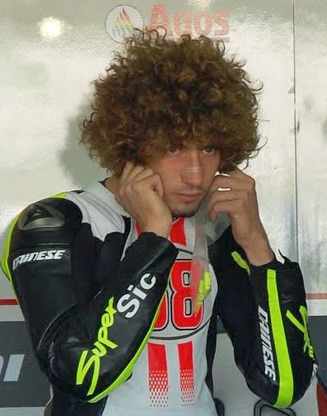
Marco Simoncelli’s legacy extends far beyond his accomplishments on the track. He was a rider who wore his heart on his sleeve, known for his curly hair, ever-present smile, and larger-than-life personality. His style of racing was fearless and thrilling, endearing him to fans who admired his refusal to back down from a challenge.
In the years following his death, Simoncelli’s memory has been honored in numerous ways. The Misano World Circuit in Italy was renamed the Misano World Circuit Marco Simoncelli in 2012, a fitting tribute to a rider who embodied the spirit of Italian motorsport. The circuit, located near Simoncelli’s hometown, has since become a pilgrimage site for fans who want to pay their respects.
The Marco Simoncelli Foundation was established by his family to continue his legacy through charitable work. The foundation supports various initiatives, including building facilities for disabled individuals and funding research and development projects in the field of healthcare. Simoncelli’s generosity and compassion, qualities that defined him as a person, live on through the work of this foundation.
In addition to these tributes, Simoncelli’s story has been immortalized in documentaries and films that celebrate his life and career. His presence continues to be felt in the MotoGP paddock, where his influence on the sport is still acknowledged by riders and fans alike. Simoncelli’s fearless approach to racing inspired a new generation of riders, and his legacy is a reminder of the passion and dedication required to compete at the highest levels of motorsport.
Conclusion
Marco Simoncelli’s life, though tragically short, was filled with remarkable achievements and unforgettable moments. From his early days on minibikes to his rise through the ranks of motorcycle racing, Simoncelli demonstrated a relentless drive to succeed and an unyielding love for the sport. His charisma and infectious enthusiasm made him a beloved figure both on and off the track.
Simoncelli’s death was a profound loss for the world of motorsport, but his legacy endures. He is remembered not only for his incredible talent and fearless racing but also for the joy and warmth he brought to everyone around him. The world may have lost a great racer, but the spirit of Marco Simoncelli continues to inspire and uplift, reminding us all of the power of passion, determination, and the importance of living life to the fullest.


