
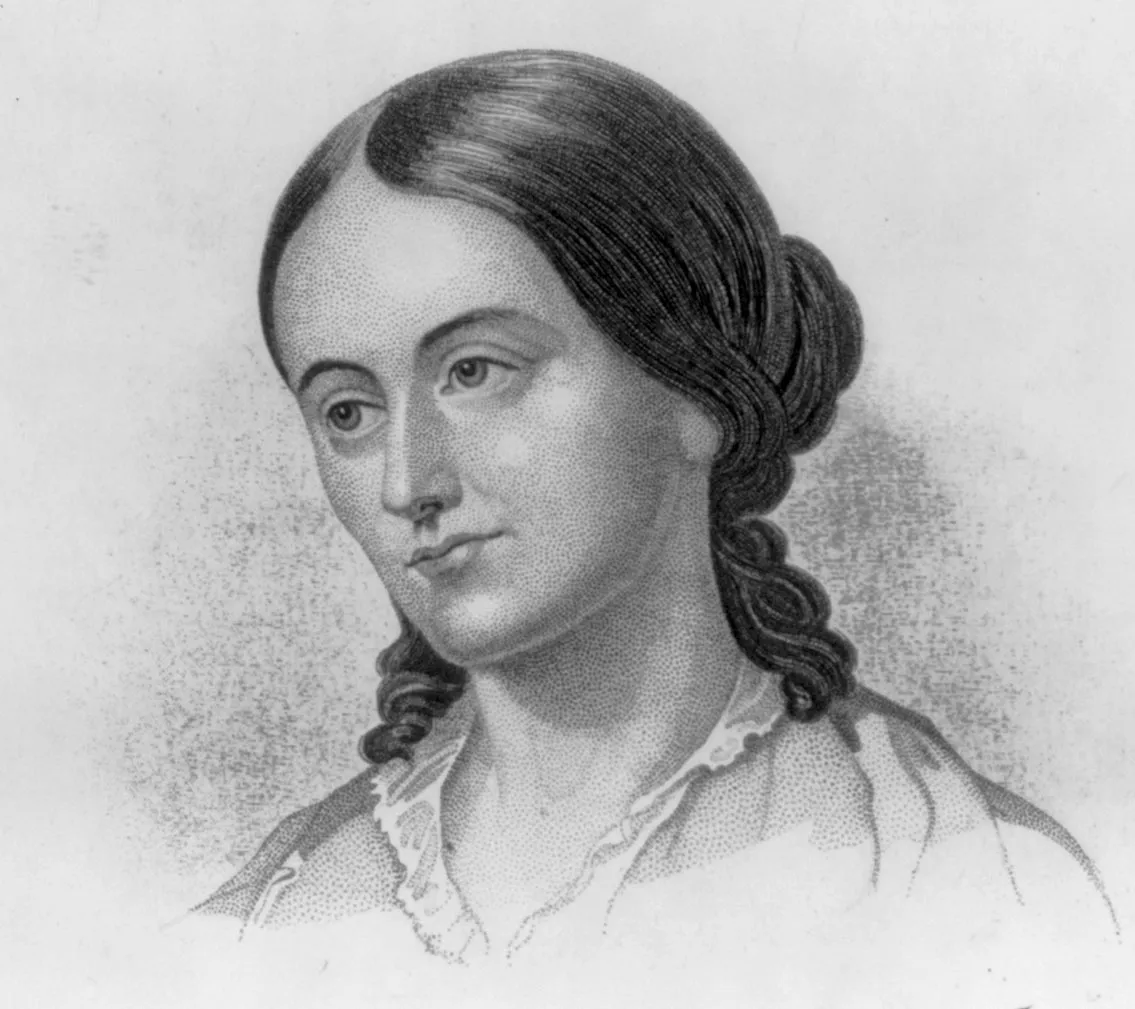
Margaret Fuller, born Sarah Margaret Fuller Ossoli on May 23, 1810, in Cambridgeport, Massachusetts, was an American journalist, editor, critic, and advocate for women’s rights. Fuller was one of the most prominent figures in the transcendentalist movement and played a crucial role in shaping the discourse around gender equality in the 19th century. Her life was marked by intellectual rigor, passionate advocacy for social reform, and a tragic end that cemented her legacy as one of America’s pioneering feminists.
Early Life and Education
Margaret Fuller was born into a family that valued education and intellectual achievement. Her father, Timothy Fuller, was a prominent lawyer and politician who served as a Congressman. Timothy Fuller was deeply invested in his daughter’s education, and from an early age, Margaret was subjected to a rigorous academic regimen. By the age of six, she was already studying Latin, and she soon became proficient in Greek and other classical languages. This intensive early education left a significant mark on Fuller, shaping her intellectual development and fostering a lifelong passion for literature and learning.
Fuller’s education was not limited to classical studies; she also taught herself several modern languages, including Italian, French, and German. Her linguistic abilities later proved invaluable in her career as a translator, journalist, and cultural critic. However, the demanding nature of her education also led to physical and emotional strain. Fuller’s father pushed her relentlessly, and the pressures of such an intense upbringing contributed to periods of ill health and anxiety in her later years.
Early Career and Literary Pursuits
The death of her father in 1835 left the Fuller family in financial difficulty, forcing Margaret to take up teaching to support herself and her siblings. She taught at schools in Boston and Providence, where she gained a reputation as an inspiring and effective educator. Despite the challenges she faced, Fuller continued to pursue her literary ambitions, immersing herself in the works of European and American authors and cultivating her own writing.
Fuller’s literary career began to take shape in the late 1830s when she became associated with the transcendentalist movement, a philosophical and social movement that emphasized the importance of individual intuition and the spiritual connection between humans and nature. Fuller was introduced to transcendentalism through her friendship with Ralph Waldo Emerson, one of the movement’s leading figures. Emerson recognized Fuller’s intellectual gifts and invited her to participate in the discussions and activities of the transcendentalist circle, which included other prominent thinkers such as Henry David Thoreau and Bronson Alcott.
In 1840, Fuller was appointed editor of The Dial, the transcendentalist journal, where she published some of her most important early work. Her contributions to The Dial included essays, literary criticism, and the first version of what would later become her seminal work, Woman in the Nineteenth Century. Fuller’s writing during this period was characterized by its boldness and originality, and she quickly established herself as one of the leading voices in American letters.
“Woman in the Nineteenth Century” and Advocacy for Women’s Rights
Margaret Fuller’s most famous work, Woman in the Nineteenth Century, published in 1845, is considered one of the first major feminist texts in the United States. The book originated as an essay titled The Great Lawsuit: Man versus Men, Woman versus Women, which was published in The Dial in 1843. In Woman in the Nineteenth Century, Fuller argued for the full intellectual, moral, and social equality of women, challenging the deeply entrenched gender norms of her time.
Fuller’s feminist philosophy was rooted in the transcendentalist belief in the inherent worth and potential of every individual. She believed that women, like men, possessed the capacity for intellectual and spiritual growth and that they should be given the same opportunities to develop their abilities. Fuller’s work was groundbreaking in its assertion that the subjugation of women was not only unjust but also detrimental to the progress of society as a whole. She called for the reform of marriage laws, the expansion of educational opportunities for women, and the recognition of women’s right to participate fully in public life.
Woman in the Nineteenth Century was met with both praise and criticism upon its publication. Some hailed it as a powerful and eloquent defense of women’s rights, while others dismissed it as radical and unfeminine. Despite the controversy, the book solidified Fuller’s reputation as a leading intellectual and advocate for social reform.
Journalism and European Travels
In 1844, Margaret Fuller accepted a position with the New-York Tribune as its first female literary critic and later its first female foreign correspondent. Her work at the Tribune marked a significant turning point in her career, providing her with a platform to reach a broader audience and engage with pressing social issues of the day.
Fuller’s journalism covered a wide range of topics, from literary criticism to social and political commentary. She was particularly vocal in her support for the abolition of slavery and the rights of women, using her columns to advocate for social justice and reform. Fuller’s writing was characterized by its intellectual rigor and moral conviction, and she quickly became one of the most respected journalists of her time.
In 1846, Fuller embarked on a journey to Europe as a foreign correspondent for the Tribune. Her travels took her to England, France, and Italy, where she met and interviewed some of the most influential figures of the time, including Thomas Carlyle, George Sand, and Giuseppe Mazzini. Fuller’s European travels deepened her understanding of the social and political struggles of the era, and her reporting provided American readers with valuable insights into the revolutionary movements that were sweeping across Europe.
Life in Italy and Personal Transformation
Margaret Fuller’s time in Italy was transformative both personally and professionally. She arrived in Rome in 1847, during a period of intense political upheaval as the Italian states were on the brink of revolution. Fuller was deeply moved by the Italian struggle for independence and became an ardent supporter of the cause. She developed a close friendship with Giuseppe Mazzini, one of the leaders of the Italian nationalist movement, and her reporting on the Italian Revolution provided American readers with a firsthand account of the events unfolding in Europe.
It was in Italy that Fuller met Giovanni Angelo Ossoli, a young Italian nobleman ten years her junior. The two began a romantic relationship, and Fuller soon became pregnant. The couple’s relationship was unconventional by the standards of the time, and they faced numerous challenges, including financial difficulties and the social stigma associated with their unmarried status. Fuller gave birth to their son, Angelo Eugenio Filippo Ossoli, affectionately known as Angelino, in 1848.
Despite the challenges she faced, Fuller continued to write and report on the Italian Revolution. Her dedication to her work and her commitment to social justice never wavered, even as she navigated the complexities of her personal life. Fuller’s time in Italy was marked by a deepening of her political convictions and a growing sense of purpose in her advocacy for freedom and equality.
Tragic End and Lasting Legacy
In 1850, Margaret Fuller, Giovanni Ossoli, and their young son Angelino decided to return to the United States. They boarded a merchant ship bound for New York, carrying with them a cargo of marble and silk. Tragically, the ship encountered a severe storm near Fire Island, New York, and was wrecked just off the coast. Margaret Fuller, Giovanni Ossoli, and their son all perished in the disaster on July 19, 1850. Fuller was just 40 years old at the time of her death.
The loss of Margaret Fuller was a profound tragedy, cutting short the life of one of America’s most brilliant and courageous intellectuals. Her death was widely mourned, and her contributions to American literature, journalism, and social reform were celebrated by her contemporaries. Ralph Waldo Emerson, who had been a close friend and mentor to Fuller, edited a posthumous collection of her works, ensuring that her ideas and legacy would continue to inspire future generations.
Margaret Fuller’s legacy as a pioneering feminist, journalist, and advocate for social justice endures to this day. Her work laid the foundation for the women’s rights movement in the United States, and her writings continue to be studied and admired for their intellectual depth and moral clarity. Fuller’s life was a testament to the power of ideas and the importance of standing up for what is right, even in the face of adversity.
SEO and Search Intent Keywords
To enhance the visibility of content related to Margaret Fuller and ensure it is effectively indexed by search engines like Google, the following search intent keywords are essential:
- Margaret Fuller Biography
- Transcendentalist Movement in America
- Woman in the Nineteenth Century Analysis
- Margaret Fuller Feminist Philosophy
- 19th Century American Women Writers
- Margaret Fuller and Ralph Waldo Emerson
- Margaret Fuller European Travels
- Margaret Fuller Italian Revolution Reporting
These keywords should be strategically integrated into content related to Margaret Fuller to reach a broad audience interested in American literature, women’s rights, and 19th-century history.
Conclusion
Margaret Fuller remains a towering figure in American history, a woman whose intellect, courage, and commitment to social justice set her apart as one of the most influential thinkers of her time. Her life was a journey of intellectual exploration, personal transformation, and unwavering dedication to the causes she believed in. From her early days as a precocious child in Cambridgeport to her tragic death at sea, Fuller’s story is one of resilience, brilliance, and an enduring legacy that continues to inspire.
For those interested in the history of American feminism, literature, and social reform, Margaret Fuller’s life and works provide invaluable insights. Her contributions to the transcendentalist movement, her pioneering advocacy for women’s rights, and her fearless journalism make her a figure of lasting importance. As we continue to grapple with issues of gender equality and social justice today, Margaret Fuller’s life and legacy offer a powerful reminder of the enduring struggle for human rights and dignity.


