
Introduction
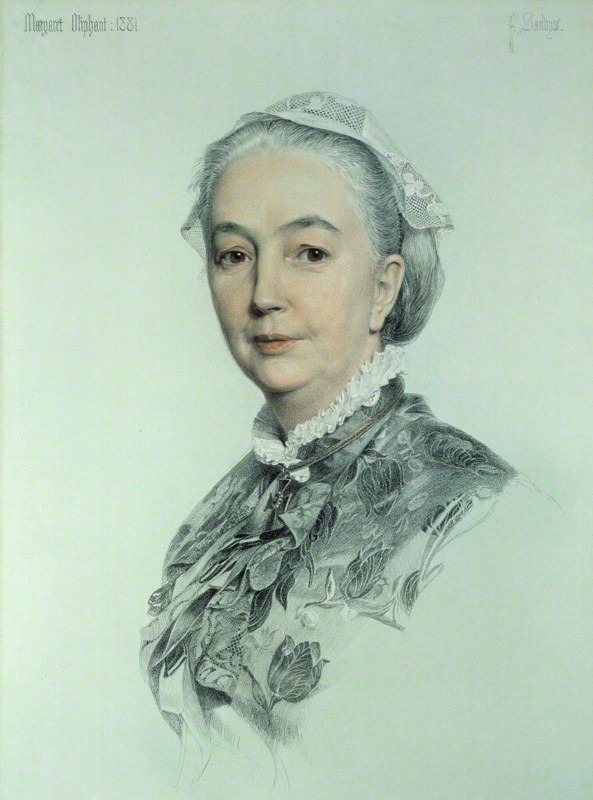
Margaret Oliphant, born Margaret Oliphant Wilson on April 4, 1828, in Wallyford, Midlothian, Scotland, was a prolific Victorian-era writer whose life and work captured the complexities of 19th-century society. Oliphant’s legacy as an author is remarkable not only for the volume of her work—comprising nearly 100 novels, numerous short stories, essays, biographies, and historical writings—but also for her ability to navigate the male-dominated literary world of her time. Despite personal tragedies and financial burdens, Oliphant managed to sustain a career that spanned over five decades, leaving an indelible mark on English literature. This article delves into the life, achievements, and enduring influence of Margaret Oliphant, exploring how she became one of the most important yet often overlooked figures in Victorian literature.
Early Life and Education
Margaret Oliphant was born into a middle-class family in Scotland, the daughter of Francis W. Wilson, a government clerk and banker, and Margaret Oliphant, an avid reader who instilled in her daughter a love for history and Scottish culture. The family was part of the Free Church of Scotland, a radical sect of Presbyterianism, which greatly influenced Oliphant’s early worldview. However, she eventually distanced herself from the strict religious principles of her upbringing, though she maintained a strong personal faith throughout her life.
When Oliphant was ten years old, her family relocated to Liverpool, England. It was in Liverpool that she spent the majority of her formative years. Despite the move, Oliphant continued to identify strongly with her Scottish roots, which would later become a recurring theme in her writing. Her education was largely informal, guided by her mother and self-directed reading, which was typical for women of her social class at the time. Nevertheless, Oliphant’s intellectual curiosity and passion for literature set the stage for her future career as a writer.
Literary Debut and Early Success
Oliphant’s first novel, Passages in the Life of Margaret Maitland, was published in 1849 when she was just 21 years old. The novel was well-received, marking the beginning of a long and prolific writing career. Margaret Maitland explored themes of Scottish identity, religious conflict, and the challenges faced by women—subjects that would continue to resonate throughout Oliphant’s work.
In the years following her literary debut, Oliphant moved to London, where she met her cousin, Francis Wilson Oliphant (known as Frank), a painter of stained glass windows. The two married in 1852, and the early years of their marriage were marked by financial difficulties and personal hardships. Of the couple’s first five children, only two survived infancy: Maggie and Cyril (affectionately known as Tiddy).
Despite these challenges, Oliphant continued to write, producing both fiction and non-fiction works. Her ability to blend domestic realism with broader social commentary made her novels popular among Victorian readers. Her early success laid the foundation for a career that would see her become one of the most productive and respected writers of her time.
Personal Tragedies and Professional Resilience
Oliphant’s life was marred by a series of personal tragedies that would profoundly influence her writing. In 1859, her beloved husband Frank died of tuberculosis in Rome, where the family had relocated in hopes of improving his health. Frank’s death left Oliphant a widow with three young children to support. Just two months later, Oliphant gave birth to her third child, Francis Romano (known as Cecco).
The loss of her husband and the responsibility of raising her children alone compelled Oliphant to become the primary breadwinner for her family. She turned to writing with renewed vigor, driven by the need to support her children and extended family. It was during this period that she began publishing The Chronicles of Carlingford in Blackwood’s Edinburgh Magazine, a series that would become her most successful and enduring work. The Chronicles, which depicted the lives of the residents of a fictional English town, showcased Oliphant’s keen insight into human nature and her ability to portray the intricacies of social dynamics.
However, the tragedies in Oliphant’s life were far from over. In 1864, her daughter Maggie died suddenly in Rome at the age of ten. This loss was a devastating blow to Oliphant, who had already endured so much. Nevertheless, she continued to write, channeling her grief into her work.
The Chronicles of Carlingford and Literary Fame
The Chronicles of Carlingford series, published between 1862 and 1876, is often regarded as Oliphant’s magnum opus. The series includes some of her most famous novels, such as Miss Marjoribanks (1866) and Phoebe, Junior (1876). These novels were serialized in Blackwood’s Edinburgh Magazine, one of the most prestigious literary periodicals of the time, bringing Oliphant considerable fame and financial stability.
The Chronicles are notable for their detailed depiction of small-town life and the social, religious, and gender dynamics at play. Oliphant’s characters are richly drawn, with complex motivations and relationships that reflect the broader social issues of the Victorian era. Her portrayal of women, in particular, is nuanced and sympathetic, often highlighting the limited roles available to them in a patriarchal society. Miss Marjoribanks, for example, is a sharp and witty examination of the life of a strong-willed woman navigating the social expectations of her time.
Oliphant’s success with The Chronicles of Carlingford solidified her reputation as a leading writer of domestic fiction. Her ability to capture the subtleties of everyday life while addressing larger societal themes made her work both popular with readers and respected by critics.
Later Life, Continued Success, and Final Years
As Oliphant’s literary career flourished, her personal life continued to be fraught with difficulties. Her surviving sons, Cyril and Cecco, struggled to find their footing in life, experiencing one failure after another. Cyril, the elder of the two, died in 1890 at the age of 34 after a long illness. Four years later, Cecco also passed away, leaving Oliphant bereft of all her children.
Despite these heartbreaking losses, Oliphant never ceased to write. Her resilience in the face of personal tragedy is a testament to her strength and determination. Throughout her life, Oliphant produced an astonishing volume of work, including historical writings, biographies, and supernatural fiction. Her Autobiography, published posthumously in 1899, offers a poignant reflection on her life, providing insight into the personal struggles that shaped her literary career.
Oliphant’s later works continued to explore themes of loss, grief, and the resilience of the human spirit. Her supernatural stories, such as The Library Window and The Open Door, are particularly noted for their eerie atmosphere and psychological depth, reflecting the darker aspects of her own life experiences.
In 1897, Margaret Oliphant passed away in her home in Wimbledon, London, just a few months after witnessing the celebrations for Queen Victoria’s Diamond Jubilee. She was 69 years old. Oliphant’s death marked the end of a remarkable literary career, but her legacy as a pioneering female author in the Victorian era endures.
Legacy and Influence
Margaret Oliphant’s contribution to English literature is immense, yet she remains a somewhat overlooked figure in comparison to her contemporaries, such as Charles Dickens and George Eliot. However, her work provides invaluable insight into the lives of women in the Victorian era, offering perspectives that were often marginalized or ignored by male writers of the time.
Oliphant’s ability to blend domestic realism with social commentary makes her work a rich resource for understanding the complexities of 19th-century society. Her novels and stories continue to be studied for their exploration of themes such as gender roles, religious doubt, and the impact of industrialization on traditional communities.
In recent years, there has been a resurgence of interest in Oliphant’s work, with scholars and readers alike recognizing the depth and breadth of her literary output. Her Autobiography, in particular, has been praised for its candid portrayal of the challenges faced by women writers in a male-dominated industry. Oliphant’s life and work stand as a testament to the resilience and creativity of a woman who, despite overwhelming personal and financial challenges, made a lasting impact on the literary world.
Conclusion
Margaret Oliphant was a woman of extraordinary talent and determination. Her life, marked by personal tragedy and professional triumph, reflects the complexities of the Victorian era in which she lived. Oliphant’s extensive body of work—ranging from novels and short stories to biographies and essays—offers a window into the social, religious, and cultural issues of her time.
As a writer, Oliphant was able to capture the nuances of everyday life while addressing broader societal themes, making her work both relatable and thought-provoking. Her legacy as one of the most prolific and insightful writers of the 19th century continues to resonate with readers and scholars today.
While Margaret Oliphant may not have achieved the same level of fame as some of her contemporaries, her contributions to English literature are undeniable. Her life and work serve as an inspiration to writers and readers alike, reminding us of the enduring power of storytelling and the resilience of the human spirit.


