
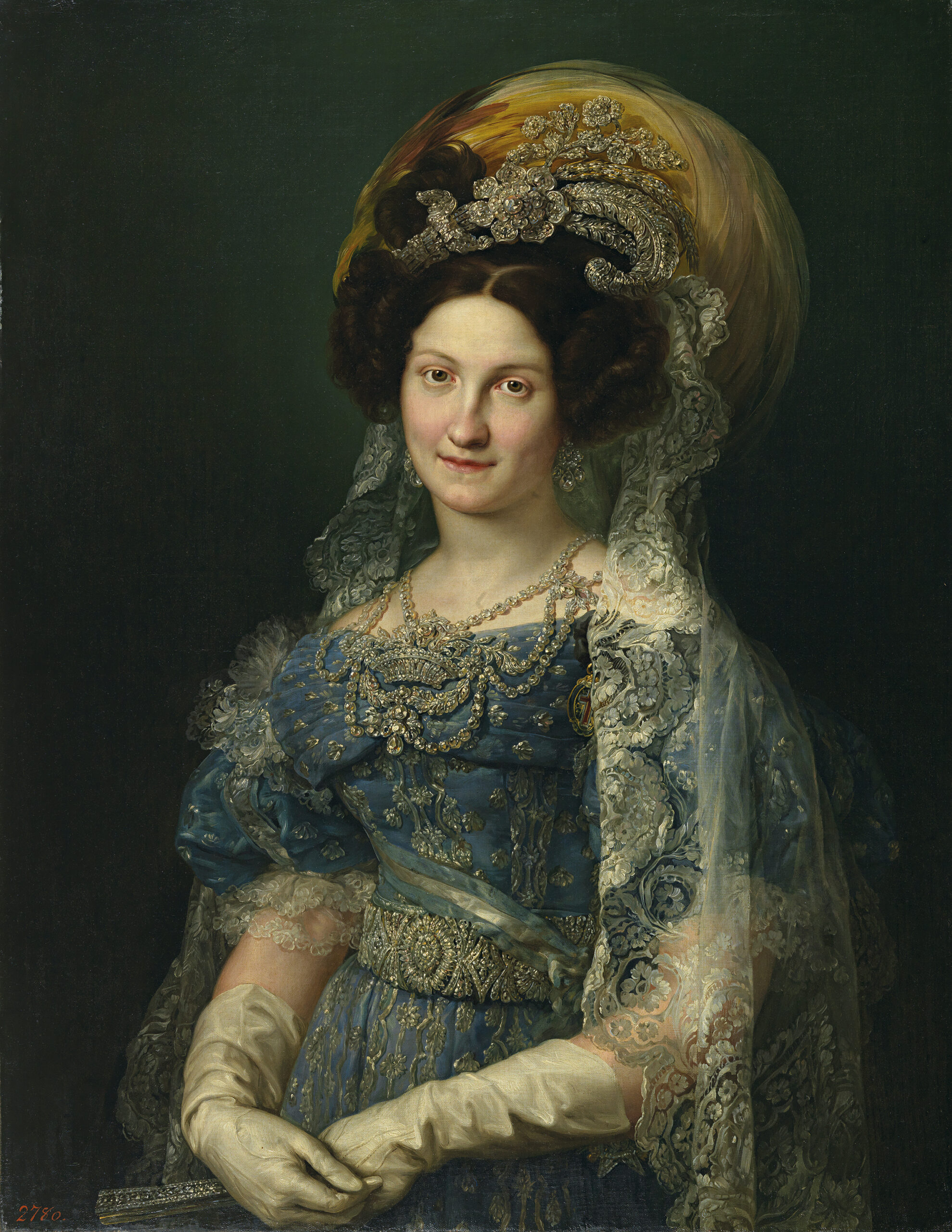
Maria Cristina delle Due Sicilie, born on April 27, 1806, in Palermo, Sicily, was a pivotal figure in European history during the 19th century. Her life was marked by political intrigue, dynastic struggles, and a deep commitment to securing her family’s legacy. As the daughter of Francesco I of the Two Sicilies and Maria Isabella of Spain, Maria Cristina was born into royalty, a status that would shape her life in significant ways. This article delves into the life of Maria Cristina, exploring her age, fame, and the highlights of her remarkable life, with a focus on the historical context and the nuances of her influence on European history.
Early Life and Royal Lineage
Maria Cristina was born into the House of Bourbon, one of the most influential royal families in Europe. Her father, Francesco I, was the King of the Two Sicilies, a realm that encompassed the southern part of Italy and the island of Sicily. Her mother, Maria Isabella of Spain, was a member of the Spanish branch of the Bourbon family. This illustrious lineage connected Maria Cristina to many of the major royal families of Europe, placing her at the heart of the continent’s political and dynastic networks.
Growing up in the royal courts of Naples and Palermo, Maria Cristina was surrounded by the opulence and complexity of European aristocracy. Her education was typical of a princess of her time, focusing on languages, religion, and the arts, preparing her for the roles she would later assume as a queen and regent.
Marriage to Ferdinand VII of Spain
In 1829, at the age of 23, Maria Cristina married her uncle, King Ferdinand VII of Spain, becoming his fourth wife. The marriage was politically motivated, designed to strengthen the ties between the Spanish and Neapolitan branches of the Bourbon family. Despite the considerable age difference between them, with Ferdinand being 20 years her senior, the union was crucial for the continuation of the Bourbon line in Spain.
Ferdinand VII had previously been married three times, but none of his previous wives had borne him a surviving heir. This made the production of an heir a matter of national importance, and Maria Cristina quickly became pregnant. However, a significant challenge loomed: the Salic law, which prohibited female succession to the Spanish throne.
The Pragmatic Sanction and the Birth of Isabella II
Understanding the gravity of the situation, Maria Cristina persuaded her husband to issue a Pragmatic Sanction in March 1830, which effectively abolished the Salic law in Spain. This legal maneuver allowed for the succession of a female heir, ensuring that their child, regardless of gender, would inherit the throne.
On October 10, 1830, Maria Cristina gave birth to a daughter, Isabella, who would later become Queen Isabella II of Spain. Two years later, she bore another daughter, Maria Luisa Fernanda. With the birth of Isabella, the question of succession was momentarily settled, but it also set the stage for future conflicts that would engulf Spain in civil war.
Regency and the Carlist Wars
Ferdinand VII died on September 29, 1833, leaving his three-year-old daughter, Isabella, as his heir. Maria Cristina was appointed regent for her young daughter, a position that placed her at the center of Spanish politics during a tumultuous period. Her regency was immediately challenged by her brother-in-law, Don Carlos, who claimed the throne based on the pre-Pragmatic Sanction laws. This dispute ignited the First Carlist War, a conflict that would shape Spanish politics for decades.
Maria Cristina aligned herself with the liberal factions in Spain, who supported her daughter’s claim to the throne. In doing so, she positioned herself as a key figure in the liberal movement, promising constitutional reforms in exchange for their support. This alliance between the regent and the liberals led to the formation of the “Cristinos,” a political faction opposed to the “Carlists,” who supported Don Carlos.
The Carlist Wars were brutal and divisive, with fighting spreading across the country. Despite the challenges, Maria Cristina’s forces, supported by the loyalist army, managed to suppress the Carlist uprising, culminating in the Truce of Vergara in August 1839. This victory secured Isabella II’s position on the throne and solidified Maria Cristina’s power as regent.
Shifts in Power and Exile
Maria Cristina’s alliance with the liberals was, however, short-lived. Once the threat from the Carlists had been neutralized, she began to distance herself from her former allies, displaying increasingly absolutist tendencies. This shift alienated many of her supporters and led to growing opposition within Spain.
The situation came to a head in 1840 when General Baldomero Espartero, a prominent liberal military leader, forced Maria Cristina to resign from the regency. Faced with little choice, she fled to France, where she sought refuge. Espartero assumed the regency, and Maria Cristina’s influence in Spain was significantly diminished.
Despite her forced exile, Maria Cristina continued to play a significant role in Spanish politics from afar. In 1843, she orchestrated the marriage of her daughter, Queen Isabella II, to her cousin Francisco de Asís de Borbón. At the same time, she arranged the marriage of her younger daughter, Maria Luisa Fernanda, to Antoine d’Orléans, Duke of Montpensier, son of King Louis-Philippe of France. These marriages were strategic, designed to strengthen the Bourbon family’s hold on the Spanish throne.
Final Years and Legacy
Maria Cristina’s later years were marked by continued turbulence. In 1854, she was forced to leave Spain once again due to the O’Donnell revolt, a military uprising led by General Leopoldo O’Donnell against the government. She returned to France, where she lived until her death in Le Havre on August 22, 1878, at the age of 72.
Maria Cristina’s life was a reflection of the complex and often treacherous world of 19th-century European politics. Her efforts to secure her daughter’s succession and her role in the Carlist Wars left a lasting impact on Spain’s political landscape. However, her later years were characterized by a decline in influence, as her absolutist tendencies and political miscalculations led to her eventual exile.
Despite these challenges, Maria Cristina’s legacy endures, particularly through her daughter, Queen Isabella II, who ruled Spain for 35 years. Maria Cristina’s actions as regent helped shape the future of the Spanish monarchy and the broader political dynamics of Europe during a critical period.
Historical Context and Impact
The life of Maria Cristina delle Due Sicilie must be understood within the broader context of 19th-century Europe, a time of significant political, social, and economic change. The Napoleonic Wars had reshaped the continent, leading to the rise of nationalism and the decline of absolute monarchies. The Bourbon family, to which Maria Cristina belonged, was at the center of these changes, struggling to maintain its influence in a rapidly evolving world.
Maria Cristina’s marriage to Ferdinand VII and her subsequent role as regent placed her at the heart of these transformations. Her efforts to navigate the complex political landscape of Spain, particularly during the Carlist Wars, were indicative of the challenges faced by monarchs and regents during this period. The conflict between the Carlists and Cristinos was not merely a dynastic struggle; it was also a battle over the future of Spain, with broader implications for the stability of Europe.
The Pragmatic Sanction, which allowed for the succession of Isabella II, was a turning point in Spanish history, representing a shift towards constitutionalism and away from the rigid, male-dominated succession laws that had previously governed European monarchies. Maria Cristina’s role in securing this change demonstrated her political acumen and her commitment to ensuring her daughter’s place on the throne.
However, her subsequent actions, particularly her move towards absolutism and her alienation of the liberal factions, reveal the complexities of her character. Maria Cristina was a pragmatic and often ruthless political operator, willing to shift alliances and adapt her strategies to maintain power. This adaptability was both her greatest strength and her eventual downfall, as it led to her estrangement from the very forces that had initially supported her.
Conclusion
Maria Cristina delle Due Sicilie was a remarkable figure whose life was intertwined with some of the most significant events in 19th-century European history. As a queen consort, regent, and mother of a queen, she played a crucial role in the dynastic and political struggles that shaped the future of Spain and its monarchy.
Her legacy is one of both triumph and tragedy, marked by her successful efforts to secure her daughter’s succession but also by her eventual fall from power and exile. Maria Cristina’s story is a testament to the challenges faced by women in positions of power during this period, as well as the complexities of navigating the shifting political landscape of 19th-century Europe.
In the end, Maria Cristina’s life reflects the broader themes of ambition, power, and the often-fraught relationship between monarchy and the evolving demands of modern governance. Her influence on Spanish history, particularly through the legacy of her daughter, Queen Isabella II, continues to be felt today, making her a figure of enduring interest and significance in European history.


