
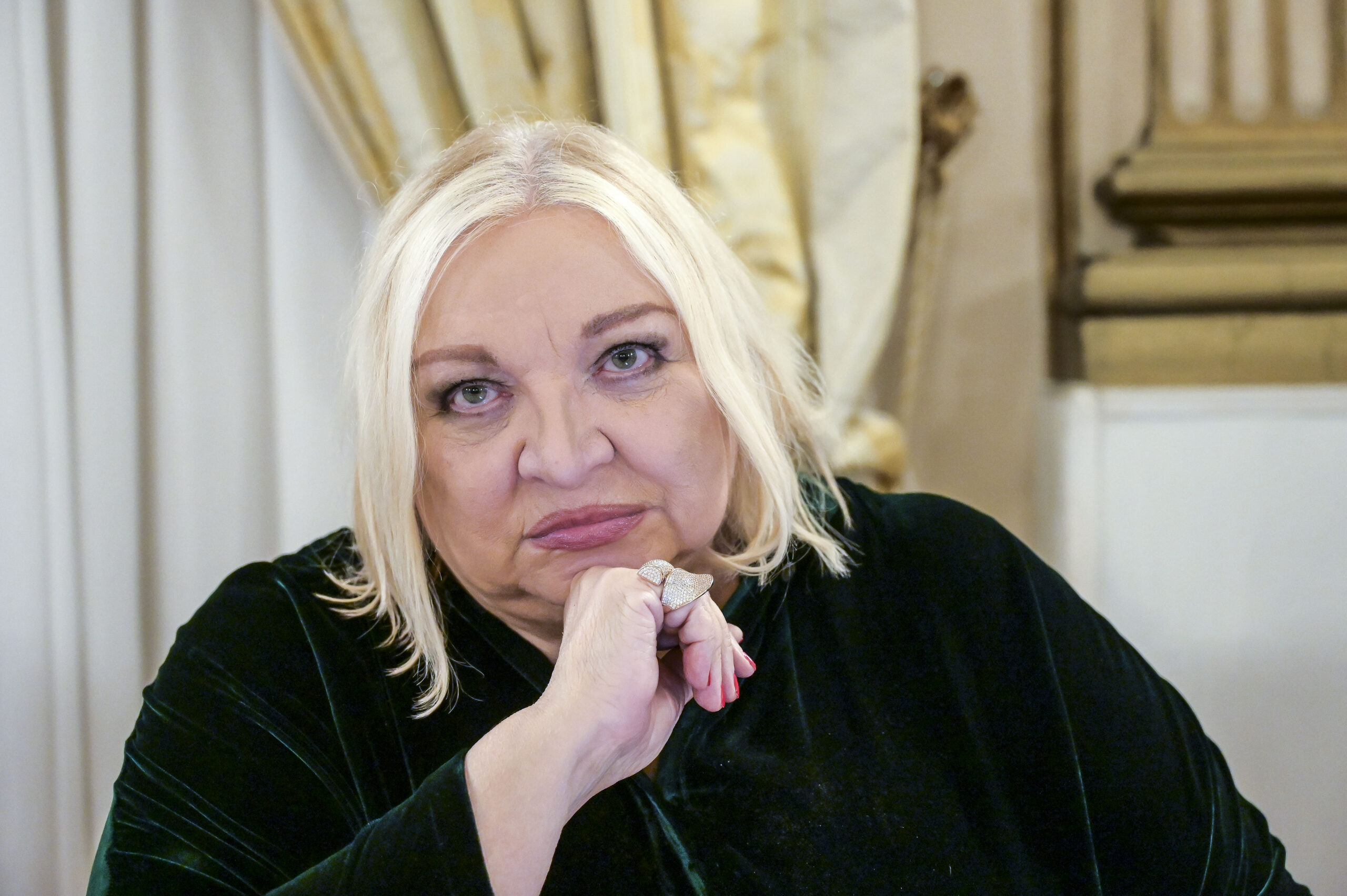
Maria Giovanna Maglie, born on August 3, 1952, in Venice, Italy, was a prominent Italian journalist, writer, and television commentator known for her bold opinions and controversial views. With a career spanning several decades, Maglie was a significant figure in Italian journalism, admired by many for her sharp intellect and fearless commentary while equally criticized for her outspoken nature and controversial stances. This article explores the life, age, fame, and career highlights of Maria Giovanna Maglie, delving into her impact on Italian journalism and public discourse.
Early Life and Career Beginnings
Maria Giovanna Maglie was born in Venice to a Venetian mother and a Pugliese father. She spent her early childhood in Venice, a city known for its rich cultural heritage, before moving to Rome at the age of ten with her family. Growing up in Rome, Maglie developed a keen interest in journalism and current affairs from a young age. She was driven by a passion for storytelling and a desire to explore the world of politics and international relations.
After completing her higher education, Maglie pursued a career in journalism. She began her professional journey with L’Unità, a national newspaper closely associated with the Italian Communist Party (PCI). Maglie joined the publication in 1979 and quickly established herself as a dedicated journalist with a focus on political and international reporting. Her early work at L’Unità involved covering various social issues across Latin America, where she spent significant time as a correspondent, gaining firsthand experience in reporting from conflict zones and politically volatile environments.
Transition to RAI and Rise to Prominence
Maria Giovanna Maglie’s career took a significant turn in the late 1980s. Despite her initial alignment with L’Unità and the PCI, she began to experience ideological differences with the party, particularly as its influence over editorial decisions at the newspaper became more pronounced. These growing divergences led Maglie to seek new opportunities, culminating in her departure from L’Unità in 1987.
Her career trajectory shifted dramatically when she joined RAI, Italy’s public broadcasting company, in 1989. This move was facilitated by Bettino Craxi, a leading figure in the Italian Socialist Party (PSI) at the time. Craxi’s support helped Maglie secure a position at RAI, where she joined the prestigious journalistic team. Her tenure at RAI allowed her to reach a broader audience and significantly raised her profile within Italian media.
During the early 1990s, Maglie gained widespread recognition for her coverage of the Gulf War. As a correspondent for TG2, one of RAI’s main news programs, she reported live from the conflict, delivering in-depth analysis and frontline updates. Her reporting style, characterized by its assertiveness and clarity, resonated with viewers and established her as a respected journalist. Her work during the Gulf War led to a promotion, and she was assigned as a correspondent based in the United States from 1990 to 1993. This role further solidified her reputation as a leading figure in international journalism.
Controversies and Legal Issues
Maria Giovanna Maglie’s career was not without controversy. Her time at RAI, while professionally rewarding, was also marked by significant challenges. In the early 1990s, she became embroiled in a scandal involving alleged financial misconduct related to inflated expense claims for her overseas assignments. The allegations led to a legal investigation and intense media scrutiny, casting a shadow over her career.
Despite the controversy, the legal proceedings concluded relatively quickly in 1994, with the case being dismissed due to a lack of evidence of fraudulent activity. However, the episode did not pass without consequence, as it led to her voluntary resignation from RAI. The scandal and subsequent departure from the network marked a turning point in her career, as she shifted her focus away from television journalism to writing and commentary.
A New Direction: Writing and Commentary
Following her departure from RAI, Maglie redirected her energy towards writing and established herself as a prolific essayist and commentator. She began contributing to several Italian newspapers and magazines across the political spectrum, including Il Giornale, Il Foglio, and Libero. Her articles often touched on themes of politics, international relations, and social issues, reflecting her deep understanding of these topics and her ability to articulate complex ideas in a compelling manner.
In addition to her work as a columnist, Maglie authored several books that explored various aspects of global and Italian politics. Her writings often included a critical analysis of contemporary issues, reflecting her independent and often contrarian views. One of her notable works was a biography of Oriana Fallaci, a similarly controversial figure in Italian journalism known for her confrontational style and provocative opinions. This biography allowed Maglie to explore themes of courage and defiance, traits she admired in Fallaci and embodied in her own career.
Return to Television and Advocacy for Populism
In 2011, Maria Giovanna Maglie returned to RAI in a new capacity as a collaborator on a documentary film project titled “Istanbul la Sublime.” This project marked a brief return to her roots in television journalism but also signaled a new phase in her career as a public commentator. Around this time, Maglie began to appear more frequently as a television pundit, offering her opinions on various political talk shows. Her outspoken style and willingness to engage in heated debates made her a popular guest on programs such as La vita in diretta (RAI 1), Non è l’arena (La7), L’isola dei famosi (RAI 2), and Stasera Italia (Rete 4).
Her television appearances often sparked controversy, as she was known for her sharp critiques and unfiltered commentary. In 2016, she was expelled from the Italian Order of Journalists due to non-payment of membership fees, which did not deter her from continuing her work. Instead, she embraced her outsider status, becoming even more vocal in her support for populist movements and figures.
Maglie was an early advocate for the populist wave that swept across Europe and the United States in the late 2010s. She publicly supported the Lega party under the leadership of Matteo Salvini in Italy and became an enthusiastic supporter of Donald Trump in the United States. Her endorsement of Trump was based on her belief in his outsider status and his ability to challenge the political establishment, a sentiment she frequently expressed in her television appearances and writings. She predicted Trump’s victory in the 2016 U.S. presidential election, citing his charisma and appeal as a “pop star” of politics.
Later Years and Literary Contributions
In the years leading up to her death, Maria Giovanna Maglie remained a prominent voice in Italian media, continuing to write and comment on current affairs. Between 2020 and 2021, she published three books with Piemme, a leading Italian publishing house. These works included “Il mostro cinese” (2020), which examined China’s role in global affairs, “Puttane. Il mestiere più antico del mondo ai tempi di internet e del Covid” (2020), which discussed the complexities of sex work in the modern age, and “I dannati del Covid” (2021), which provided a critical perspective on the global response to the COVID-19 pandemic.
These books showcased her ability to tackle diverse and often contentious topics with a unique blend of insight, provocation, and wit. They also reflected her ongoing commitment to exploring the nuances of contemporary political and social issues, even as she faced personal health challenges.
Death and Legacy
Maria Giovanna Maglie passed away on May 23, 2023, in Rome at the age of 70, following a series of surgeries. Her death marked the end of a remarkable career that spanned over four decades and left an indelible mark on Italian journalism and public discourse.
Maglie’s legacy is characterized by her fierce independence, her willingness to challenge the status quo, and her commitment to expressing her views without fear of controversy. She was a polarizing figure who inspired both admiration and criticism, but her impact on Italian media and politics is undeniable. Her career serves as a testament to the power of journalism to provoke thought, stir debate, and influence public opinion.
In conclusion, Maria Giovanna Maglie was a formidable presence in Italian journalism, known for her sharp intellect, fearless commentary, and controversial views. Her contributions to journalism, writing, and public discourse will be remembered as a reflection of her complex and often provocative personality, and her legacy will continue to be a subject of discussion and analysis for years to come.


