
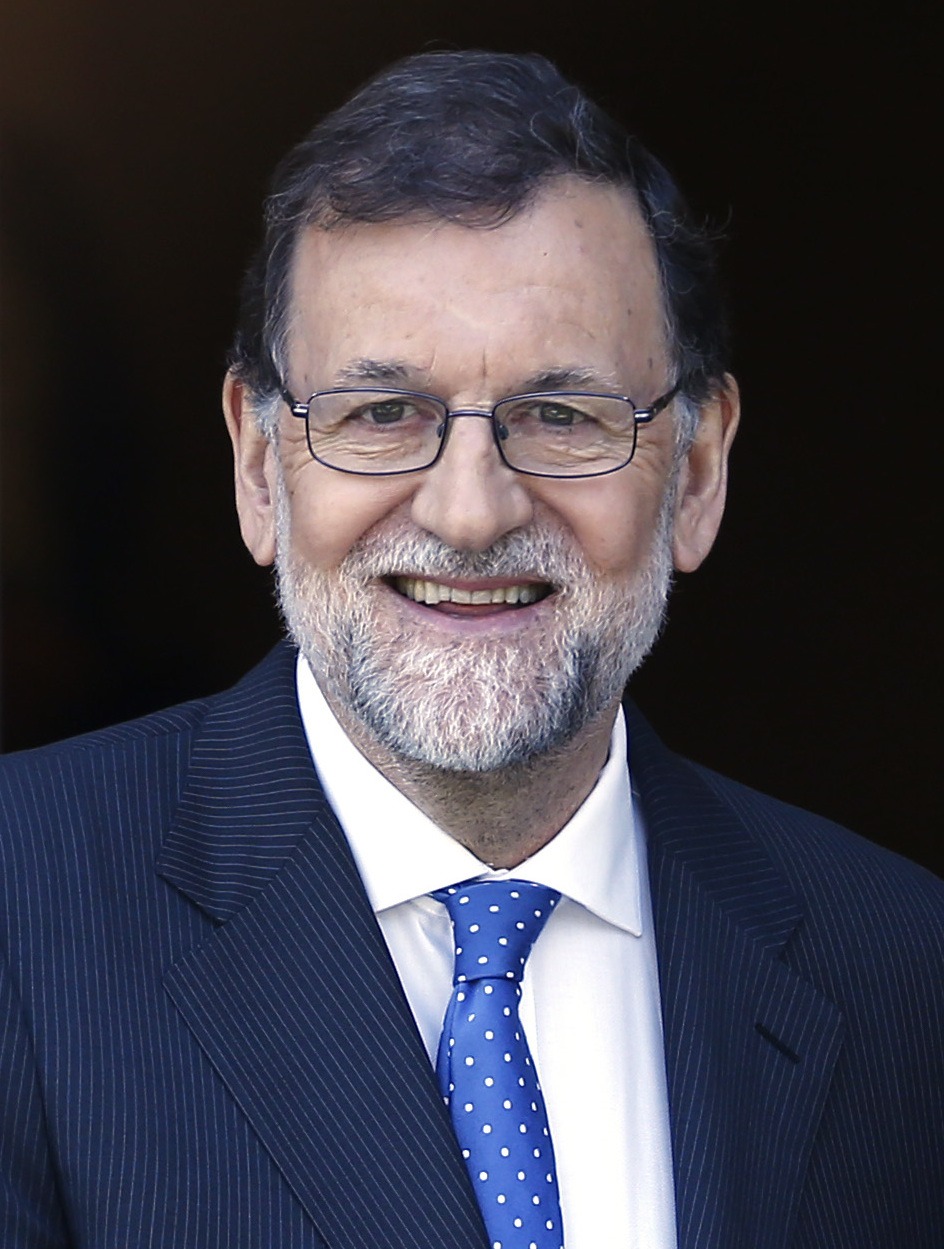
Mariano Rajoy Brey, born on March 27, 1955, in Santiago de Compostela, Spain, is a prominent Spanish politician who served as the Prime Minister of Spain from 2011 to 2018. His career has been marked by his leadership within the Spanish People’s Party (Partido Popular, PP), his role in navigating Spain through the financial crisis of the early 2010s, and his involvement in several political controversies. Rajoy’s journey in politics reflects the complexities and challenges of leading a modern European nation through turbulent times.
Early Life and Education
Mariano Rajoy was born into a politically engaged family in Santiago de Compostela, the capital of the autonomous community of Galicia in northwestern Spain. His father was a jurist and a president of the provincial government, which provided Rajoy with a deep understanding of the legal and political frameworks of Spain from an early age.
Rajoy pursued higher education in his hometown, attending the University of Santiago de Compostela, where he earned a law degree. This academic background in law would later become a cornerstone of his political career, informing his approach to governance and legal reform.
Entry into Politics: The Beginnings of a Long Career
Rajoy’s political career began in the late 1970s during Spain’s transition to democracy following the end of Francisco Franco’s dictatorship. He joined the Alianza Popular (AP), a conservative party that later evolved into the Partido Popular (PP), one of Spain’s major political forces. His early political roles were in the regional government of Galicia, where he was elected to the regional parliament in 1981. His work in Galicia helped him build a reputation as a diligent and effective politician.
In 1986, Rajoy was elected to the Spanish Congress of Deputies representing Pontevedra, a key milestone that marked the beginning of his national political career. However, he soon returned to regional politics, serving as the Vice President of the Galician government. His decision to focus on regional governance highlights his deep connection to his home region and his commitment to addressing local issues.
Rise to National Prominence
The 1990s were a pivotal decade for Rajoy, as he rose through the ranks of the Partido Popular. In 1990, under the leadership of José María Aznar, Rajoy was appointed as the party’s Deputy Secretary-General. This role placed him at the heart of the PP’s strategy and operations, preparing him for more significant responsibilities.
In 1996, when Aznar became Prime Minister of Spain, Rajoy was appointed Minister of Public Administration, where he was responsible for modernizing Spain’s bureaucracy. His tenure in this role was marked by efforts to streamline government operations and improve efficiency. This period was crucial in shaping Rajoy’s reputation as a pragmatic and methodical leader.
In 1999, Rajoy became Minister of Education and Culture, a position that allowed him to influence Spain’s educational policies. His time in this role was characterized by efforts to reform Spain’s education system, focusing on improving standards and accessibility. Rajoy’s work in education further solidified his standing within the PP and laid the groundwork for his future leadership roles.
The Path to Leadership: From Minister to Party Leader
By the early 2000s, Rajoy had established himself as a key figure within the PP, known for his loyalty to Aznar and his ability to navigate the complexities of Spanish politics. In 2000, Rajoy played a central role in the PP’s successful re-election campaign, which saw the party secure an absolute majority in the Spanish parliament. Following this victory, Aznar appointed Rajoy as First Deputy Prime Minister and Minister of the Presidency, one of the most powerful positions in the Spanish government.
Rajoy’s responsibilities during this period included coordinating government policy and overseeing the day-to-day operations of the Spanish executive branch. His leadership style, characterized by cautious pragmatism and a focus on consensus-building, earned him the trust of his colleagues and the broader Spanish electorate.
In 2003, as Aznar prepared to step down as Prime Minister, he endorsed Rajoy as his successor. This endorsement was a testament to Rajoy’s skills as a politician and his ability to manage the party’s affairs during a time of transition. Rajoy was elected as the Secretary-General of the PP and became the party’s candidate for the 2004 general elections.
The Challenges of Opposition: 2004-2011
The 2004 general elections were held in the shadow of the devastating Madrid train bombings on March 11, which had a profound impact on Spanish politics. The elections, held just days after the attacks, resulted in a surprise victory for the Spanish Socialist Workers’ Party (PSOE) and its leader, José Luis Rodríguez Zapatero. Rajoy, who had been widely expected to win, was defeated.
Despite this setback, Rajoy remained at the helm of the PP, leading the party through the next eight years in opposition. This period was marked by intense political battles with the PSOE, particularly over issues such as the Iraq War, economic policy, and social reforms. Rajoy’s opposition to Zapatero’s policies, especially his economic management, positioned him as a staunch defender of conservative values and fiscal responsibility.
Rajoy’s tenure as leader of the opposition was not without challenges. He faced internal dissent within the PP and criticism from some quarters of the Spanish media. However, he remained steadfast in his leadership, focusing on rebuilding the party and preparing for the next electoral challenge.
In the 2011 general elections, Spain was in the midst of a severe economic crisis, with high unemployment, a soaring public deficit, and widespread public discontent. Rajoy’s message of economic austerity, fiscal discipline, and structural reforms resonated with voters, leading to a decisive victory for the PP. Rajoy was sworn in as Prime Minister on December 21, 2011.
As Prime Minister, Rajoy’s primary focus was on steering Spain out of the financial crisis. His government implemented a series of austerity measures aimed at reducing the public deficit, restoring confidence in Spain’s economy, and avoiding a bailout from the European Union. These measures included significant cuts to public spending, tax increases, and labor market reforms.
While these policies were credited with stabilizing Spain’s economy and returning it to growth, they also led to widespread public protests and criticism from opposition parties. The social impact of the austerity measures, including rising unemployment and poverty, sparked debates about the human cost of economic reform.
Political Scandals and the Fall from Power
Rajoy’s second term as Prime Minister, following the 2016 general elections, was marred by political scandals and increasing political instability. The PP was implicated in several corruption scandals, most notably the Gürtel case, which involved allegations of illegal financing and bribery within the party. These scandals severely damaged the party’s reputation and eroded public trust in Rajoy’s leadership.
In October 2017, Rajoy faced one of the most significant challenges of his political career when the Catalan government, led by Carles Puigdemont, held an independence referendum that the Spanish government deemed illegal. Rajoy’s government responded by invoking Article 155 of the Spanish Constitution, which allowed the central government to take direct control of Catalonia. This move was controversial and deepened the political crisis in Spain.
By 2018, Rajoy’s position had become increasingly untenable. On June 1, 2018, he was ousted from office following a vote of no confidence in the Spanish parliament, brought about by the opposition in response to the corruption scandals. Rajoy’s departure marked the end of his long and eventful political career.
Legacy and Post-Political Life
Mariano Rajoy’s legacy is a complex one, shaped by his efforts to lead Spain through one of its most challenging economic periods and the controversies that surrounded his time in office. His supporters praise him for his steady leadership during the financial crisis and his commitment to preserving Spain’s unity in the face of separatist challenges. However, his critics argue that his policies exacerbated social inequalities and that his government was tainted by corruption.
Since leaving office, Rajoy has largely stayed out of the political spotlight, focusing on writing and speaking engagements. His memoirs and public appearances offer insights into his perspective on the key events of his political career and his views on the future of Spain.
Conclusion: A Life of Public Service
Mariano Rajoy’s career in politics spanned over four decades, during which he played a central role in shaping modern Spain. From his early days in regional politics to his time as Prime Minister, Rajoy’s journey reflects the challenges and responsibilities of political leadership in a democratic society. His legacy, while controversial, is an integral part of Spain’s recent history, offering lessons for future leaders about the complexities of governance, the importance of integrity, and the impact of political decisions on the lives of citizens.


