
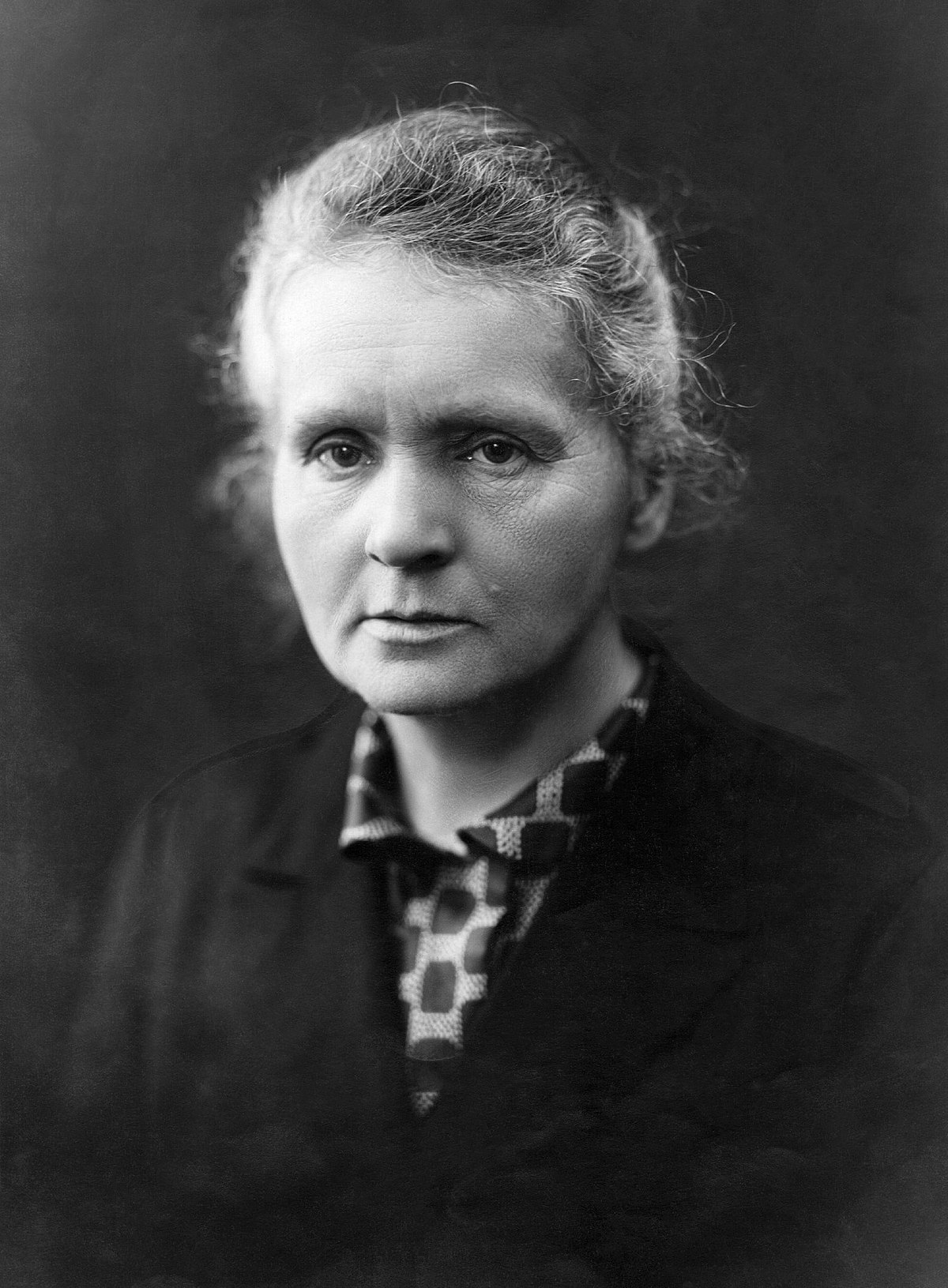
Marie Curie, born Maria Salomea Skłodowska on November 7, 1867, in Warsaw, Poland, is a name that resonates through the annals of science and history. Her groundbreaking discoveries in radioactivity earned her not only global recognition but also a legacy that transcends time. As a pioneering physicist and chemist, Marie Curie’s life is a testament to perseverance, intellectual brilliance, and an unyielding commitment to scientific exploration.
Early Life and Education
Marie Curie was born into a family that valued education and intellectual pursuit. Her father, Władysław Skłodowski, was a teacher of mathematics and physics, while her mother, Bronisława, was a pianist, singer, and schoolteacher. Growing up in Russian-occupied Poland, Curie faced numerous challenges, not the least of which was the restrictive environment that limited educational opportunities for women.
Despite these barriers, Curie was determined to pursue her education. After completing her secondary education at the age of 15, she worked as a governess and tutor to support herself and her sister Bronisława, who was studying medicine in Paris. The sisters had a pact: Marie would help fund Bronisława’s studies, and once Bronisława became a doctor, she would assist Marie in pursuing her own education.
In 1891, Marie moved to Paris to study at the Sorbonne, one of Europe’s most prestigious universities. At the Sorbonne, she excelled in her studies, earning degrees in physics and mathematics. It was here that she adopted the French version of her name, Marie, and began to lay the foundation for her future scientific achievements.
The Meeting of Minds: Marie and Pierre Curie
Marie Curie’s life took a significant turn when she met Pierre Curie, a French physicist, in 1894. Pierre was already an accomplished scientist, known for his work on crystallography and magnetism. The two shared a deep intellectual bond, and their mutual respect and admiration for each other’s work led to a partnership that would revolutionize the field of science.
The couple married in 1895 and began collaborating on research. They worked together in a makeshift laboratory, often under challenging conditions, but their shared passion for discovery drove them forward. In 1897, their first daughter, Irène, was born, followed by their second daughter, Ève, in 1904. Despite the demands of motherhood, Marie continued her research with unwavering determination.
Discovery of Radioactivity
Marie Curie’s most significant contributions to science began with her study of uranium, a project she undertook for her doctoral thesis. Building on the work of Henri Becquerel, who discovered that uranium emitted rays that could expose photographic plates, Curie sought to understand the nature of these emissions. She coined the term “radioactivity” to describe the phenomenon, a concept that would become central to her work.
Curie’s research led to the discovery of two new elements: polonium, named after her native Poland, and radium. The discovery of radium, in particular, was groundbreaking. It demonstrated that radioactivity was not just a property of uranium, as previously thought, but a phenomenon that could occur in other elements as well. This insight was crucial in advancing the understanding of atomic structure and paved the way for the development of nuclear physics.
The Curie’s work on radioactivity earned them international acclaim. In 1903, Marie Curie, along with Pierre Curie and Henri Becquerel, was awarded the Nobel Prize in Physics. This honor made Marie Curie the first woman to receive a Nobel Prize, a remarkable achievement in an era when women were often excluded from the scientific community.
Tragedy and Triumph
Tragedy struck the Curie family in 1906 when Pierre Curie was killed in a street accident in Paris. Marie was devastated by the loss of her husband and research partner. Despite her grief, she resolved to continue their work, taking over Pierre’s teaching position at the Sorbonne, making her the first woman to teach at the university.
Marie Curie’s resilience in the face of adversity was evident as she continued her research, eventually isolating pure radium metal. In 1911, she was awarded her second Nobel Prize, this time in Chemistry, for her work on the discovery of radium and polonium. This achievement made her the first and only person to win Nobel Prizes in two different scientific fields.
Contributions to World War I
During World War I, Marie Curie applied her scientific knowledge to the war effort. She recognized the potential of X-ray technology to assist in medical treatment on the battlefield. Curie developed mobile radiography units, known as “Little Curies,” which were used to provide X-ray services to wounded soldiers. With the help of her daughter Irène, she trained medical personnel in the use of these units and personally drove them to the front lines.
Curie’s work during the war not only saved countless lives but also further demonstrated her commitment to using science for the betterment of humanity. Her efforts earned her the recognition of the French government, which awarded her the Legion of Honour, France’s highest civilian distinction.
Legacy and Lasting Impact
Marie Curie’s contributions to science extended far beyond her own research. In 1914, she established the Radium Institute in Paris, which became a leading center for the study of radioactivity. The institute attracted some of the brightest minds in science, including future Nobel laureates. Curie’s legacy continued through her daughter Irène, who followed in her mother’s footsteps and won the Nobel Prize in Chemistry in 1935 for her work on artificial radioactivity.
Marie Curie’s approach to science was characterized by her dedication to rigorous research and her refusal to commercialize her discoveries. She and Pierre Curie chose not to patent the process of isolating radium, believing that scientific knowledge should be shared freely for the benefit of all. This selflessness reflected their belief in the greater good of humanity, a principle that guided Curie throughout her life.
Curie’s work also had a profound impact on the field of medicine. The use of radium in cancer treatment marked the beginning of radiation therapy, which remains a cornerstone of oncology today. Her discoveries also laid the groundwork for the development of nuclear energy, a field that has had far-reaching implications for both science and society.
The Final Years and Death
Marie Curie continued her research and teaching well into her later years, despite the toll that long-term exposure to radiation had taken on her health. She suffered from pernicious anemia, a condition that was likely caused by her exposure to radioactive materials. Curie passed away on July 4, 1934, at the age of 66, in a sanatorium in Sancellemoz, France.
Curie’s death was a great loss to the scientific community, but her legacy lives on through her contributions to science and the institutions she helped to establish. In 1995, her remains were interred in the Panthéon in Paris, making her the first woman to be honored in this way for her scientific achievements.
Historical Context and the Struggle for Recognition
Marie Curie’s journey was not only a scientific odyssey but also a battle against the societal norms of her time. The late 19th and early 20th centuries were marked by significant gender disparities, particularly in the field of science. Women were often denied access to higher education and were rarely acknowledged for their contributions to scientific research.
Curie’s achievements challenged these norms and opened the door for future generations of women in science. Her perseverance in the face of discrimination and her commitment to her work served as an inspiration to women around the world. Curie’s success demonstrated that gender should not be a barrier to scientific inquiry and that intellectual capability knows no gender.
Despite her accomplishments, Curie faced considerable opposition from her male colleagues. Her election to the French Academy of Sciences was blocked by conservative members who opposed the inclusion of women in the institution. This rejection only strengthened Curie’s resolve to continue her work and to prove her worth through her scientific contributions.
Curie’s legacy is also a reminder of the importance of collaboration and the exchange of ideas in scientific progress. Her work with Pierre Curie and other scientists of the time exemplifies the collaborative nature of scientific discovery. The Curies’ willingness to share their findings and to work with others in the pursuit of knowledge contributed to the rapid advancement of the field of radioactivity.
Conclusion
Marie Curie’s life is a testament to the power of perseverance, intellect, and a deep commitment to the pursuit of knowledge. Her contributions to science have had a lasting impact on the world, from the development of medical treatments to the advancement of nuclear physics. Curie’s legacy continues to inspire scientists, particularly women, to push the boundaries of what is possible and to challenge the status quo.
As we look back on Marie Curie’s life and achievements, we are reminded of the importance of dedication to the greater good. Curie’s decision to prioritize the dissemination of scientific knowledge over personal gain has left an indelible mark on the world, ensuring that her discoveries would benefit humanity for generations to come.
Marie Curie remains one of the most influential figures in the history of science, a pioneer who blazed a trail for future generations of scientists. Her life and work serve as a powerful reminder that with passion, determination, and a commitment to the truth, one can achieve greatness and leave a legacy that transcends time.


