
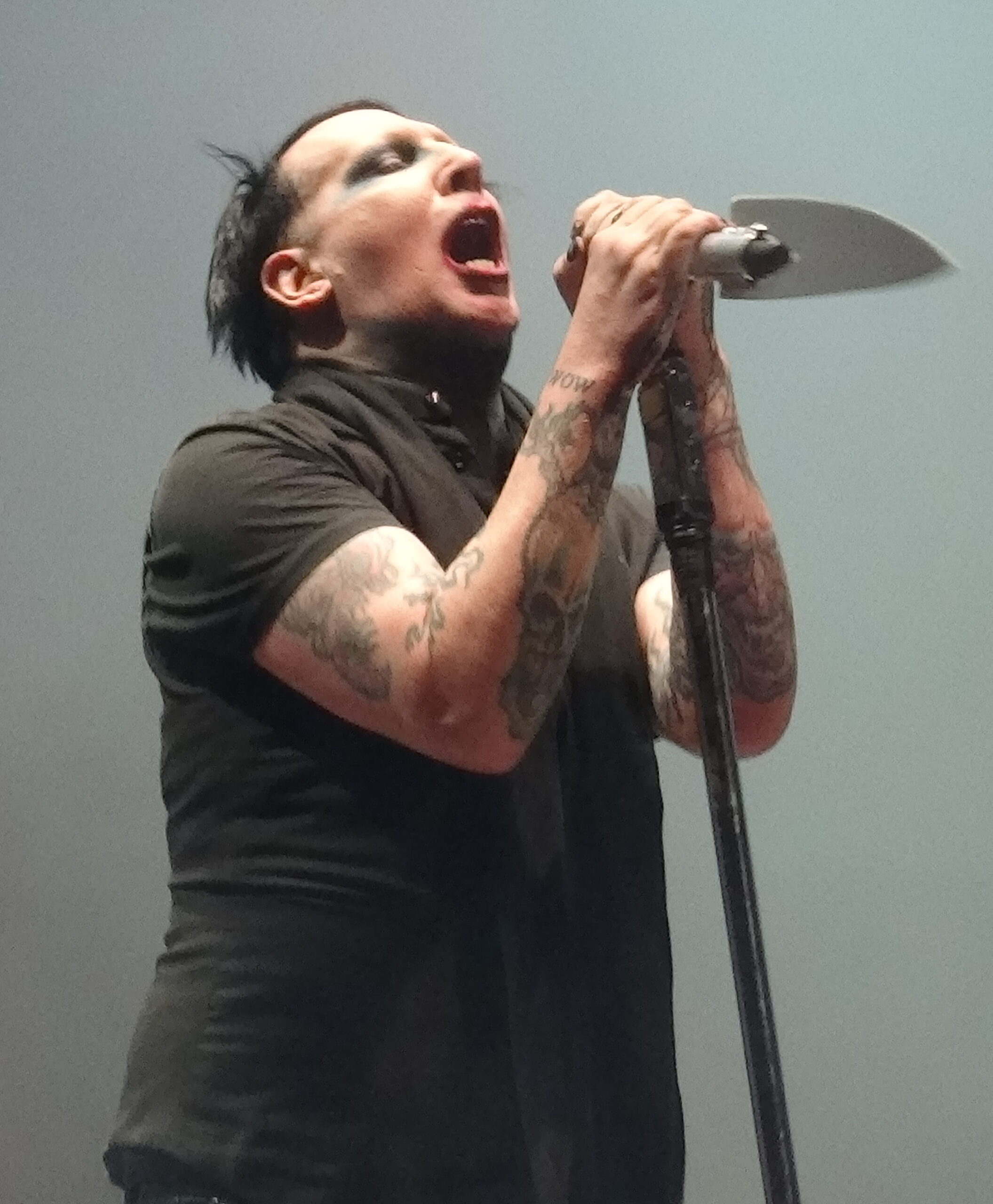
Marilyn Manson, born Brian Hugh Warner on January 5, 1969, in Canton, Ohio, is one of the most controversial and enigmatic figures in the world of rock music. His journey from a troubled childhood to becoming a global icon of shock rock is both fascinating and unsettling. Manson’s career has been marked by his provocative image, his theatrical performances, and his relentless challenge to societal norms. This article delves into the life of Marilyn Manson, exploring the factors that shaped his persona, his rise to fame, and the impact he has had on music and culture.
Early Life: The Making of a Controversial Figure
Brian Hugh Warner’s early life was far from ordinary. Born to Hugh Warner, a carpet salesman, and Barbara Warner, a nurse, Manson’s childhood was marred by a series of unsettling experiences that would later influence his art and public persona. Growing up in a modest home in Canton, Ohio, Brian was exposed to a mix of religious dogma and personal turmoil that shaped his views on life and society.
One of the most significant factors in his early life was his strained relationship with his father, who was often absent due to work and, when present, exhibited violent behavior. This tumultuous family environment left a lasting impression on young Brian. Additionally, his discovery of his grandfather’s disturbing sexual behavior added another layer of trauma to his already troubled upbringing. These experiences planted the seeds for the dark and controversial themes that would later define his music and stage persona.
Brian’s early education at Heritage Christian School, an institution known for its strict religious teachings, also played a crucial role in shaping his rebellious attitude. The school’s dogmatic approach to Christianity, combined with the teachers’ obsession with the presence of the devil in popular culture, led to Brian developing a deep-seated aversion to religious indoctrination. This environment, where fear and guilt were used as tools of control, contributed to his later rejection of traditional values and his embrace of the macabre.
Brian’s experiences at Heritage Christian School were far from positive. He was subjected to fear-mongering tactics, such as being forced to listen to rock music played backward to reveal supposed satanic messages. This environment of paranoia and religious zealotry left Brian feeling alienated and resentful. His attempts to escape this oppressive atmosphere, including trying to get expelled by distributing forbidden materials, only fueled his desire to rebel against authority and societal norms.
The Birth of Marilyn Manson: A New Persona
In the early 1990s, Brian Warner began to transform himself into the persona that would make him famous. Adopting the stage name “Marilyn Manson,” a combination of the names of actress Marilyn Monroe and cult leader Charles Manson, Brian crafted a persona that embodied the duality of beauty and horror, fame and infamy. This juxtaposition of iconic figures symbolized the extremes of American culture and the blurred lines between good and evil.
Manson’s early forays into music began with his band, “Marilyn Manson & The Spooky Kids.” The band’s lineup changed several times before settling into its definitive form, which included members such as Daisy Berkowitz on guitar, Gidget Gein on bass, and Madonna Wayne Gacy (alias Pogo) on keyboards. The band quickly gained attention in Florida’s underground music scene with their provocative performances and self-produced cassettes, including titles like “Meat Beat Cleaver Beat” and “The Family Jams.”
The choice of the name “Marilyn Manson” was not just for shock value; it was a statement about the contradictory nature of fame and notoriety. In Manson’s own words, “I watched a lot of talk shows on TV, and I was struck by how they managed to juxtapose serial killers with Hollywood stars, putting both on the same scandalous level.” This insight into the American media’s obsession with sensationalism became a central theme in Manson’s work, as he sought to expose the dark underbelly of celebrity culture.
Manson’s early music was heavily influenced by the industrial sound of bands like Nine Inch Nails, with whom he would later collaborate. His debut album, “Portrait of an American Family,” produced by Trent Reznor, was released in 1994 and marked the beginning of Manson’s rise to fame. The album’s dark themes and raw sound resonated with a generation disillusioned by the status quo, and Manson quickly became a symbol of rebellion and nonconformity.
Rise to Fame: The Shock Rocker Takes Center Stage
Marilyn Manson’s rise to fame was characterized by his ability to provoke and challenge societal norms. His second album, “Antichrist Superstar” (1996), catapulted him into the spotlight and solidified his status as a shock rocker. The album, which was a commercial and critical success, featured a fusion of heavy metal, industrial music, and controversial lyrics that explored themes of nihilism, corruption, and rebellion.
“Antichrist Superstar” was more than just an album; it was a manifesto for a generation of disaffected youth. The title itself was a direct challenge to religious institutions, and the album’s content was filled with imagery that shocked and outraged conservative America. Songs like “The Beautiful People” became anthems for those who felt alienated by mainstream culture, and Manson’s theatrical live performances, complete with elaborate costumes and provocative imagery, only added to his notoriety.
The album’s success was not without controversy. Manson’s confrontational style and unapologetic embrace of taboo subjects made him a target for politicians, religious groups, and concerned parents. His concerts were frequently picketed by protesters, and there were numerous attempts to ban his performances in various cities across the United States. Despite (or perhaps because of) this backlash, Manson’s popularity continued to grow, and he became a cultural icon for those who rejected conventional values.
Manson’s influence extended beyond music; he became a symbol of the counterculture movement of the 1990s. His image was everywhere, from magazine covers to television interviews, and he used his platform to challenge societal norms and push the boundaries of what was considered acceptable in popular culture. His autobiographical book, “The Long Hard Road Out of Hell,” published in 1998, provided further insight into his life and the motivations behind his controversial persona.
Controversies and Cultural Impact
Marilyn Manson’s career has been marked by a series of controversies that have only added to his mystique. Perhaps the most infamous of these was the accusation that his music influenced the Columbine High School shooters, an allegation that Manson has vehemently denied. Despite the lack of evidence linking Manson to the tragedy, the incident sparked a nationwide debate about the impact of violent and provocative media on youth culture.
The Columbine controversy highlighted the fear and misunderstanding that surrounded Manson’s work. While his detractors accused him of glorifying violence and promoting anti-social behavior, Manson defended his art as a reflection of the darker aspects of human nature. In interviews, he argued that his music was a mirror held up to society, exposing its hypocrisies and failures.
In the wake of the Columbine massacre, Manson faced intense scrutiny from the media, politicians, and religious leaders. He was labeled a scapegoat for the tragic events, and many sought to blame his music for inciting violence. Manson, however, refused to back down. In a powerful essay published in Rolling Stone magazine, he addressed the controversy head-on, questioning the role of the media and society in creating a culture of fear and violence.
Despite the controversy, Manson’s career continued to thrive. His next albums, “Mechanical Animals” (1998) and “Holy Wood (In the Shadow of the Valley of Death)” (2000), further explored themes of alienation, fame, and the corrupting influence of power. These albums, while less overtly shocking than “Antichrist Superstar,” continued to challenge societal norms and provoke discussion.
Manson’s cultural impact extended beyond his music. He became a symbol of the clash between conservative values and the emerging counterculture of the late 1990s and early 2000s. His persona, with its androgynous appearance and provocative stage antics, challenged traditional notions of gender, sexuality, and morality. Manson’s willingness to confront taboo subjects head-on made him a polarizing figure, but also an influential one.
Evolution and Artistic Legacy
As the 2000s progressed, Marilyn Manson continued to evolve as an artist. His 2003 album “The Golden Age of Grotesque” marked a shift in his music, drawing inspiration from the decadence of 1930s Berlin and the works of the Marquis de Sade. This period also saw Manson exploring other artistic avenues, including painting and filmmaking. His work during this time reflected a more mature, introspective approach, while still maintaining the dark, provocative edge that had defined his earlier career.
Manson’s personal life also became a subject of public fascination. His marriage to burlesque performer Dita Von Teese in 2005 garnered significant media attention, as did their subsequent divorce in 2007. Manson’s relationships and personal struggles were often fodder for tabloids, but he remained unapologetic about his lifestyle choices, embracing his role as the ultimate outsider.
In 2007, Manson released “Eat Me, Drink Me,” an album that reflected the emotional turmoil he experienced during his divorce. The album’s more personal and introspective tone was a departure from the grandiose themes of his earlier work, but it resonated with fans who had followed his career for over a decade. The album’s lead single, “Heart-Shaped Glasses,” showcased a more vulnerable side of Manson, while still retaining the dark, gothic aesthetic for which he was known.
Manson’s influence on the music industry and popular culture is undeniable. He paved the way for a new generation of artists who embraced the theatrical and provocative aspects of performance. His willingness to challenge societal norms and push the boundaries of what was considered acceptable in mainstream culture set him apart from his peers. Manson’s legacy is not just in his music, but in his ability to provoke thought, spark debate, and inspire a generation of fans and artists.
Conclusion: The Enduring Legacy of Marilyn Manson
Marilyn Manson is more than just a musician; he is a cultural phenomenon. His journey from Brian Warner, a troubled youth in Ohio, to Marilyn Manson, the self-proclaimed “Antichrist Superstar,” is a story of transformation, rebellion, and defiance. Manson’s ability to shock, provoke, and challenge societal norms has made him a polarizing figure, but also an enduring one.
Manson’s legacy is one of contradiction and complexity. He is both a product of and a reaction to the culture that created him. His music, with its dark themes and confrontational style, is a reflection of the darker aspects of human nature, but it is also a critique of the very society that condemns him. Manson’s ability to hold up a mirror to society and force it to confront its own fears and hypocrisies is what makes him a truly unique and influential artist.
As Manson continues to evolve as an artist, his impact on music and culture remains profound. He has influenced a generation of musicians, artists, and fans who see in him a kindred spirit, someone who refuses to conform to societal expectations. Marilyn Manson’s story is one of survival, defiance, and the enduring power of art to challenge and provoke.


