
Introduction
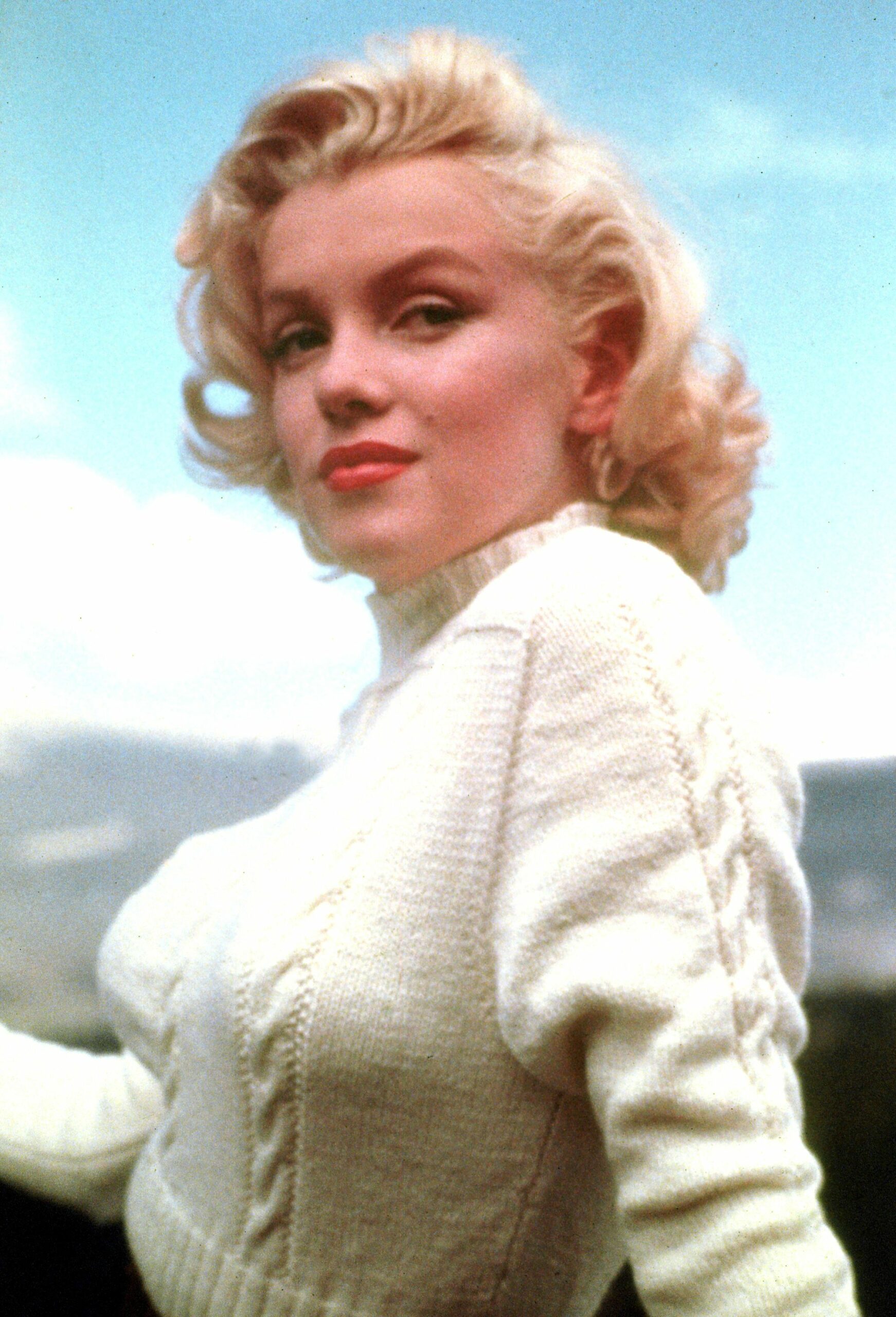
Marilyn Monroe, born Norma Jeane Baker Mortenson on June 1, 1926, in Los Angeles, California, is a name that resonates with glamour, fame, and tragedy. A cultural icon of the 20th century, Monroe’s life was marked by a meteoric rise to fame, a tumultuous personal life, and an untimely death that continues to be shrouded in mystery. As one of Hollywood’s most enduring legends, Marilyn Monroe’s story is one of beauty, talent, vulnerability, and the relentless pursuit of love and acceptance. This article delves into the age, fame, and life highlights of Marilyn Monroe, exploring her journey from a troubled childhood to becoming the ultimate symbol of Hollywood’s Golden Age.
Early Life and Struggles
Marilyn Monroe was born into a world of uncertainty. Her mother, Gladys Pearl Baker, struggled with severe mental health issues, leading to frequent hospitalizations. As a result, young Norma Jeane spent much of her childhood in foster homes and orphanages, deprived of a stable and loving environment. This early life of abandonment and neglect would leave deep emotional scars, contributing to the insecurity and vulnerability that would later define Monroe’s adult life.
At the age of 16, in an attempt to escape her difficult circumstances, Norma Jeane married James Dougherty, a 21-year-old factory worker. The marriage, however, was short-lived, and they divorced four years later. This early union was more a means of survival than a romantic partnership, reflecting Monroe’s desperate need for stability in a world that had offered her little.
Entry into Modeling and the Birth of Marilyn Monroe
Marilyn Monroe’s entry into the world of modeling and, subsequently, Hollywood was a stroke of fate. While working in a munitions factory during World War II, she was discovered by photographer David Conover, who was tasked with capturing images of women contributing to the war effort. Struck by her photogenic beauty, Conover encouraged her to pursue a career in modeling. This was the turning point in Norma Jeane’s life, setting her on a path to fame.
Under the guidance of photographer André de Dienes, Norma Jeane began to gain attention as a model, gracing the covers of numerous magazines. Recognizing the potential for stardom, she decided to reinvent herself. She dyed her hair blonde and adopted the stage name “Marilyn Monroe,” borrowing her mother’s maiden name, Monroe. This transformation was not just physical; it marked the beginning of her journey toward becoming the quintessential Hollywood star.
Rise to Stardom: Marilyn Monroe and Hollywood
Marilyn Monroe’s early years in Hollywood were marked by small, often uncredited roles in films such as “Ladies of the Chorus” (1949) and “Love Happy” (1949), the latter featuring the Marx Brothers. However, it was her role in “The Asphalt Jungle” (1950) and “All About Eve” (1950) that began to establish her as a promising actress. Her sultry appearance and undeniable screen presence captivated audiences, and Hollywood began to take notice.
The year 1952 was a pivotal one for Monroe. She secured her first leading role in the film “Don’t Bother to Knock,” where she played a mentally unstable babysitter. Her performance demonstrated her range as an actress, moving beyond the stereotype of the “dumb blonde” and showcasing her ability to portray complex, psychologically nuanced characters.
In 1953, Marilyn Monroe achieved global fame with the release of “Niagara,” where she starred alongside Joseph Cotten. The film’s success solidified her status as a sex symbol, a title that was further cemented with her roles in “Gentlemen Prefer Blondes” (1953) and “How to Marry a Millionaire” (1953). These films showcased Monroe’s comedic talent and her ability to command the screen, making her one of the most sought-after actresses in Hollywood.
Iconic Roles and Cultural Impact
Marilyn Monroe’s impact on popular culture cannot be overstated. Her portrayal of the “dumb blonde” archetype, particularly in films like “Gentlemen Prefer Blondes,” where she sang the iconic “Diamonds Are a Girl’s Best Friend,” became a defining image of femininity in the 1950s. However, Monroe was far from being a one-dimensional actress. Her comedic timing, combined with her vulnerability, allowed her to create characters that were both captivating and relatable.
One of Monroe’s most memorable performances came in 1955 with the release of “The Seven Year Itch,” directed by Billy Wilder. The film featured the famous scene where Monroe stands over a subway grate, her white dress billowing as a train passes below. This image has since become one of the most iconic in cinematic history, symbolizing Monroe’s blend of innocence and sensuality.
Despite her success, Monroe was deeply unhappy with the typecasting that limited her to roles emphasizing her physical appeal. In 1955, seeking to prove herself as a serious actress, she moved to New York City to study at the Actors Studio under the legendary Lee Strasberg. This decision marked a turning point in her career, as she began to take on more challenging and dramatic roles.
Marriages and Personal Turmoil
Marilyn Monroe’s personal life was as tumultuous as her career was successful. Her marriages to Joe DiMaggio, the legendary New York Yankees baseball player, and Arthur Miller, the celebrated playwright, were highly publicized and ultimately ended in divorce.
Monroe’s marriage to Joe DiMaggio in 1954 was a union of two American icons. However, the marriage was short-lived, lasting only nine months. The couple’s relationship was strained by DiMaggio’s jealousy and Monroe’s burgeoning career. Despite their divorce, DiMaggio remained devoted to Monroe, famously sending roses to her grave for 20 years after her death.
Monroe’s marriage to Arthur Miller in 1956 was an attempt to find stability and intellectual fulfillment. Miller, known for his plays such as “Death of a Salesman” and “The Crucible,” represented a different world from the glitz and glamour of Hollywood. Monroe, eager to be taken seriously as an actress and a person, found solace in Miller’s intellectualism. However, the marriage was fraught with difficulties, including Monroe’s growing dependence on drugs and alcohol, and the couple divorced in 1961.
Decline and Tragic End
The final years of Marilyn Monroe’s life were marked by personal and professional turmoil. Despite winning a Golden Globe for Best Actress in 1960 for her role in “Some Like It Hot,” her emotional instability and substance abuse began to take a toll on her career. She was frequently late to film sets, and her erratic behavior made her increasingly difficult to work with.
Monroe’s final completed film was “The Misfits” (1961), written by Arthur Miller specifically for her. The film, which also starred Clark Gable and Montgomery Clift, was a critical and commercial disappointment. It was during the filming of “The Misfits” that Monroe’s marriage to Miller began to unravel, leading to their divorce shortly after the film’s release.
In 1962, Monroe began work on the film “Something’s Got to Give,” but her increasingly erratic behavior led to her being fired from the production. On August 5, 1962, Marilyn Monroe was found dead in her Los Angeles home from an overdose of barbiturates. She was only 36 years old.
The circumstances surrounding Monroe’s death have been the subject of intense speculation and conspiracy theories, with some suggesting that she was murdered due to her alleged relationships with President John F. Kennedy and his brother, Robert Kennedy. However, the official cause of death was ruled as a probable suicide.
Legacy and Enduring Influence
Marilyn Monroe’s death marked the end of an era, but her legacy has only grown in the decades since. She remains an enduring symbol of beauty, glamour, and the tragic consequences of fame. Monroe’s image continues to be celebrated in popular culture, and her influence can be seen in the work of countless artists, designers, and performers.
Monroe’s vulnerability and her struggle to find love and acceptance resonate with people across generations. She has been the subject of numerous biographies, documentaries, and films, each attempting to unravel the complexities of her life and the reasons behind her enduring appeal.
In 1999, a dress worn by Monroe in her famous performance of “Happy Birthday, Mr. President” to John F. Kennedy was sold at auction for over $1 million, underscoring the ongoing fascination with her life and career. Monroe’s films continue to be celebrated, and her performances remain a testament to her talent and charisma.
Historical Context and Cultural Significance
To fully appreciate Marilyn Monroe’s impact, it is important to consider the historical and cultural context of her life. Monroe rose to fame in post-war America, a time when the country was experiencing rapid economic growth and cultural change. The 1950s and early 1960s were marked by a fascination with consumerism, celebrity culture, and the idealization of femininity.
Monroe’s image as a glamorous yet vulnerable woman perfectly encapsulated the contradictions of this era. She was both an object of desire and a symbol of the unattainable ideal, embodying the pressures placed on women to conform to certain standards of beauty and behavior.
Monroe’s struggles with mental health, substance abuse, and her quest for identity in a male-dominated industry highlight the darker side of fame. Her life story serves as a cautionary tale about the dangers of the Hollywood machine and the personal toll that stardom can take.
Conclusion
Marilyn Monroe’s life was a complex tapestry of triumphs and tragedies. From her troubled beginnings to her rise as one of Hollywood’s most iconic figures, Monroe’s story is a testament to the power of resilience and the enduring allure of fame. Despite her untimely death, Monroe’s legacy lives on, continuing to captivate audiences around the world. Her image remains a symbol of the Golden Age of Hollywood, and her life serves as a poignant reminder of the human cost of stardom.


