
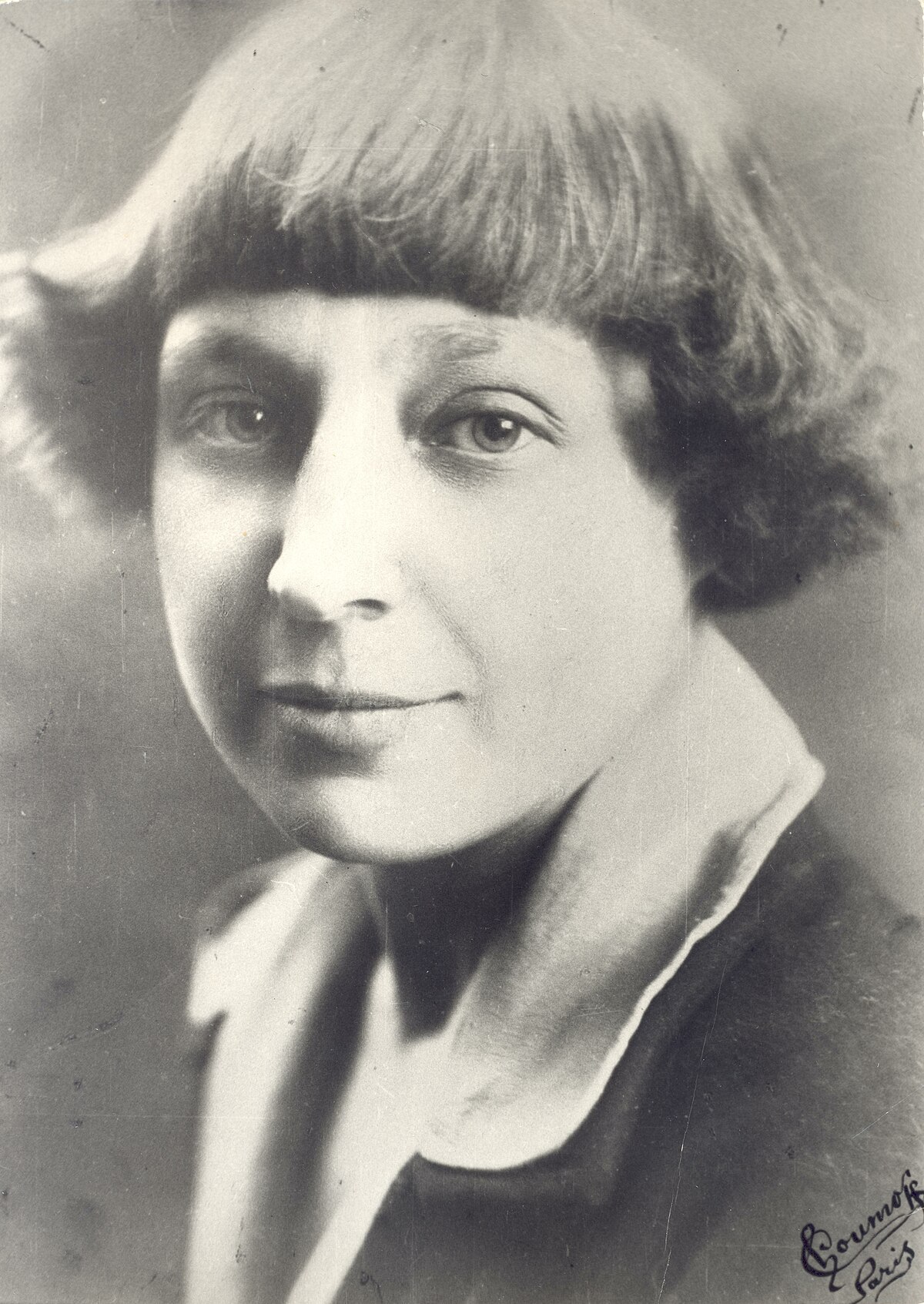
Marina Ivanovna Cvetaeva stands as one of the most powerful and tragic figures in Russian literature. Born on October 8, 1892, in Moscow, Cvetaeva’s life was marked by immense creative output, personal struggles, and a tumultuous historical context that ultimately led to her untimely death. This article delves into her life, her contributions to literature, and the profound impact she left on the world of poetry.
Early Life and Family Background
Marina Cvetaeva was born into a culturally rich and intellectually stimulating environment. Her father, Ivan Vladimirovic Cvetaev, was a renowned philologist and art historian, and her mother, Marija Mejn, was a talented pianist of Polish descent. The cultural wealth of her upbringing, combined with the artistic inclinations of her parents, had a profound influence on Cvetaeva’s development as a poet.
Cvetaeva began writing poetry at the tender age of six, showing an early propensity for the art form. Her childhood was spent in the company of her younger sister, Anastasia (affectionately known as Asja), and her half-siblings, Valerija and Andrej, from her father’s previous marriage. Despite the nurturing environment, her early years were also marked by upheaval, as the family frequently traveled due to her mother’s struggle with tuberculosis. These travels exposed Cvetaeva to different cultures, as she attended private institutions in Switzerland and Germany before eventually returning to Moscow in 1906.
Education and Literary Beginnings
Cvetaeva’s formal education was eclectic and varied. After returning to Moscow, she enrolled in a local gymnasium but soon revealed a fiercely independent and rebellious character. She preferred to immerse herself in intense private readings rather than conform to the structured academic curriculum. Her literary influences included the works of Pushkin, Goethe, Heine, Hölderlin, Dumas, and Rostand, among others. These early readings laid the foundation for her poetic voice, which would later be recognized for its intensity and originality.
In 1909, Cvetaeva moved to Paris to study French literature at the Sorbonne. This period was pivotal in her development as a poet, as it exposed her to the rich literary traditions of Europe. In 1910, at just 18 years old, she published her first collection of poems, Album serale (Evening Album), which included works she had written between the ages of 15 and 17. The collection, despite being self-published in a limited edition, attracted the attention of prominent Russian poets such as Nikolai Gumilev, Valery Bryusov, and Maximilian Voloshin.
Voloshin, in particular, played a crucial role in introducing Cvetaeva to the literary circles of Moscow. Through him, she became acquainted with the Musaget publishing house and other influential literary figures of the time. In 1911, Cvetaeva visited Voloshin’s famous house in Koktebel, Crimea, which served as a hub for Russian writers and artists. It was here that she met Sergei Efron, a young aspiring writer who would later become her husband.
Marriage and Personal Life
Cvetaeva’s marriage to Sergei Efron was a defining event in her life. The couple met in Koktebel in 1911, and Cvetaeva quickly decided that she would never part from him. They married shortly thereafter, despite the opposition of Cvetaeva’s father. Their marriage was marked by both deep affection and significant challenges, particularly as the political landscape of Russia became increasingly volatile.
In 1912, the couple welcomed their first child, a daughter named Ariadna (Alja). During this period, Cvetaeva published her second poetry collection, Lanterna magica (Magic Lantern), followed by Da due libri (From Two Books) in 1913. Her early work was characterized by its exploration of personal and emotional themes, often reflecting her inner turmoil and the complexities of her relationship with Efron.
As World War I erupted, Efron enlisted as a volunteer in the White Army, fighting against the Bolsheviks during the Russian Civil War. This period of separation was incredibly difficult for Cvetaeva, who was left alone in Moscow with their two young daughters. The war years were marked by extreme hardship, including severe food shortages and political repression. In 1917, Cvetaeva gave birth to their second daughter, Irina, amidst the chaos of the February Revolution and the subsequent Bolshevik takeover.
Tragic Losses and Emigration
The post-revolutionary period was one of the most challenging times in Cvetaeva’s life. Separated from her husband for five years, she struggled to provide for her daughters in a city devastated by civil war and famine. Tragically, in 1920, Cvetaeva was forced to place her younger daughter, Irina, in an orphanage due to extreme poverty. Irina died shortly thereafter from malnutrition, a loss that haunted Cvetaeva for the rest of her life.
In 1922, after reestablishing contact with Efron, who had fled to the West, Cvetaeva and her remaining daughter emigrated to Berlin and then to Prague, where they were reunited with him. The family’s time in Prague was relatively stable, and Cvetaeva experienced a period of renewed creative energy. During these years, she published several significant works, including the poetry collection Versti I (Verses I) in 1922, which was well-received in both Russia and abroad.
However, the family’s move to Paris in 1925 marked the beginning of a long and painful period of isolation for Cvetaeva. The Russian émigré community in Paris was deeply divided, and Cvetaeva found herself increasingly marginalized due to her husband’s involvement with Soviet intelligence. Efron’s work with the Soviet secret police (GPU) and his alleged participation in political assassinations, such as that of Trotsky’s son, deeply troubled Cvetaeva, although she claimed to be unaware of the full extent of his activities.
Return to Soviet Russia and Final Years
By the late 1930s, Cvetaeva’s situation in Paris had become untenable. Isolated and struggling with poverty, she decided to return to Soviet Russia in 1939, under pressure from her children, who longed to see their homeland. However, the return to Russia proved disastrous. The political climate had shifted dramatically, and Cvetaeva was viewed with suspicion as an émigré who had lived in the West. Her attempts to reestablish herself in the Soviet literary world were met with indifference, and she was unable to find stable work.
The situation worsened when her daughter, Ariadna, and her sister were both arrested and sent to the Gulag. Shortly thereafter, Efron was arrested and executed as a “traitor” and “enemy of the people.” These events plunged Cvetaeva into deep despair. She was left destitute, isolated, and emotionally shattered, living in a country that now considered her a pariah.
In 1941, as the German army invaded the Soviet Union, Cvetaeva was evacuated to the small town of Yelabuga in Tatarstan. Here, she faced unimaginable hardship, struggling to survive in a state of complete isolation. On August 31, 1941, in a moment of profound despair, Cvetaeva took her own life. She left behind a note, now lost to history, and was buried in an unmarked grave, her final resting place unknown.
Literary Legacy
Despite the tragic circumstances of her life, Marina Cvetaeva’s literary legacy is one of extraordinary significance. Her poetry is celebrated for its emotional intensity, linguistic innovation, and deep exploration of the human condition. Cvetaeva’s work spans a wide range of themes, including love, loss, exile, and the search for identity. Her voice is marked by a profound sense of individuality, defiance, and resilience, qualities that continue to resonate with readers today.
Cvetaeva’s influence extends beyond her own time, as she has become a symbol of the struggles faced by artists under oppressive regimes. Her ability to create beauty out of suffering, to articulate the pain of exile and the yearning for connection, has cemented her place as one of the greatest poets of the 20th century.
Conclusion
Marina Cvetaeva’s life and work are a testament to the power of poetry as a means of expression in the face of overwhelming adversity. Her journey, marked by both personal and historical tragedies, reflects the broader struggles of her generation. Yet, despite the immense challenges she faced, Cvetaeva’s poetry endures as a beacon of creative strength and emotional depth. Her story is one of profound human resilience, a reminder of the enduring power of art to transcend the darkest of times.


