
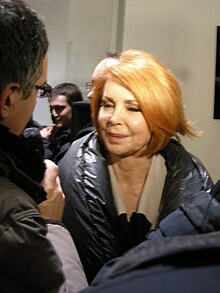
Marina Ripa di Meana, born Marina Elide Punturieri on October 21, 1941, in Reggio Calabria, Italy, was a multifaceted figure known for her flamboyant personality, her bold activism, and her deep involvement in the Italian cultural and social scene. Over the course of her life, she became a symbol of defiance, unconventionality, and relentless passion, leaving an indelible mark on Italian society. This article delves into the life, fame, and key highlights of Marina Ripa di Meana, offering a comprehensive look at her journey from a fashion icon to a celebrated author, activist, and media personality.
Early Life and Beginnings
Marina Ripa di Meana was born into a bourgeois family in Reggio Calabria, where she spent her early years. After completing her education in her hometown, she moved to Rome, where she began her career in fashion. Marina opened an atelier in Piazza di Spagna, one of Rome’s most prestigious locations, quickly establishing herself as a talented designer in the world of high fashion. Her work in the fashion industry was marked by an innate sense of style and a bold approach that set her apart from her contemporaries.
In 1961, Marina married Alessandro Lante della Rovere, a man from an ancient ducal family. The marriage produced a daughter, Lucrezia Lante della Rovere, who would go on to become a prominent actress in theater, cinema, and television. Despite the outward appearance of a successful union, the marriage eventually ended in divorce, a decision that would mark the beginning of Marina’s journey into a more unconventional and public life.
The 1970s: A Decade of Transformation
The 1970s were a period of significant transformation for Marina. During this time, she became involved in a tumultuous relationship with the Italian painter Franco Angeli, a figure associated with the Pop Art movement. This relationship, while passionate, was also marked by struggles with drug addiction, a subject Marina would later explore in her book Cocaina a colazione (“Cocaine for Breakfast”), published in 2005. In this memoir, Marina candidly discussed the lengths she went to support Angeli’s addiction, including prostituting herself to procure drugs for him.
This period was characterized by Marina’s increasing departure from her role as a conventional fashion designer and her emergence as a public figure who was unafraid to challenge societal norms. Her divorce from Alessandro Lante della Rovere did not sever her ties with the name, as she continued to use it in her professional endeavors. However, after legal battles, the court eventually prohibited her from using the Lante della Rovere name, a ruling that did little to diminish her public presence.
Literary Success and Public Image
Marina Ripa di Meana’s life took another turn when she embarked on a career as an author. She penned several books, many of which were autobiographical, detailing her experiences in the fashion world, her relationships, and her life in the spotlight. Her first major literary success came with the release of I miei primi quarant’anni (“My First Forty Years”), which became a bestseller. The book provided readers with a glimpse into her colorful and often controversial life, cementing her reputation as a woman who lived on her own terms.
The success of her autobiography led to the production of a film by the same name, directed by Carlo Vanzina in 1987. The movie, which became a cult classic in Italy, further enhanced Marina’s fame and solidified her status as a cultural icon. A second film, La più bella del reame (“The Fairest of the Realm”), directed by Cesare Ferrario in 1989, continued to explore her life, portraying her as a figure of beauty, power, and intrigue.
Activism and Advocacy
Beyond her work in fashion and literature, Marina Ripa di Meana was also a passionate activist, particularly in the fields of environmentalism and animal rights. In the late 1970s, she began appearing more frequently on Italian television as a commentator and opinion leader. Her appearances were marked by her strong, often controversial opinions, which she expressed with characteristic flair and eloquence. Marina’s activism was deeply intertwined with her personal beliefs, particularly her commitment to environmental conservation and the protection of animals.
In the 1990s, she became a prominent figure in Italy’s animal rights movement, leading campaigns against the slaughter of seal pups, the use of fur in fashion, bullfighting, and nuclear testing. Her dedication to these causes earned her the title of Ambassador in Italy for the International Fund for Animal Welfare (IFAW) in 1995. Marina was not content with merely lending her name to these causes; she actively participated in protests and public campaigns, often using her celebrity status to draw attention to issues that she believed were critical.
One of the most memorable moments in her activism career was when she posed nude for an anti-fur campaign. The image of Marina, bold and unashamed, became a powerful symbol of her commitment to animal rights and her willingness to use her body as a tool for advocacy. This act was in line with her lifelong dedication to challenging societal norms and using her influence to effect change.
The 2000s and Reality Television
As the new millennium dawned, Marina Ripa di Meana continued to evolve, taking on new challenges and exploring different facets of her public persona. In 2009, she participated in the reality television show La Fattoria (“The Farm”), hosted by Paola Perego. The show, which featured celebrities living and working on a farm, provided Marina with a platform to showcase her personality to a new generation of viewers. Her participation in La Fattoria was indicative of her ability to adapt to changing media landscapes while maintaining her distinct identity.
Marina’s involvement in television extended beyond reality shows. She made a guest appearance in an episode of the popular Italian television series I Cesaroni during its third season, playing herself. This appearance further solidified her status as a cultural icon who could effortlessly bridge the worlds of high society, media, and activism.
Later Years and Legacy
In her later years, Marina Ripa di Meana remained a prominent figure in Italian society, continuing to write, advocate for her causes, and appear on television. Despite battling cancer from 2002, she maintained an active public life until her passing on January 5, 2018, at the age of 76. Marina’s death marked the end of an era, but her legacy lives on through her contributions to fashion, literature, activism, and media.
Marina’s life was a testament to the power of individuality and the importance of living authentically. She was a woman who refused to be confined by societal expectations, choosing instead to chart her own path and embrace the complexities of her identity. Whether through her bold fashion statements, her candid writings, or her relentless activism, Marina Ripa di Meana made an indelible impact on Italian culture.
Conclusion
Marina Ripa di Meana’s story is one of defiance, creativity, and resilience. From her early days as a fashion designer in Rome to her rise as a celebrated author and activist, Marina consistently challenged the status quo and pushed the boundaries of what it meant to be a public figure in Italy. Her legacy is one of courage and conviction, qualities that defined her life and continue to inspire those who seek to make a difference in the world.
Marina’s life serves as a reminder that true fame is not just about being in the spotlight but about using that platform to advocate for what one believes in. Whether she was fighting for animal rights, writing about her personal experiences, or simply living her life on her own terms, Marina Ripa di Meana exemplified the power of authenticity and the enduring impact of a life lived with passion and purpose.


