
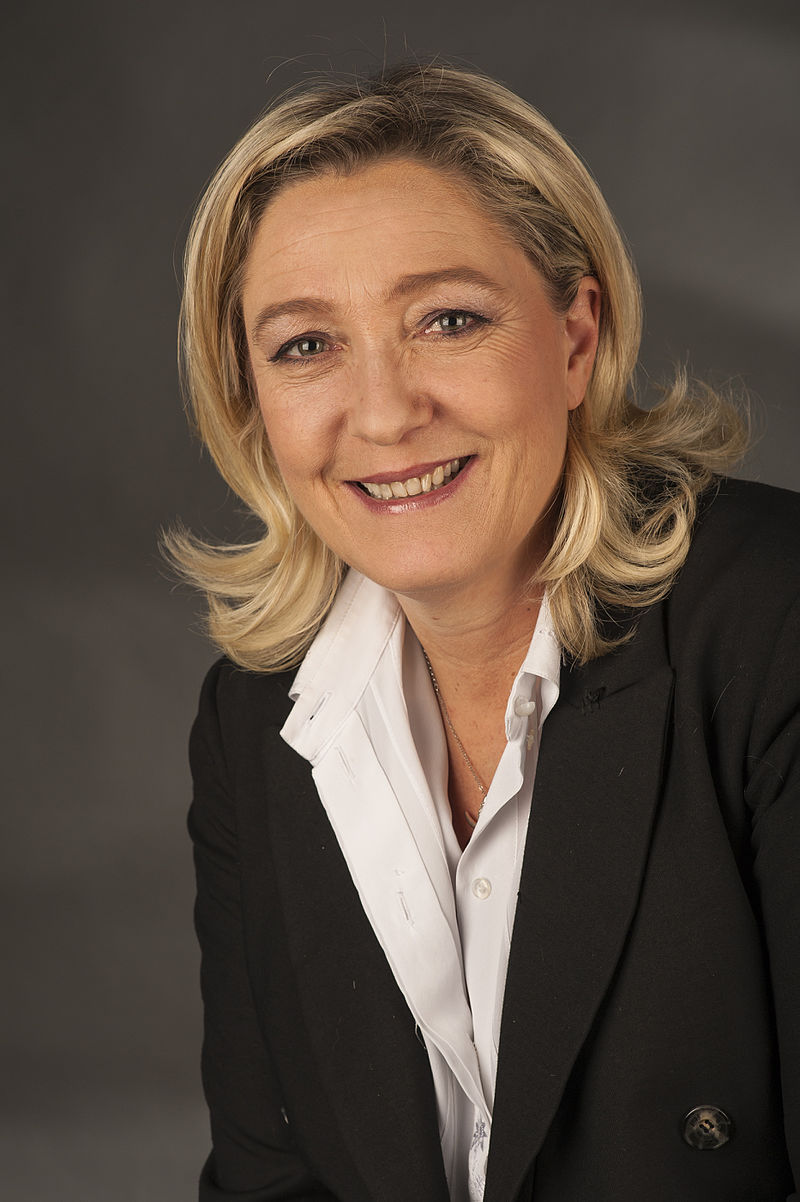
Marine Le Pen, born on August 5, 1968, in Neuilly-sur-Seine, France, is a prominent figure in contemporary French politics. As the youngest daughter of Jean-Marie Le Pen, the founder of the National Front (Front National), Marine Le Pen has played a crucial role in reshaping the political landscape of France. This article provides a comprehensive overview of Marine Le Pen’s life, from her early years and the challenges she faced growing up, to her rise to political prominence and the controversies that have marked her career.
Early Life and Family Background
Marine Le Pen was born into a politically charged environment. Her father, Jean-Marie Le Pen, was a well-known and polarizing figure in French politics, known for his nationalist and often controversial views. Marine’s upbringing was anything but ordinary, with her family’s political activities frequently making them targets of both public scrutiny and physical danger. In 1976, when Marine was just eight years old, her family survived an assassination attempt when a bomb exploded outside their apartment. Although no one was injured, the event left a lasting impact on Marine and her view of the world.
Marine’s childhood was marked by the public’s perception of her father, which often led to teasing and isolation at school. Despite these challenges, she pursued her education with determination. After completing her secondary education at Lycée Florent Schmitt in Saint-Cloud, Marine enrolled at Panthéon-Assas University, where she studied law. She graduated with a degree in law in 1991, and in the following year, she obtained a Diplôme d’études approfondies (DEA) in criminal law. Marine subsequently earned her certification as a lawyer (Certificat d’Aptitude à la Profession d’Avocat, CAPA) and began practicing law in Paris.
Early Career: From Law to Politics
Marine Le Pen’s legal career spanned six years, from 1992 to 1998, during which she represented a variety of clients, including undocumented immigrants. Her experience in the legal field provided her with a strong foundation in understanding the intricacies of French law and the justice system. However, as the daughter of one of France’s most controversial politicians, it was perhaps inevitable that Marine would eventually follow in her father’s footsteps.
In the late 1990s, Marine Le Pen began to take a more active role in the National Front (Front National, FN), the party her father founded. Her political career officially began in 1998 when she was elected as a regional councilor for Nord-Pas-de-Calais. Over the next few years, Marine’s influence within the party grew, and she was appointed as the president of the “Generations Le Pen” association, an organization aimed at promoting her father’s political ideals among the youth.
Rise to Prominence: Leadership of the National Front
Marine Le Pen’s rise within the National Front was marked by her strategic efforts to modernize and soften the party’s image. In 2003, she was appointed vice-president of the party, and she continued to build her political credentials by running for various political offices. In 2004, she was elected as a Member of the European Parliament (MEP) for the Île-de-France constituency, a position she would hold for several years.
Her leadership aspirations became more evident when she ran for the presidency of the Île-de-France region in 2004, where she garnered 12.3% of the vote, securing her position as a regional councilor. Marine Le Pen’s growing prominence within the party set the stage for her eventual bid to succeed her father as the leader of the National Front.
Leadership of the National Front: A New Era
Marine Le Pen’s official ascent to the leadership of the National Front came on January 16, 2011, when she was elected president of the party with nearly 68% of the vote, defeating her rival Bruno Gollnisch. This leadership change marked a significant turning point for the party, as Marine sought to distance the FN from its more extreme elements and reposition it as a viable political force capable of challenging the mainstream parties.
One of Marine Le Pen’s primary goals as leader was to rebrand the National Front as a more inclusive and modern party, while still maintaining its core nationalist and anti-immigration policies. She focused on issues such as France’s sovereignty, opposition to the European Union, and the perceived threat of Islamization in France. Her leadership style was characterized by a blend of populist rhetoric and a commitment to traditional French values, which resonated with a significant portion of the electorate.
Controversies and Legal Challenges
Marine Le Pen’s political career has not been without controversy. One of the most significant incidents occurred in December 2010, during her campaign for the leadership of the National Front. In a speech to party members in Lyon, Marine made a controversial comparison between the presence of Muslims praying in the streets of certain French cities and the Nazi occupation of France during World War II. This statement sparked outrage across the political spectrum and led to widespread condemnation in the media. The Imam of the Grand Mosque of Paris, Dalil Boubakeur, and other political figures criticized Le Pen’s remarks as inflammatory and divisive.
The controversy did not end there. In 2012, Marine Le Pen was placed under investigation by the Lyon prosecutor’s office for incitement to discrimination, violence, or hatred against a group of people based on their religion. This legal battle culminated in the French Ministry of Justice requesting the European Parliament to lift Le Pen’s parliamentary immunity in 2013, a request that was eventually granted.
Despite these legal challenges, Marine Le Pen continued to build her political base. In the 2012 French presidential election, she ran as the National Front’s candidate and achieved the party’s best-ever result in a presidential election, securing nearly 18% of the vote in the first round. Although she did not advance to the second round, her performance demonstrated the growing appeal of the National Front among French voters.
European Parliament and National Politics: A Growing Influence
Marine Le Pen’s success in the 2012 presidential election set the stage for the National Front’s continued rise in French politics. In the 2014 European Parliament elections, the party achieved a historic victory, winning over 25% of the vote and becoming the largest French party in the European Parliament. This result was a clear indication of the growing discontent among French voters with the traditional political parties and the European Union.
Le Pen’s leadership of the National Front also saw the party make significant gains in regional and local elections. Her ability to tap into the frustrations of ordinary French citizens, particularly on issues such as immigration, security, and national identity, helped to solidify her position as a major player in French politics.
The 2017 Presidential Election: A Major Challenge
The 2017 French presidential election was a critical moment in Marine Le Pen’s political career. As the National Front’s candidate, she ran a campaign focused on “France first” policies, calling for stricter immigration controls, a referendum on France’s membership in the European Union, and a crackdown on Islamic extremism. Her populist message resonated with a significant portion of the electorate, particularly in rural and economically depressed areas.
In the first round of the election, Marine Le Pen finished second with 21.3% of the vote, advancing to the runoff against centrist candidate Emmanuel Macron. The runoff election was a highly polarized contest, with Macron representing a pro-European, globalist agenda, while Le Pen advocated for nationalism and protectionism. In the end, Le Pen was defeated, receiving 33.9% of the vote to Macron’s 66.1%. While she did not win the presidency, her performance marked the strongest showing for the National Front in its history.
Rebranding the Party: The National Rally
Following the 2017 election, Marine Le Pen faced the challenge of rebuilding the National Front after its defeat. In 2018, she announced a major rebranding of the party, renaming it the National Rally (Rassemblement National, RN). This rebranding was part of her broader strategy to broaden the party’s appeal and distance it from the more controversial aspects of its past, including its association with her father.
The National Rally under Marine Le Pen’s leadership continued to focus on issues such as immigration, security, and French sovereignty, but with a more polished and mainstream image. This strategy paid off in the 2019 European Parliament elections, where the RN once again emerged as the largest French party, demonstrating its continued relevance in French politics.
Marine Le Pen Today: A Persistent Force in French Politics
As of today, Marine Le Pen remains one of the most influential figures in French politics. Her ability to connect with a broad base of voters, particularly those disillusioned with the traditional political establishment, has made her a formidable opponent in any election. With the next French presidential election on the horizon, Le Pen is once again positioning herself as a leading candidate, continuing to push her nationalist and populist agenda.
Her journey from the daughter of a controversial political figure to a major player in her own right is a testament to her political acumen and resilience. Despite the controversies and legal challenges she has faced, Marine Le Pen has managed to transform the National Front, now the National Rally, into a powerful force in French politics, with a lasting impact on the country’s political landscape.
Conclusion: The Legacy of Marine Le Pen
Marine Le Pen’s career has been marked by both significant achievements and persistent controversies. Her leadership of the National Front and its successor, the National Rally, has reshaped French politics, bringing issues such as immigration, national identity, and sovereignty to the forefront of political debate. While her views and rhetoric have often been divisive, there is no denying her influence on the direction of French politics in the 21st century.
As Marine Le Pen continues to play a key role in French politics, her legacy will be defined by her ability to challenge the status quo and offer an alternative vision for France’s future. Whether one agrees with her politics or not, Marine Le Pen’s impact on France and its political landscape is undeniable, making her one of the most important political figures of our time.


