
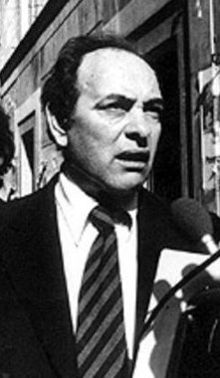
Mario Francese, an iconic figure in Italian journalism, is remembered as one of the most courageous and pioneering investigative reporters in the history of Sicily. Born on February 6, 1925, in Siracusa, Italy, Francese became a prominent voice in exposing the operations of the Sicilian Mafia, ultimately paying the ultimate price for his relentless pursuit of truth. His life, career, and tragic death at the hands of the Mafia in 1979, encapsulate a critical period in Italy’s struggle against organized crime.
Early Life and Path to Journalism
Mario Francese was born into a modest family in Siracusa, Sicily, the third of four children. His early years were marked by a keen interest in education and a desire to pursue a professional career. After completing his secondary education in his hometown, Francese moved to Palermo, the capital of Sicily, to live with an aunt while he continued his studies.
He enrolled at the University of Palermo, initially pursuing a degree in engineering. However, Francese soon found himself drawn to the world of journalism, a field where he believed he could make a real difference. To support himself financially while studying, he began working for ANSA, Italy’s leading news agency, as a telescriventista (telegraphist), where he first experienced the fast-paced and impactful nature of news reporting.
During the 1950s, Francese’s career in journalism began to take shape. He started contributing to La Sicilia, a regional newspaper, and eventually found a more stable position working for the regional government in Sicily. However, his passion for journalism never waned. In 1957, he took a significant step, leaving his secure government job to join the Giornale di Sicilia, one of Sicily’s most important newspapers. It was here that Francese would make his mark as a formidable investigative journalist.
Rise to Prominence in Investigative Journalism
By the late 1950s, Francese had become one of the most respected journalists at the Giornale di Sicilia, particularly noted for his coverage of crime and judicial matters. His reputation was built on his ability to connect seemingly unrelated events and his deep understanding of the complexities of Sicilian society. His work often involved dangerous investigations into the Mafia, which at that time was deeply entrenched in Sicilian life and politics.
In 1968, Francese achieved the status of a professional journalist, a milestone that further solidified his commitment to his craft. Over the next decade, he produced a series of groundbreaking reports that exposed the inner workings of the Mafia, particularly focusing on their infiltration into the construction industry and public contracts. His articles were not just reports; they were detailed analyses that often anticipated official investigations by law enforcement, highlighting Francese’s unique ability to foresee the Mafia’s moves.
One of his most notable works was his coverage of the Ciaculli massacre in 1963, a car bombing that marked a turning point in the Mafia wars of the 1960s. Francese’s reporting provided a clear picture of the power struggles within Cosa Nostra, the Sicilian Mafia, and the broader implications for Sicilian society. His interviews with key figures, including members of the Mafia, brought unprecedented insight into the criminal organization’s operations.
The Threat of the Mafia and Francese’s Assassination
Mario Francese’s investigative work made him a significant threat to the Mafia. He had an uncanny ability to piece together fragments of information, revealing the Mafia’s strategies long before they became evident to the authorities. This made him an enemy of the powerful Corleonesi clan, led by Totò Riina and Leoluca Bagarella, among others.
On January 26, 1979, after leaving the offices of the Giornale di Sicilia, Francese was ambushed and killed outside his home in Palermo. The murder was carried out by Leoluca Bagarella, a notorious Mafia hitman, acting on the orders of the Corleonesi leadership. Francese’s assassination marked the beginning of a dark period in Italian history known as the era of “excellent murders,” where the Mafia targeted high-profile figures, including politicians, judges, and journalists, who were seen as obstacles to their operations.
The killing of Mario Francese sent shockwaves through Italy. It was a clear message from the Mafia that they would stop at nothing to silence those who dared to challenge their authority. Francese’s death was not just a loss for journalism but for the broader fight against organized crime in Italy.
The Aftermath and Quest for Justice
Following Francese’s assassination, there was widespread outrage, but justice was slow in coming. Initial investigations into his murder were plagued by inertia and the pervasive influence of the Mafia within Sicily’s institutions. For years, the case languished without resolution, leading many to fear that Francese’s killers would escape punishment.
It was not until the persistent efforts of Francese’s family, particularly his son, Giuseppe Francese, that the case was reopened. Giuseppe, who had followed in his father’s footsteps to become a journalist, dedicated his life to seeking justice for his father’s murder. His relentless campaigning eventually led to a new investigation, which brought to light the full extent of the Mafia’s involvement in the killing.
In 2001, more than two decades after the murder, a landmark trial resulted in the conviction of several high-ranking Mafia bosses, including Totò Riina, Francesco Madonia, and Leoluca Bagarella, for their roles in Francese’s assassination. The court recognized that Francese’s work had made him a target because of his ability to expose the Mafia’s criminal plans, making him a “danger to the emerging Mafia” of the time.
The trial also highlighted the systemic failures that had allowed the Mafia to operate with impunity for so long, including the corruption and fear that permeated many levels of Sicilian society. The convictions were a significant victory, not just for Francese’s family, but for all those who had fought against the Mafia’s reign of terror.
Mario Francese’s Legacy
Mario Francese’s legacy is one of courage, integrity, and an unwavering commitment to the truth. He is remembered as a pioneering figure in investigative journalism, whose work laid the groundwork for future generations of journalists to continue the fight against organized crime. His reporting not only exposed the Mafia’s activities but also raised awareness of the broader social and economic issues that allowed the Mafia to thrive in Sicily.
Francese’s story is also a testament to the power of persistence and the importance of holding those in power accountable. His work demonstrated that journalism could be a powerful tool in the fight for justice, even in the face of overwhelming odds. Today, Mario Francese is regarded as a martyr for the cause of press freedom and the rule of law, not just in Italy, but around the world.
In 2002, the Italian state posthumously honored Mario Francese for his contributions to journalism and his role in the fight against the Mafia. His life and work continue to inspire journalists, particularly those covering organized crime and corruption, to pursue their work with the same dedication and fearlessness that he embodied.
The Historical Context and Impact on Sicilian Society
To fully understand Mario Francese’s significance, it is essential to place his life and work within the broader historical context of Sicily in the mid-20th century. During this period, Sicily was undergoing profound social and economic changes, many of which were driven by the rapid industrialization and urbanization that followed World War II.
These changes created new opportunities for the Mafia to expand its influence, particularly in the construction industry, which was booming due to post-war reconstruction efforts and government investment in infrastructure. The Mafia’s infiltration of this sector allowed them to accumulate vast wealth and power, which they used to further entrench themselves in Sicilian society.
At the same time, Sicily was also experiencing a growing awareness of the Mafia’s corrosive influence, thanks in part to the efforts of journalists like Mario Francese. His work helped to expose the connections between the Mafia, local politicians, and businesses, making it clear that the Mafia was not just a criminal organization but a deeply embedded part of the social and economic fabric of the island.
Francese’s reporting also coincided with a broader shift in public attitudes towards the Mafia. In the 1960s and 1970s, a new generation of Sicilians began to challenge the traditional culture of silence (omertà) that had long protected the Mafia from scrutiny. This period saw the emergence of a more assertive civil society, as well as a new wave of anti-Mafia activism that sought to break the Mafia’s hold on Sicily.
Conclusion
Mario Francese was more than just a journalist; he was a pioneer in the fight against organized crime in Sicily. His work as an investigative journalist not only brought to light the inner workings of the Mafia but also challenged the pervasive culture of fear and silence that allowed it to thrive. His assassination in 1979 was a tragic loss, but it also marked the beginning of a new phase in the battle against the Mafia, one that would eventually lead to significant victories for justice.
Francese’s legacy continues to inspire journalists and activists around the world. His life is a powerful reminder of the importance of courage, integrity, and the relentless pursuit of truth in the face of adversity. As we remember Mario Francese, we also honor the countless others who have followed in his footsteps, risking their lives to expose corruption and hold the powerful accountable.


