
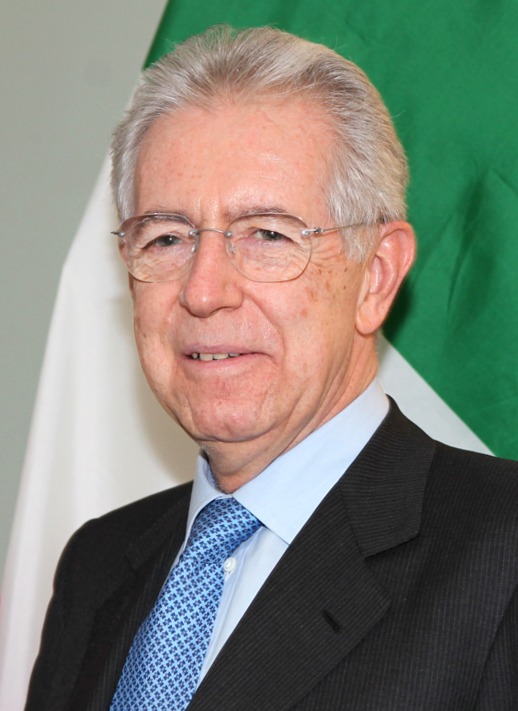
Mario Monti, born on March 19, 1943, in Varese, Italy, is a prominent economist and academician known for his significant contributions to European economic policy and governance. His journey from an academic scholar to a pivotal figure in European politics has been marked by a dedication to economic reforms, financial stability, and public service. This comprehensive exploration delves into Monti’s life, career, and the impact of his work, highlighting his rise to fame, the nuances of his economic philosophy, and his enduring legacy.
Early Life and Education
Mario Monti’s early life was characterized by a strong academic foundation, which later became the bedrock of his illustrious career. He pursued his studies in Economics at the prestigious Bocconi University in Milan, graduating in 1965. His academic prowess quickly earned him a position as an assistant at Bocconi, where he served for four years before securing a full professorship at the University of Trento. By 1970, Monti had moved to the University of Turin, further establishing his reputation as a leading economist.
In 1985, Monti returned to Bocconi University as a professor of Political Economy and the director of the Institute of Political Economy. His contributions to the field of economics were not confined to the classroom; Monti also assumed the presidency of Bocconi University in 1994, following the death of Giovanni Spadolini. Under his leadership, Bocconi University solidified its status as a premier institution for economic studies, producing generations of economists who would go on to shape global economic policy.
Career and Contributions to Economics
Mario Monti’s career is a testament to his deep understanding of economic theory and its practical applications in governance and policy-making. His work extended beyond academia into the realm of public service, where he made significant contributions to both Italian and European economic policy.
European Commission and Economic Reforms
Monti’s role as a member of the European Commission from 1995 to 1999 marked a turning point in his career. During this period, he was responsible for overseeing the internal market, financial services, customs, and taxation matters. Monti’s tenure at the European Commission was defined by his commitment to economic integration and the strengthening of the European single market.
As the European Commissioner for Competition from 1999, Monti played a crucial role in shaping the competition policies of the European Union. He was instrumental in enforcing antitrust laws, regulating mergers and acquisitions, and promoting fair competition across the EU. His work laid the groundwork for a more competitive and integrated European economy, ensuring that businesses operated on a level playing field.
One of Monti’s most notable achievements was his involvement in high-profile antitrust cases, including the historic cases against Microsoft and General Electric-Honeywell. These cases highlighted Monti’s determination to uphold the principles of competition and consumer protection, even in the face of powerful multinational corporations.
Academic Contributions and Publications
Beyond his public service, Monti has been a prolific writer and commentator on economic issues. He has authored numerous publications on monetary and financial economics, with a focus on the intricacies of the Italian banking system and the broader European financial landscape.
Some of his notable works include “Problemi di economia monetaria” (Problems of Monetary Economics) published in 1969, “Il sistema creditizio e finanziario italiano” (The Italian Credit and Financial System) in 1982, and “Autonomia della Banca centrale, inflazione e disavanzo pubblico: osservazioni sulla teoria e sul caso italiano” (Central Bank Autonomy, Inflation, and Public Deficit: Observations on Theory and the Italian Case) in 1991. These publications reflect Monti’s deep understanding of monetary policy, central banking, and the challenges facing the Italian economy.
Monti’s academic work has not only influenced the field of economics but has also informed his approach to policy-making. His ability to bridge the gap between theory and practice has made him a respected figure in both academic and policy circles.
Political Career and Legacy
Mario Monti’s transition from academia to politics was marked by his appointment as a Senator for life in November 2011 by the then President of Italy, Giorgio Napolitano. This appointment came at a critical juncture in Italian history, as the country grappled with a severe political, economic, and international crisis. Monti was tasked with leading Italy out of this crisis, succeeding Silvio Berlusconi as the Prime Minister.
The Monti Government: A Technocratic Leadership
Monti’s government, often referred to as a “technocratic” administration, was characterized by its focus on economic reforms and austerity measures. His tenure as Prime Minister was marked by a commitment to restoring fiscal discipline, reducing Italy’s public debt, and regaining the confidence of international markets.
One of Monti’s first acts as Prime Minister was to implement a series of austerity measures aimed at stabilizing Italy’s economy. These measures included tax increases, pension reforms, and cuts to public spending. While these policies were met with resistance from various quarters, Monti’s technocratic approach was seen as necessary to prevent a full-blown financial crisis in Italy.
Monti’s leadership was not without controversy. His austerity measures were criticized for their impact on the Italian populace, particularly the working class and pensioners. However, Monti defended his policies as essential for the long-term stability and sustainability of Italy’s economy.
European and International Impact
Monti’s influence extended beyond Italy’s borders. As a respected economist and former European Commissioner, Monti was seen as a key figure in European politics. His leadership during the eurozone crisis was instrumental in navigating the complexities of the European financial system and ensuring the stability of the euro.
Monti’s commitment to European integration and his advocacy for a stronger, more united Europe earned him recognition on the international stage. His work with institutions like the Aspen Institute and the Centre for European Policy Studies further solidified his reputation as a thought leader in global economic policy.
Age, Fame, and Life Highlights
As of 2024, Mario Monti is 81 years old, and his contributions to economics and politics continue to be celebrated. His fame is not just a result of his political career but also his enduring impact on European economic policy and his role as an educator and mentor to future generations of economists.
Monti’s life is a testament to the power of intellect, dedication, and public service. From his early days as an academic to his role as a statesman, Monti has consistently demonstrated a commitment to the principles of economic stability, competition, and integration. His legacy is one of intellectual rigor, ethical leadership, and a deep commitment to the public good.
Conclusion: Mario Monti’s Enduring Legacy
Mario Monti’s life and career offer valuable insights into the intersection of economics and politics. His contributions to European economic policy, his leadership during times of crisis, and his commitment to public service have left an indelible mark on both Italy and Europe.
As we reflect on Monti’s life, it is clear that his legacy will continue to influence economic thought and policy for years to come. His ability to navigate complex economic challenges with a steady hand and a clear vision is a testament to his intellect and character. In an era where economic stability and sound governance are more important than ever, Mario Monti’s life serves as an inspiration to future generations of leaders and economists.


