
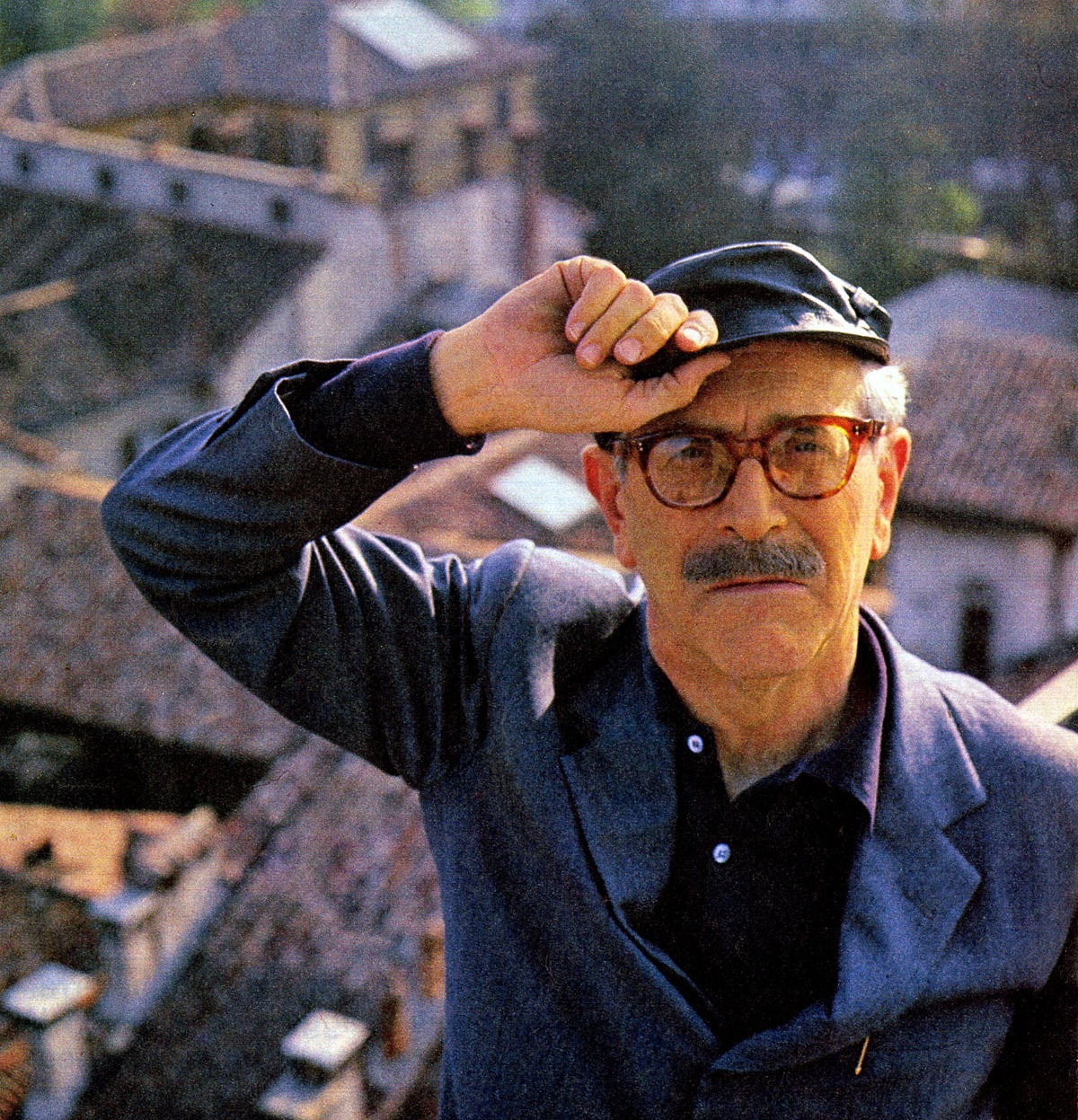
Mario Soldati, born on November 17, 1906, in Turin, Italy, was a man of many talents—a writer, filmmaker, television personality, and cultural commentator. His diverse body of work left an indelible mark on 20th-century Italian literature, cinema, and media. Soldati’s life and career reflect the complexities of Italian culture during a period of significant social and political change. This article provides a comprehensive exploration of Mario Soldati’s age, fame, and life highlights, delving into the nuances of his work and its historical context.
Early Life and Education
Mario Soldati was born into a well-to-do family in Turin, a city known for its intellectual and cultural vibrancy. His early education was marked by a strong religious influence, as he attended schools run by the Jesuits. However, Soldati’s intellectual curiosity soon led him beyond the confines of traditional Catholic education. He began to engage with the liberal and radical intellectual circles of Turin, particularly those surrounding the influential figure of Piero Gobetti, a noted anti-fascist intellectual.
Soldati went on to study literature, earning a degree in Letters. His academic pursuits didn’t stop there; he later attended the Istituto Superiore di Storia dell’Arte in Rome, where he deepened his knowledge of art history. This educational background would profoundly influence his work, particularly his literary style, which was heavily visual and evocative.
The Beginnings of a Literary Career
Mario Soldati’s literary career began in the late 1920s. In 1929, he published his first collection of short stories, Salmace, which appeared in the literary journal La Libra, edited by his friend Mario Bonfantini. These early works were marked by a post-romantic sensibility, blending an ironic moralism with a taste for intrigue and the grotesque.
His early writings and experiences in the intellectual milieu of Italy set the stage for a career that would span several decades and multiple artistic disciplines. Soldati’s work often reflected his dual nature: on one hand, a deeply sentimental moralist, and on the other, a sharp observer of the absurdities and contradictions of modern life.
American Sojourn and Literary Fame
In 1929, Soldati was awarded a scholarship to study in the United States, an experience that would profoundly shape his worldview. Disillusioned with the increasingly repressive atmosphere in fascist Italy, Soldati welcomed the opportunity to teach at Columbia University and explore the cultural landscape of America.
His experiences in the United States culminated in the publication of America, primo amore (America, First Love) in 1935. This book, a blend of travel narrative and personal reflection, offered a nuanced and often critical view of American life from the perspective of a European intellectual. The book was well-received and helped establish Soldati as a significant voice in Italian literature.
The title America, primo amore is particularly revealing, as it captures the ambivalence that characterized Soldati’s relationship with the New World. On one hand, he was fascinated by the dynamism and modernity of American culture; on the other, he remained deeply attached to the traditions and landscapes of his native Italy. This tension between the old and the new, between tradition and modernity, would become a recurring theme in Soldati’s work.
Film Direction and the Intersection of Literature and Cinema
Mario Soldati’s entry into the world of cinema was a natural extension of his literary work. His first foray into film was as a screenwriter, but he soon transitioned to directing, where he found a medium that allowed him to fully explore his visual sensibilities. Soldati’s films often drew on classic literary works, which he adapted for the screen with a distinctive blend of realism and romanticism.
One of his most celebrated films is Piccolo mondo antico (1941), an adaptation of the novel by Antonio Fogazzaro. The film was a critical and commercial success, showcasing Soldati’s ability to translate the subtleties of literature into the language of cinema. Other notable adaptations include Malombra (1942), based on the novel by Antonio Fogazzaro, and Le miserie di Monsù Travet (1945), adapted from a play by Vittorio Bersezio.
Soldati’s films were characterized by their lush cinematography, meticulous attention to period detail, and a deep empathy for his characters. His work as a director reflected his broader artistic vision, which sought to capture the complexities of human experience through a combination of visual and narrative techniques.
Television and Cultural Commentary
In addition to his work in literature and film, Mario Soldati was also a pioneering figure in Italian television. In the late 1950s and early 1960s, he hosted several television programs that combined travel reportage with cultural commentary. Among the most famous of these was Viaggio nella Valle del Po (Journey in the Po Valley), which aired in 1957.
Viaggio nella Valle del Po was a groundbreaking series that took viewers on a journey through the landscapes and communities of Northern Italy. The show was notable for its use of on-location filming and its focus on the everyday lives of ordinary Italians. Soldati’s empathetic and inquisitive approach to his subjects helped to establish a new standard for Italian television journalism, blending documentary realism with a personal, reflective tone.
This program, along with others like Chi legge? (Who Reads?), which aired in 1960, cemented Soldati’s reputation as a cultural commentator with a unique ability to connect with the Italian public. His work on television demonstrated his versatility as a storyteller and his commitment to exploring the cultural and social issues of his time.
Literary Legacy and Later Works
Mario Soldati’s literary output was vast and varied, encompassing novels, short stories, essays, and memoirs. Some of his most significant works include La verità sul caso Motta (1937), A cena col Commendatore (1950), Le lettere da Capri (1954), and La sposa americana (1977). These works are characterized by their rich characterizations, intricate plots, and a keen eye for the subtleties of human behavior.
Le lettere da Capri (Letters from Capri), one of Soldati’s most acclaimed novels, won the prestigious Strega Prize in 1954. The novel tells the story of a love triangle set against the backdrop of post-war Italy, exploring themes of desire, jealousy, and the search for identity. It is a testament to Soldati’s skill as a novelist, combining a compelling narrative with deep psychological insight.
Another notable work is Vino al vino (Wine to Wine), a travelogue published in 1976, in which Soldati documented his travels through Italy’s wine regions. The book is not just a celebration of Italy’s rich winemaking tradition, but also a reflection on the changes that modernization was bringing to rural Italy. Vino al vino is a quintessential example of Soldati’s ability to blend personal reflection with broader social commentary.
In his later years, Soldati continued to write and reflect on his life and career. His memoirs, including Le sere (Evenings) and Il concerto (The Concert), offer a glimpse into his personal life and the experiences that shaped his work. These later works are characterized by a tone of introspection and a deep sense of nostalgia for the world that had shaped him.
Historical Context and Influence
Understanding Mario Soldati’s work requires an appreciation of the historical and cultural context in which he lived. Born in the early 20th century, Soldati’s life spanned a period of profound change in Italy and the world. He witnessed the rise and fall of fascism, the devastation of World War II, and the economic and social transformations of post-war Italy.
Soldati’s work is deeply rooted in the Italian cultural tradition, but it also reflects the broader currents of European and American modernism. His engagement with American culture, particularly during his time in the United States, influenced his perspective on Italy and its place in the world. This transatlantic dimension of his work is one of its defining features, setting him apart from many of his contemporaries.
Moreover, Soldati’s career as a filmmaker and television personality allowed him to reach a broad audience and engage with the cultural and social issues of his time in a way that few other writers could. His work in these mediums helped to shape the development of Italian cinema and television, and his influence can be seen in the work of later filmmakers and writers who sought to explore the complexities of Italian identity and culture.
The Complexity of Mario Soldati’s Legacy
Mario Soldati’s legacy is one of complexity and contradiction. On one hand, he was a deeply traditional writer, rooted in the literary and cultural traditions of Italy. On the other hand, he was a modernist, constantly experimenting with new forms and mediums, whether in his literature, his films, or his television work.
This duality is reflected in the reception of his work. While some critics have praised him as one of Italy’s greatest literary and cultural figures, others have struggled to categorize him, finding his work too eclectic to fit neatly into any one literary or artistic movement. Yet it is precisely this eclecticism, this refusal to be confined by any one genre or style, that makes Soldati’s work so rich and rewarding.
Soldati’s ability to move between different forms of expression—literature, film, television—allowed him to explore the human experience in all its complexity. His work is characterized by a deep empathy for his characters, a keen eye for detail, and a profound understanding of the cultural and social forces that shape our lives.
Conclusion
Mario Soldati was a multifaceted artist whose work continues to resonate today. Whether through his novels, his films, or his television programs, Soldati captured the essence of Italian life in the 20th century. His ability to blend personal reflection with broader social commentary, his keen visual sensibility, and his deep empathy for the human condition make him a towering figure in Italian culture.
As we look back on Mario Soldati’s life and work, we see a man who was constantly searching for new ways to express himself, who was unafraid to experiment with different forms and genres, and who always sought to connect with his audience on a deep and personal level. His legacy is one of creativity, innovation, and a deep commitment to exploring the complexities of the human experience.
Mario Soldati’s work remains an essential part of the Italian cultural landscape, offering insights not only into the Italy of his time but also into the timeless themes of love, identity, and the search for meaning. His life and career serve as a testament to the power of art to capture the essence of a culture and to speak to the universal human experience.


