
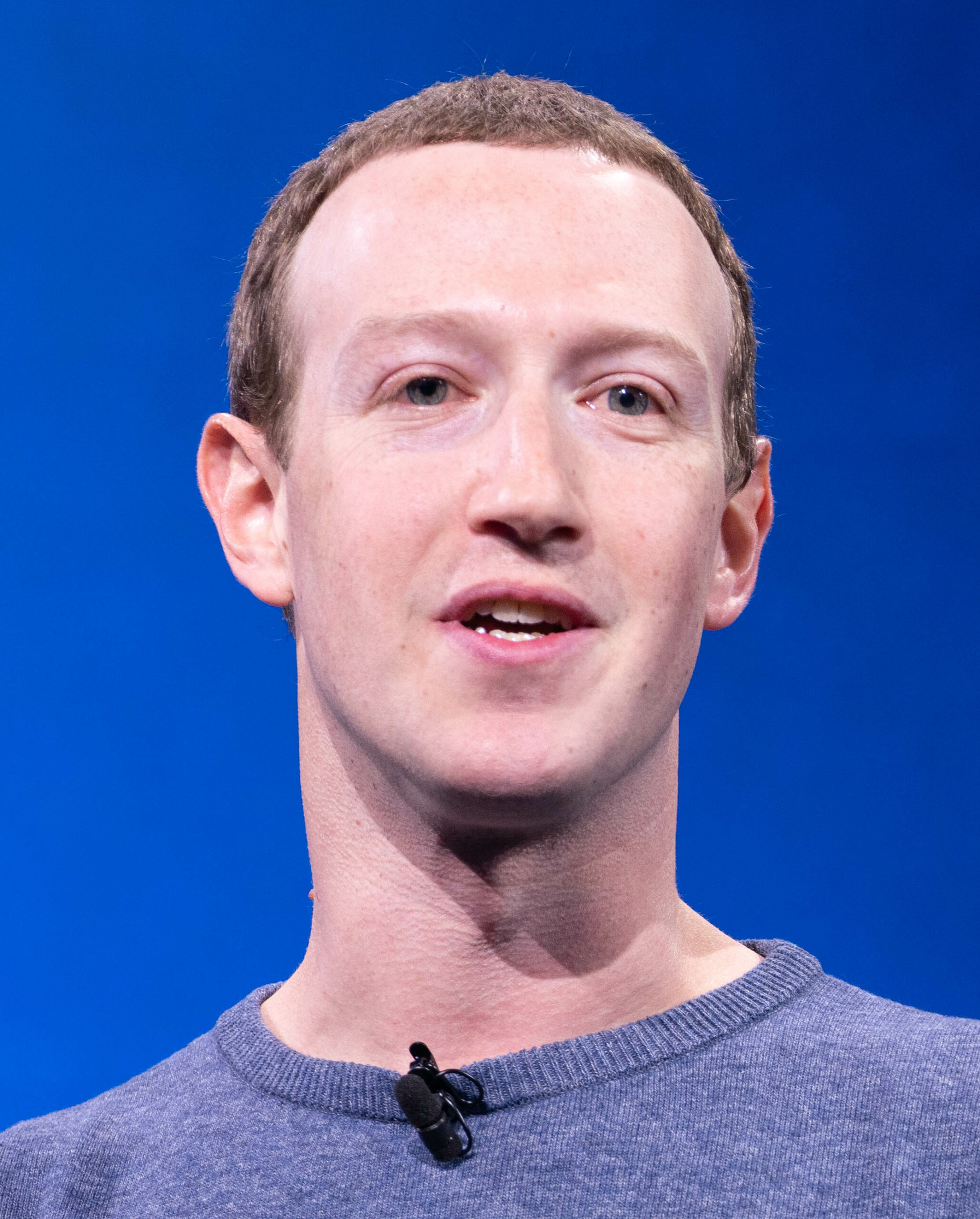
Mark Zuckerberg, born on May 14, 1984, in White Plains, New York, is one of the most influential figures in the digital age. As the co-founder and CEO of Facebook, now rebranded as Meta, Zuckerberg has played a pivotal role in shaping the way people connect, communicate, and consume information worldwide. His journey from a college student with a passion for programming to becoming one of the wealthiest and most powerful individuals on the planet is a fascinating tale of innovation, ambition, and controversy.
Early Life and Education
Mark Zuckerberg was raised in Dobbs Ferry, a small village along the Hudson River in New York. His father, Edward Zuckerberg, was a dentist, and his mother, Karen Kempner, was a psychiatrist. Growing up in a Jewish household, Mark was the second of four children and showed an early interest in computers and programming. By the time he was in middle school, Zuckerberg was already creating rudimentary software programs, including a communication tool called “ZuckNet” for his father’s dental office.
Zuckerberg attended Ardsley High School before transferring to Phillips Exeter Academy, a prestigious preparatory school in New Hampshire. At Exeter, Zuckerberg excelled academically, particularly in the classics, and won prizes in science and literature. However, it was his passion for coding that truly set him apart. During his high school years, Zuckerberg developed a music player called “Synapse Media Player,” which used artificial intelligence to learn users’ listening habits. Both AOL and Microsoft expressed interest in buying the software, but Zuckerberg chose to focus on his studies instead.
The Harvard Years and the Birth of Facebook
In 2002, Zuckerberg enrolled at Harvard University, where he studied psychology and computer science. It was here, in his dorm room, that he launched what would eventually become Facebook. On February 4, 2004, Zuckerberg, along with his roommates Eduardo Saverin, Andrew McCollum, Dustin Moskovitz, and Chris Hughes, launched “TheFacebook,” initially as a social networking site for Harvard students. The idea was to create an online platform that replicated the printed “face books” containing students’ photos and personal information, which were commonly distributed at American universities.
The site quickly gained popularity, and within a few months, it expanded to other Ivy League universities, then to colleges and universities across the United States and Canada. By the end of 2004, Facebook had over one million users, and Zuckerberg and his team moved their operations to Palo Alto, California, where they rented a small house that served as their office.
Facebook’s Explosive Growth
In the early years, Facebook’s growth was meteoric. By 2005, the platform had expanded beyond universities, allowing anyone over the age of 13 with a valid email address to join. This move opened the floodgates, and Facebook’s user base skyrocketed. In 2006, the platform introduced the News Feed, which became a central feature of Facebook, allowing users to see updates from their friends in real-time.
During this period, Zuckerberg’s vision for Facebook extended beyond simply being a social networking site. He saw the potential for Facebook to become a platform that connected the world, where people could share and discover content, engage in meaningful interactions, and even conduct business. This vision attracted significant investment, with venture capital firms and tech giants like Microsoft pouring money into the company.
By 2008, Zuckerberg had become the youngest self-made billionaire in history, as Facebook’s valuation soared. The platform continued to innovate and expand, acquiring other companies like Instagram and WhatsApp, which further solidified Facebook’s dominance in the social media landscape. By 2012, when Facebook went public, it was valued at over $100 billion, making it one of the largest IPOs in tech history.
Controversies and Challenges
Despite Facebook’s success, Zuckerberg’s journey has not been without challenges and controversies. The platform has been at the center of numerous debates over privacy, data security, and its role in spreading misinformation. One of the most significant controversies arose in 2018 with the Cambridge Analytica scandal, where it was revealed that the data of millions of Facebook users had been improperly accessed and used for political advertising. This incident led to widespread criticism of Facebook’s data practices and resulted in Zuckerberg testifying before the U.S. Congress.
Additionally, Facebook has faced scrutiny over its role in the spread of fake news, particularly during the 2016 U.S. presidential election. The platform’s algorithms, designed to maximize user engagement, were accused of promoting divisive content and enabling the spread of misinformation. In response, Facebook has implemented various measures to combat fake news and improve transparency, but the challenges remain ongoing.
Zuckerberg has also been criticized for his handling of internal company culture and his approach to leadership. Reports of a cutthroat work environment and concerns over Facebook’s monopoly power have led to calls for greater regulation of the tech industry. Despite these challenges, Zuckerberg has remained steadfast in his belief that Facebook, and now Meta, can be a force for good in the world.
Rebranding to Meta and the Future Vision
In October 2021, Zuckerberg announced a major rebranding of Facebook Inc. to Meta Platforms Inc., signaling a shift in the company’s focus towards building the “metaverse.” The metaverse, as envisioned by Zuckerberg, is a virtual reality space where users can interact with each other and digital environments in a more immersive way than ever before. This ambitious project aims to integrate technologies like virtual reality (VR), augmented reality (AR), and blockchain to create a new frontier for social interaction, work, and entertainment.
The rebranding to Meta represents Zuckerberg’s commitment to staying at the forefront of technological innovation. He believes that the metaverse will be the next evolution of the internet, transforming how people connect, work, and play. However, the concept of the metaverse is still in its early stages, and it remains to be seen how it will be received by the public and how it will impact society.
Personal Life and Philanthropy
Mark Zuckerberg’s personal life has also garnered significant attention over the years. In 2012, he married Priscilla Chan, a former medical student whom he met while at Harvard. The couple has two daughters, Maxima and August, and they have been vocal about their commitment to philanthropy.
In 2015, Zuckerberg and Chan launched the Chan Zuckerberg Initiative, a philanthropic organization focused on advancing human potential and promoting equality. The initiative has pledged billions of dollars towards education, healthcare, and scientific research, with a particular emphasis on using technology to solve global challenges. Zuckerberg has also signed the Giving Pledge, committing to donate the majority of his wealth to charitable causes over his lifetime.
Legacy and Impact
As one of the most influential figures in the tech industry, Mark Zuckerberg’s impact on the world cannot be overstated. Through Facebook, he has fundamentally changed the way people communicate, share information, and connect with others. His vision of a connected world has brought people closer together, but it has also raised important questions about privacy, data security, and the role of technology in society.
Zuckerberg’s legacy is one of innovation and disruption, but it is also one of responsibility. As the digital landscape continues to evolve, the challenges facing Facebook and Meta will require careful navigation. Zuckerberg’s ability to address these challenges while continuing to push the boundaries of what’s possible in the tech world will ultimately define his place in history.
In conclusion, Mark Zuckerberg’s life and career are a testament to the power of innovation and the impact that one individual can have on the world. From his early days as a programming prodigy to his role as the CEO of Meta, Zuckerberg’s journey is a story of ambition, creativity, and resilience. As he continues to shape the future of technology, the world will be watching to see how his vision for the metaverse unfolds and what new challenges and opportunities lie ahead.


