
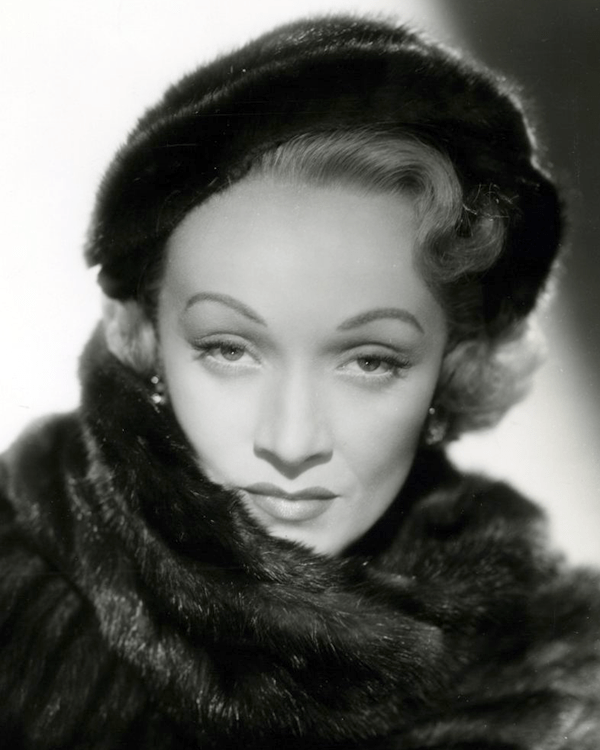
Marlene Dietrich, born Marie Magdalene Dietrich on December 27, 1901, in Schoeneberg, Germany, is an enduring icon of the 20th century. With her distinctive voice, androgynous allure, and enigmatic presence, Dietrich captivated audiences around the world. Her career spanned over six decades, encompassing film, stage, and music, making her one of the most versatile and influential figures in the history of entertainment. This article delves into the life of Marlene Dietrich, exploring her rise to fame, personal struggles, and the legacy she left behind.
Early Life and Background
Marie Magdalene Dietrich was born into a middle-class family in Berlin. Her mother was a jeweler, and her father was a police officer who died when she was still young. The death of her father and the subsequent loss of her stepfather in World War I left a deep impression on Dietrich, influencing her relationships and personal life. She grew up in a strict, conservative environment, which perhaps fueled her later rebellion against traditional gender norms and societal expectations.
Dietrich began her education at a private school for girls, where she studied French and English, alongside the arts. She developed a love for poetry and theater, which eventually led her to pursue a career in acting. By the early 1920s, Dietrich had enrolled in the Max Reinhardt Drama School in Berlin, one of the most prestigious acting schools in Europe at the time.
Early Career and Rise to Fame
Dietrich’s early acting career was modest. She appeared in small roles in German silent films and on stage, where she honed her craft. It was during this period that she met and married Rudolf Sieber, a film director. Although their marriage was unconventional—they remained legally married but lived separate lives—it produced one daughter, Maria, who would later become a prominent film producer and writer.
Dietrich’s breakthrough came in 1929 when Austrian director Josef von Sternberg cast her in the lead role of the 1930 film “The Blue Angel” (Der blaue Engel). The film was based on Heinrich Mann’s novel “Professor Unrat” and told the story of a professor’s downfall due to his obsession with a cabaret singer, played by Dietrich. Her performance as Lola Lola, a seductive and free-spirited singer, was nothing short of mesmerizing. The film’s success catapulted her to international stardom and marked the beginning of her legendary partnership with von Sternberg.
Following the success of “The Blue Angel,” Dietrich moved to Hollywood, where she signed a contract with Paramount Pictures. Von Sternberg continued to shape her career, directing her in a series of films that showcased her unique blend of allure, mystery, and strength. Films like “Morocco” (1930), in which Dietrich famously wore a tuxedo and kissed a woman on screen, “Dishonored” (1931), and “Shanghai Express” (1932) solidified her status as a Hollywood star.
The Creation of an Icon
Marlene Dietrich was more than just an actress; she was a carefully crafted persona. With the help of von Sternberg, Dietrich transformed herself into an icon of androgyny and sexual ambiguity. Her use of men’s clothing, deep voice, and enigmatic demeanor challenged the traditional representations of femininity in the early 20th century. She became a symbol of the modern, liberated woman—a figure that resonated with both men and women.
Dietrich’s image was meticulously curated, and she became known for her impeccable style. Her influence extended beyond the screen, as she became a fashion icon whose looks were emulated by women across the world. The tuxedo she wore in “Morocco” became particularly famous, inspiring generations of women to embrace more masculine fashion.
Dietrich’s persona also had a significant impact on gender dynamics in Hollywood. She was one of the first actresses to take control of her own image, dictating the terms of her public persona. This control allowed her to navigate the male-dominated film industry on her own terms, paving the way for future generations of female performers.
Life During World War II
As World War II loomed, Dietrich faced a moral dilemma. Despite her German roots, she was a vocal critic of the Nazi regime and refused to return to Germany after Adolf Hitler’s rise to power. Instead, she became an American citizen in 1939 and dedicated herself to the Allied war effort.
Dietrich used her fame and influence to support the troops, performing for American soldiers on the front lines in Europe and North Africa. She also worked tirelessly to promote war bonds and entertained the troops with her famous rendition of “Lili Marlene,” a song that became an anthem for soldiers on both sides of the conflict. Her efforts earned her the Medal of Freedom, the highest civilian honor in the United States, as well as France’s prestigious Légion d’Honneur.
Dietrich’s wartime activities further solidified her status as a cultural icon. She was not only a glamorous movie star but also a symbol of resistance against tyranny. Her actions during the war earned her admiration and respect from people around the world.
Post-War Career and Reinvention
After the war, Dietrich’s film career began to wane as Hollywood’s tastes changed. The roles offered to her were often less substantial, and she struggled to find projects that matched her talents. However, Dietrich was not one to fade quietly into obscurity. Instead, she reinvented herself as a stage performer, embarking on a second career as a cabaret singer.
Dietrich’s stage act was a sensation. She performed in packed venues around the world, captivating audiences with her deep, sultry voice and magnetic stage presence. Her performances were a mix of classic songs, including “Lili Marlene,” and new material that showcased her versatility as an entertainer. The stage allowed Dietrich to maintain control over her image, and she continued to perform well into her 70s.
One of the most memorable moments of her stage career came in 1959, when she performed in Rio de Janeiro. The concert was a triumph, further cementing her status as a global icon. Dietrich’s live performances became legendary, and she continued to tour extensively until the mid-1970s, when her health began to decline.
Later Life and Legacy
As she aged, Marlene Dietrich gradually withdrew from public life, choosing to live in seclusion in her Paris apartment. She made few public appearances in her later years, preferring to maintain the mystique that had defined her career. Despite her withdrawal from the public eye, Dietrich’s influence continued to be felt.
Dietrich passed away on May 6, 1992, at the age of 90. Her death marked the end of an era, but her legacy endures. She is remembered not only as one of the greatest actresses of all time but also as a trailblazer who challenged societal norms and redefined what it meant to be a woman in the 20th century.
Dietrich’s impact on popular culture is immeasurable. Her style, attitude, and performances have inspired countless artists, musicians, and filmmakers. From David Bowie to Madonna, many have drawn inspiration from Dietrich’s androgynous style and fearless approach to self-expression.
The Enduring Legacy of Marlene Dietrich
Marlene Dietrich’s life and career were marked by a series of bold choices and daring reinventions. From her early days in Germany to her rise as a Hollywood star and her later years as a cabaret performer, Dietrich consistently defied expectations and carved out a path that was uniquely her own.
Her legacy is one of resilience, independence, and unwavering commitment to her principles. In an era when women were often confined to rigid societal roles, Dietrich broke free from those constraints and forged her own identity. She was a pioneer of gender fluidity and an advocate for personal freedom, values that continue to resonate in today’s world.
Dietrich’s contributions to film, fashion, and music have left an indelible mark on the cultural landscape. Her influence can be seen in the work of modern artists and performers who continue to challenge conventional norms and explore new forms of expression. Marlene Dietrich was more than just a star—she was a cultural force, a symbol of defiance, and an icon whose legacy will continue to inspire future generations.


