
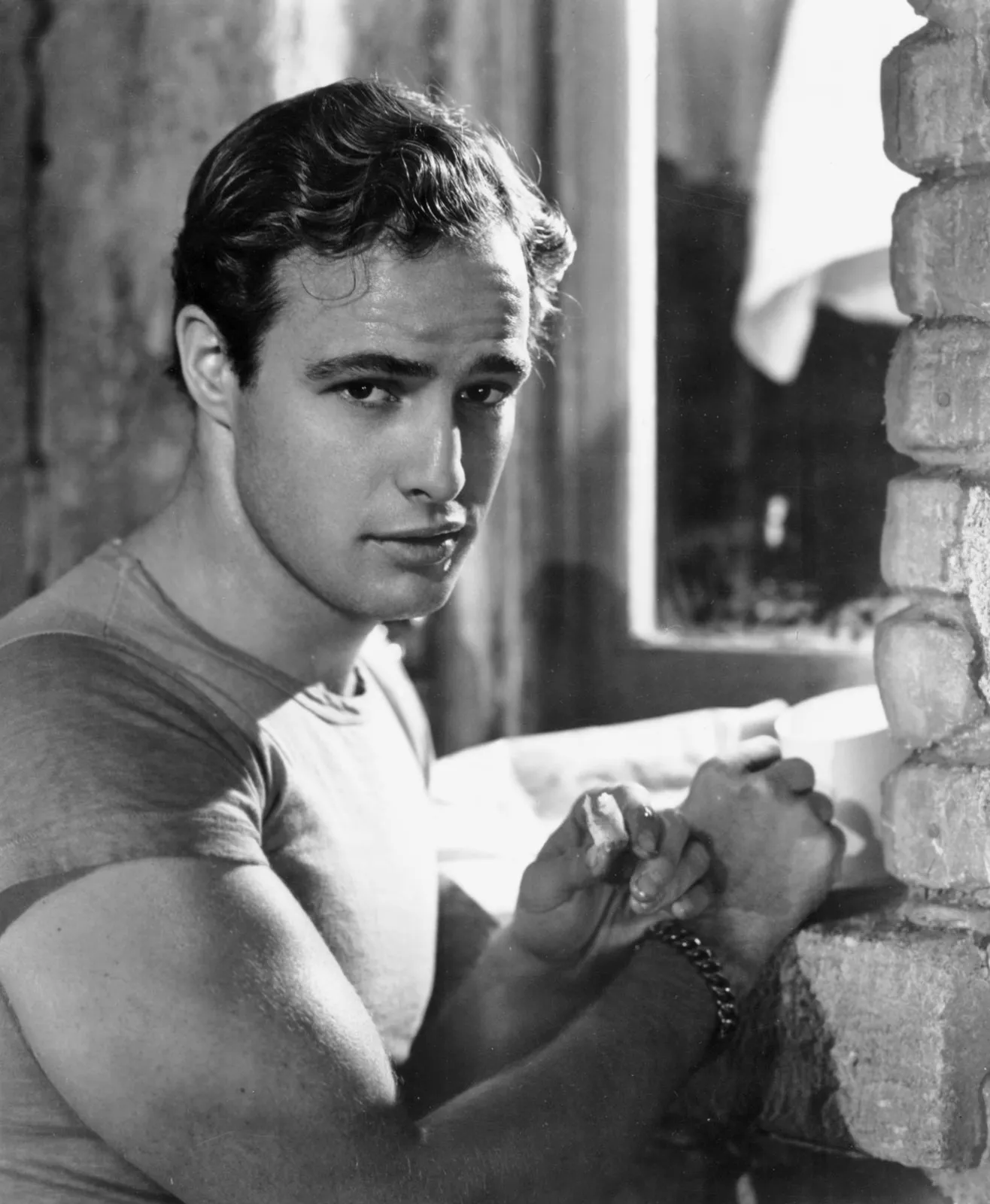
Marlon Brando, a name synonymous with acting brilliance, left an indelible mark on the world of cinema. His life, filled with triumphs, tragedies, and transformations, mirrors the complex characters he so masterfully portrayed. This article delves into the life of Marlon Brando, exploring his age, rise to fame, and the highlights of his storied career.
Early Life and Military Aspirations
Marlon Brando Jr. was born on April 3, 1924, in Omaha, Nebraska. He was the son of Marlon Brando Sr., a traveling salesman, and Dorothy Julia, an actress. Brando’s early life was marked by a strong sense of rebellion, which later became a defining feature of his persona both on and off the screen. His attempts to pursue a military career were short-lived, as his disdain for authority led to his expulsion from the Minnesota Military Academy. This early failure set the stage for his eventual journey into acting, where he found a medium to channel his intense emotions and non-conformist attitude.
The Actor’s Studio and the Method
Brando’s formal entry into the world of acting began when he moved to New York and joined the Actor’s Studio, an institution that played a crucial role in shaping his craft. Under the tutelage of Elia Kazan and influenced by the Stanislavsky method, Brando honed his skills in what became known as “The Method.” This technique emphasized the psychological depth and emotional authenticity of a character, allowing Brando to immerse himself fully into his roles.
His Broadway debut in 1944 marked the beginning of a legendary career. However, it was his portrayal of Stanley Kowalski in Tennessee Williams’ “A Streetcar Named Desire” that catapulted him into the limelight. The raw energy and complexity he brought to Kowalski captivated audiences and critics alike, setting a new standard for performance in American theater.
Hollywood Stardom: The 1950s and 1960s
Brando made his film debut in 1950 with “The Men,” directed by Fred Zinnemann, where he played a paraplegic war veteran. His dedication to the role was evident; he spent a month in a hospital studying the behaviors and challenges of paraplegic patients. This commitment to authenticity would become a hallmark of Brando’s career, as he sought to bring depth and truth to every character he portrayed.
The following year, Brando reprised his role as Stanley Kowalski in the film adaptation of “A Streetcar Named Desire,” directed by Elia Kazan. His performance was nothing short of electrifying, and it solidified his status as a Hollywood icon. Brando’s portrayal of Kowalski combined brute strength with a deep-seated vulnerability, a duality that resonated with audiences and made him a symbol of a new, more nuanced masculinity in cinema.
In 1954, Brando’s career reached new heights with his role as Terry Malloy in “On the Waterfront,” a performance that earned him his first Academy Award for Best Actor. Directed by Kazan, the film was a critical and commercial success, and Brando’s portrayal of the conflicted ex-boxer-turned-longshoreman was hailed as one of the greatest performances in film history. The famous line, “I coulda been a contender,” delivered with heartbreaking sincerity, remains etched in the annals of cinema.
The Decline and Resurrection
The 1960s were a turbulent decade for Brando, both professionally and personally. Despite his earlier successes, many of his films during this period failed to live up to expectations. His only directorial effort, “One-Eyed Jacks” (1961), received mixed reviews, and his subsequent projects did little to revive his waning career. Behind the scenes, Brando’s personal life was equally chaotic, marred by failed marriages, tumultuous relationships, and a series of family tragedies that took a heavy toll on his mental and physical health.
However, the 1970s marked a remarkable resurgence for Brando. In 1972, he took on the role of Don Vito Corleone in Francis Ford Coppola’s “The Godfather,” a performance that redefined his career and cemented his legacy as one of the greatest actors of all time. Brando’s portrayal of the aging mafia patriarch was both subtle and powerful, a masterclass in restraint and controlled intensity. His transformation into Don Vito, complete with the iconic use of cotton balls to puff out his cheeks, was a stroke of genius that contributed to the character’s unforgettable presence.
Brando’s decision to refuse the Academy Award for Best Actor in protest against Hollywood’s treatment of Native Americans further demonstrated his commitment to social justice causes, even at the height of his fame. This act of defiance was emblematic of Brando’s complex personality—one that was deeply principled, yet often unpredictable.
Later Years and Legacy
Brando’s later years in Hollywood were characterized by selective roles and a gradual retreat from the spotlight. His performance as Colonel Kurtz in “Apocalypse Now” (1979) was another standout, showcasing his ability to convey profound psychological depth with minimal screen time. The role, shrouded in mystery and darkness, was a fitting metaphor for Brando’s own enigmatic persona.
Despite his reduced presence in the industry, Brando continued to influence a new generation of actors. His work in films like “Last Tango in Paris” (1972) and “Superman” (1978) added to his diverse body of work, demonstrating his versatility and enduring appeal.
Brando’s personal life remained tumultuous, with several marriages, numerous relationships, and a series of family tragedies that cast a long shadow over his later years. His son, Christian Brando, was convicted of manslaughter in 1990, and his daughter, Cheyenne, committed suicide in 1995. These events, along with Brando’s own battles with weight and health issues, added to the narrative of a man whose life was as dramatic and tragic as the characters he portrayed.
Marlon Brando passed away on July 2, 2004, at the age of 80. His death marked the end of an era, but his influence on the world of cinema remains as strong as ever. Actors like Al Pacino and Robert De Niro have spoken openly about the profound impact Brando had on their careers, often describing him as a figure of almost mythical proportions in the acting community.
The Brando Effect: A Lasting Impact
Marlon Brando’s legacy extends far beyond the films he starred in. He was a pioneer in bringing a new level of emotional truth and complexity to the screen, challenging the conventional notions of masculinity and heroism in Hollywood. His use of “The Method” influenced countless actors and directors, shaping the way characters are conceived and portrayed in modern cinema.
Moreover, Brando’s willingness to speak out on social issues, from civil rights to indigenous rights, set him apart as an artist who was not afraid to use his platform for causes he believed in. This combination of artistic brilliance and social activism has ensured that Brando’s name remains synonymous with both cinematic excellence and a broader cultural significance.
In conclusion, Marlon Brando was more than just an actor; he was a cultural icon whose life and career reflected the complexities of the human condition. His work continues to inspire and challenge audiences, making him a timeless figure in the history of film.


