
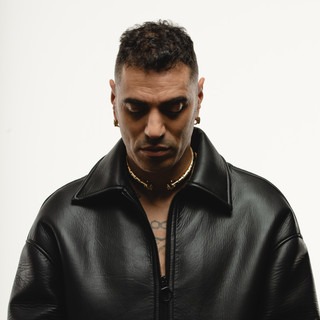
Marracash, born Fabio Bartolo Rizzo on May 22, 1979, in Nicosia, Sicily, Italy, is a name synonymous with Italian rap. As one of the most influential figures in the Italian music scene, Marracash’s journey from a working-class background to becoming the “King of Rap” is a testament to his talent, resilience, and unique voice in the world of hip-hop.
Early Life and Cultural Roots
Marracash’s early life was shaped by his humble beginnings. Born in the small town of Nicosia in the province of Enna, Sicily, he moved with his family to the outskirts of Milan, settling in the Barona district. Growing up in a modest apartment, Marracash was deeply influenced by his surroundings, which played a pivotal role in shaping his worldview and his music. His father, a truck driver, and his mother, a school janitor, instilled in him the values of hard work and perseverance, which would later become central themes in his lyrics.
His early years in Milan, a city known for its diverse cultural landscape, exposed him to the vibrant world of hip-hop. The gritty realities of his neighborhood, combined with the cultural richness of Milan, provided the perfect backdrop for his future as a rapper. It was during his teenage years that he began to immerse himself in the local hip-hop scene, frequenting places like “Il Muretto,” a legendary meeting spot for aspiring rappers in Milan. It was here that he started writing his first verses, laying the groundwork for what would become a remarkable career.
The Birth of Marracash
Marracash’s stage name is a direct reflection of his identity and his roots. The name Marracash is derived from Marrakech, a nod to the fact that, due to his distinct features and darker skin tone, he was often mistaken for a Moroccan during his youth. This name not only reflects his appearance but also serves as a symbol of his connection to the multicultural environment that influenced his upbringing.
His early forays into music began in the late 1990s when he adopted the pseudonym “Juza delle Nuvole,” inspired by a character from the manga and anime series Fist of the North Star (Ken il Guerriero). In 1999, he released his first demo, collaborating with other emerging rappers such as Gué Pequeno, Jack la Furia, and Dargen D’Amico. These collaborations were crucial in establishing his presence in the Italian hip-hop community.
Rise to Fame: The Journey of Marracash
Marracash’s rise to fame was anything but meteoric; it was the result of years of hard work, persistence, and a deep commitment to his craft. His breakthrough came in 2004 with the release of the mixtape PMC VS Club Dogo – The Official Mixtape, a collaboration with Club Dogo and Porzione Massiccia Crew. This mixtape marked the beginning of his journey into the mainstream, as he became a prominent figure in the Italian rap scene.
In 2005, Marracash released the mixtape Roccia Music I, further solidifying his place in the rap community. By 2007, he was contributing to Struggle Music, a project that included his track “Con i soldi in testa.” However, it was in 2008 that Marracash truly broke through with his self-titled debut album Marracash, released under Universal Music. The album featured the hit single “Badabum Cha Cha,” which became a summer anthem in Italy, catapulting Marracash into the national spotlight.
The success of his debut album was a turning point in his career. He became a household name, known for his sharp lyrics, insightful social commentary, and his ability to connect with audiences from all walks of life. His music, characterized by its raw honesty and emotional depth, resonated with listeners who saw in Marracash a voice that spoke to their own experiences and struggles.
Musical Evolution and Collaborations
The 2010s were a period of significant growth and evolution for Marracash. His 2010 album Fino a qui tutto bene and 2011’s King del Rap further cemented his status as one of Italy’s top rappers. The latter album, in particular, showcased his maturation as an artist, with more complex themes and polished production. The title track, “King del Rap,” became synonymous with Marracash’s persona, earning him the nickname “King of Rap” among fans and critics alike.
In 2012, Marracash took a bold step by founding his own independent label, Roccia Music, which allowed him greater creative freedom and control over his work. This move also demonstrated his commitment to nurturing new talent within the Italian rap scene. The label’s first major release was Genesi (2013), a compilation album featuring various artists, including a young Achille Lauro, whose debut album Achille Idol-Immortale was also produced by Roccia Music.
Marracash’s collaborative spirit extended beyond his label. He worked with a diverse array of artists across different genres, including Fabri Fibra, Giusy Ferreri, The Bloody Beetroots, and later on, Elodie. His collaborations were not just musical but also served as cultural statements, bridging the gap between mainstream pop and underground rap.
Personal Struggles and Public Image
Despite his professional success, Marracash has been open about his personal struggles, including his battle with bipolar disorder. This condition, characterized by alternating periods of depression and mania, has had a profound impact on his life and work. Marracash has spoken candidly about how these mood swings influenced his music, leading to some of his most introspective and emotionally charged songs.
His public image has also been shaped by his outspoken nature and willingness to engage in controversy. Marracash is known for his sharp critiques of the music industry and his peers, often calling out artists like Fedez and J-Ax for prioritizing commercial success over artistic integrity. These critiques have sometimes led to public feuds, but they have also solidified Marracash’s reputation as an artist who is unafraid to speak his mind and challenge the status quo.
Recent Years and Continued Impact
In recent years, Marracash has continued to push the boundaries of his art. His 2015 album Status was a commercial success, followed by Santeria (2016), a collaborative album with Gué Pequeno that was praised for its innovation and depth. The album featured hits like “Nulla Accade,” further demonstrating Marracash’s ability to evolve while staying true to his roots.
One of the most significant moments in his recent career was the release of his 2019 album Persona. This album was a deeply personal project, exploring themes of identity, mental health, and the duality of his persona as both Fabio and Marracash. The album was a critical and commercial success, earning accolades such as “Best Italian Album of the Year” from Rolling Stone Italia. Tracks like “Quelli che non pensano” and “Crudelia” were lauded for their lyrical depth and innovative production.
Persona was more than just an album; it was a concept album that drew inspiration from Ingmar Bergman’s film of the same name. It explored the idea of duality, with each track representing a different part of the human body, symbolizing various aspects of Marracash’s identity. This exploration of the self was both artistic and therapeutic, as Marracash used the album to confront his inner demons and express his struggles with mental health.
Marracash’s Legacy
Marracash’s legacy in the Italian music scene is undeniable. Over two decades, he has not only defined the sound of Italian rap but has also influenced a new generation of artists. His ability to blend social commentary with personal introspection has set him apart from his peers, making him a voice for those who feel marginalized or misunderstood.
His journey from the streets of Barona to the heights of musical stardom is a story of perseverance, talent, and an unwavering commitment to his art. Marracash continues to be a relevant and powerful figure in Italian music, using his platform to address important issues, challenge norms, and inspire his listeners.
As he continues to evolve as an artist, Marracash remains a symbol of authenticity in a world where commercial success often comes at the cost of artistic integrity. His music is not just entertainment; it is a reflection of his life, his struggles, and his unrelenting quest for self-expression. Marracash’s story is one of transformation, resilience, and the power of music to connect, inspire, and heal.
In conclusion, Marracash is more than just a rapper; he is a cultural icon who has left an indelible mark on the Italian music industry. His journey from a young boy in Barona to the “King of Rap” is a testament to his talent, hard work, and the enduring appeal of his music. As he continues to push the boundaries of his art, Marracash’s influence will undoubtedly continue to grow, inspiring future generations of artists and fans alike.


