
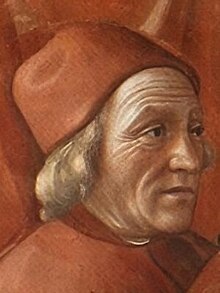
Marsilio Ficino, a name that echoes through the corridors of Renaissance history, represents a profound intellectual force whose work has left an indelible mark on Western thought. As a philosopher, theologian, and humanist, Ficino played a pivotal role in the revival of Platonic philosophy during the Renaissance. His life, rich with scholarly achievement and spiritual exploration, offers a fascinating window into one of the most transformative periods in European history. This article delves into the age, fame, and life highlights of Marsilio Ficino, exploring the nuances of his contributions and the historical context that shaped his work.
Early Life and Background: The Foundations of a Renaissance Scholar
Marsilio Ficino was born on October 19, 1433, in Figline Valdarno, near Florence, Italy. His father, Diotifeci d’Agnolo di Giusto Ficino, was a physician in the service of Cosimo de’ Medici, one of the most powerful and influential figures of the time. This connection to the Medici family would prove crucial in Ficino’s life, providing him with both the patronage and the intellectual environment necessary to pursue his scholarly ambitions.
Ficino’s early education was deeply rooted in the classical traditions of the time, focusing on Latin literature, philosophy, and theology. His father, recognizing Marsilio’s intellectual potential, ensured that he received the best education available. This classical education, combined with the vibrant intellectual atmosphere of Florence, set the stage for Ficino’s later achievements.
The Platonic Revival: Ficino and the Renaissance
The Renaissance was a period of intense cultural and intellectual renewal, characterized by a return to the classical sources of ancient Greece and Rome. Central to this revival was a renewed interest in Platonic philosophy, which had been largely overshadowed by Aristotelianism during the Middle Ages. Marsilio Ficino emerged as one of the leading figures in this Platonic revival, dedicating his life to the study and dissemination of Plato’s works.
In 1462, Cosimo de’ Medici, recognizing Ficino’s talent and passion for philosophy, provided him with a villa at Careggi, near Florence, where Ficino could focus on his studies. This villa became the headquarters of the Platonic Academy, an informal gathering of scholars and intellectuals dedicated to the study of Plato and his followers. Ficino’s translation of Plato’s complete works into Latin, completed in 1484, was one of the most significant achievements of his career and played a crucial role in making Platonic philosophy accessible to a broader European audience.
Marsilio Ficino’s Philosophical Contributions
Ficino’s work went beyond mere translation; he sought to synthesize Platonic philosophy with Christian theology, creating a new philosophical system known as Neoplatonism. Neoplatonism, which drew on the ideas of Plotinus and other late antique philosophers, emphasized the unity of all existence and the idea of a transcendent One or God, from which all things emanate. Ficino’s Neoplatonism sought to reconcile the teachings of Plato with the doctrines of Christianity, arguing that Platonic philosophy was not only compatible with Christian beliefs but could also provide a deeper understanding of the divine.
One of Ficino’s most important works, “Theologia Platonica” (Platonic Theology), is a comprehensive exposition of his Neoplatonic system. In this work, Ficino argues for the immortality of the soul, drawing on both Platonic and Christian sources to support his claim. He also explores the nature of the soul’s relationship to God, the hierarchy of being, and the process of spiritual ascent through contemplation and intellectual purification.
Ficino’s philosophical system had a profound influence on the intellectual landscape of the Renaissance. His ideas helped to shape the thought of many later philosophers, including Giovanni Pico della Mirandola, who shared Ficino’s interest in synthesizing different philosophical and religious traditions. Ficino’s emphasis on the spiritual and mystical dimensions of philosophy also resonated with the broader Renaissance fascination with the occult, astrology, and the esoteric traditions.
The Role of Astrology and Medicine in Ficino’s Thought
In addition to his work as a philosopher and theologian, Ficino was also deeply interested in astrology and medicine. He believed that the stars and planets exerted a significant influence on human life and that understanding these influences was essential for achieving both physical and spiritual well-being. Ficino’s interest in astrology was closely tied to his Neoplatonic philosophy, which posited a harmonious and interconnected universe in which celestial bodies played a crucial role in mediating the divine will.
Ficino’s work on astrology is perhaps best exemplified by his “De Vita” (Three Books on Life), a treatise on the relationship between the stars, health, and the soul. In this work, Ficino offers practical advice on how to live a healthy and balanced life, drawing on astrological principles to explain the influence of the planets on human physiology and psychology. He also discusses the use of talismans, herbal remedies, and other occult practices as means of harnessing cosmic energies for the benefit of the soul.
Ficino’s interest in medicine was not merely theoretical; he was also a practicing physician who applied his astrological and philosophical knowledge to the treatment of his patients. His holistic approach to medicine, which integrated physical, psychological, and spiritual factors, was in many ways ahead of its time and reflects the broader Renaissance interest in the interconnectedness of body and soul.
The Impact of Ficino’s Work on Renaissance Humanism
Marsilio Ficino’s work had a significant impact on the development of Renaissance humanism, a cultural and intellectual movement that emphasized the study of classical texts, the dignity of the individual, and the potential for human achievement. Ficino’s translations of Plato and other classical authors provided Renaissance humanists with access to a rich philosophical tradition that emphasized the importance of the soul, the pursuit of knowledge, and the cultivation of virtue.
Ficino’s emphasis on the soul’s ascent to the divine and the importance of intellectual and spiritual purification resonated with the broader humanist emphasis on the development of the individual. His Neoplatonic synthesis of philosophy and theology offered a vision of human life that was deeply spiritual yet rooted in the intellectual traditions of the classical world. This vision of human potential and the pursuit of the divine through intellectual and spiritual discipline was central to the Renaissance ideal of the “universal man”—a person who seeks to develop all aspects of their being, from the physical to the intellectual to the spiritual.
Ficino’s influence on Renaissance humanism extended beyond the confines of philosophy. His ideas also found expression in the visual arts, where artists such as Botticelli and Michelangelo drew on Neoplatonic themes in their work. Ficino’s emphasis on the harmony of the cosmos and the divine order of creation provided a framework for understanding the beauty and order of the natural world, which Renaissance artists sought to capture in their works.
Historical Context: Florence and the Renaissance
To fully appreciate Ficino’s contributions, it is essential to understand the historical and cultural context of Renaissance Florence. The 15th century was a period of profound transformation in Europe, marked by a renewed interest in the classical past and a flourishing of art, literature, and philosophy. Florence, under the patronage of the Medici family, became a center of intellectual and artistic activity, attracting scholars, artists, and thinkers from across Europe.
The Medici family, particularly Cosimo de’ Medici, played a crucial role in fostering the intellectual environment that allowed figures like Ficino to thrive. Cosimo’s patronage of the arts and his support for the study of classical texts were instrumental in the development of Renaissance humanism. The Platonic Academy, established by Ficino under Cosimo’s patronage, became a hub of intellectual activity, where scholars gathered to study and discuss the works of Plato and other classical authors.
The political and social climate of Florence also shaped Ficino’s work. The city was a republic, governed by a complex system of councils and magistrates, but it was also a place of intense political rivalry and intrigue. The Medici family, despite their immense power, had to navigate these complex political waters, and their support for intellectual and artistic endeavors was partly an effort to bolster their own prestige and authority. Ficino’s work, with its emphasis on the divine order and the harmony of the cosmos, can be seen as both a reflection of and a response to the turbulent political environment of his time.
Ficino’s Personal Life and Character
While Marsilio Ficino is best known for his intellectual achievements, his personal life and character also offer valuable insights into his work. Ficino was a deeply spiritual person, and his philosophy was closely tied to his own religious beliefs and practices. He was a devout Christian who saw his work as a way of understanding and articulating the relationship between God, the cosmos, and the human soul.
Ficino was also known for his modesty and humility. Despite his close ties to the powerful Medici family and his significant influence on Renaissance thought, Ficino lived a relatively simple life. He was deeply committed to his studies and spent much of his time in solitude, reading, writing, and contemplating the mysteries of the universe. His personal letters and writings reveal a man who was deeply concerned with the spiritual welfare of others and who sought to use his knowledge and talents for the benefit of humanity.
Ficino’s relationships with his contemporaries also provide a glimpse into his character. He was well-respected and admired by many of the leading figures of his time, including Giovanni Pico della Mirandola, Lorenzo de’ Medici, and Angelo Poliziano. These relationships were not only intellectual but also personal, reflecting Ficino’s deep commitment to the ideals of friendship, mutual respect, and the pursuit of truth.
Ficino’s Death and Legacy
Marsilio Ficino passed away on October 1, 1499, in Careggi, just outside Florence. His death marked the end of an era in Renaissance thought, but his influence continued to resonate long after his passing. Ficino’s translations of Plato and other classical authors remained foundational texts in the study of philosophy and played a crucial role in the intellectual life of Europe for centuries.
Ficino’s legacy is multifaceted. He is remembered as one of the most important figures in the Platonic revival of the Renaissance, a philosopher who sought to bridge the gap between classical thought and Christian theology. His work laid the groundwork for many of the intellectual developments that followed, including the rise of Neoplatonism and the flourishing of Renaissance humanism.
Ficino’s emphasis on the spiritual dimensions of philosophy also had a lasting impact on the development of Western thought. His ideas about the soul, the cosmos, and the relationship between the divine and the human continue to inspire philosophers, theologians, and spiritual seekers to this day. Ficino’s vision of a harmonious and interconnected universe, where the pursuit of knowledge and the cultivation of virtue lead to spiritual enlightenment, remains a powerful and enduring ideal.
Conclusion: The Enduring Significance of Marsilio Ficino
Marsilio Ficino was a philosopher, theologian, and humanist whose work played a central role in the intellectual life of the Renaissance. His translations of Plato and his development of Neoplatonism provided the foundation for a new synthesis of classical philosophy and Christian theology, which had a profound influence on the thought of his time and beyond.
Ficino’s life and work reflect the broader cultural and intellectual currents of the Renaissance, a period of intense creativity and exploration that reshaped the Western world. His emphasis on the spiritual and mystical dimensions of philosophy, his interest in astrology and medicine, and his commitment to the ideals of humanism all contributed to the rich tapestry of Renaissance thought.
Today, Marsilio Ficino is remembered as one of the great intellectual figures of the Renaissance, a scholar whose work continues to inspire and challenge us. His vision of a world in which philosophy, religion, and science are interconnected, where the pursuit of knowledge leads to spiritual enlightenment, remains as relevant today as it was in his own time. As we continue to explore the mysteries of the universe and the depths of the human soul, Ficino’s work offers a timeless guide, reminding us of the enduring power of philosophy to illuminate the path to wisdom and understanding.


