
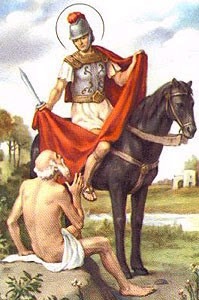
Martino di Tours, also known as Saint Martin of Tours, is a significant figure in Christian history, revered as one of the founding fathers of monasticism in the Western world. Born around 316 AD in Sabaria, a region that corresponds to modern-day Szombathely in Hungary, Martino’s life is a fascinating blend of military service, profound religious experiences, and an enduring legacy as a patron saint. This article delves into the life of Martino di Tours, exploring his age, rise to fame, and key highlights, while providing detailed insights into the historical context and his lasting influence.
Early Life and Military Service
Martino di Tours was born into a Roman family in the province of Pannonia, which was then part of the vast Roman Empire. His father, a senior officer in the Roman army, named him Martino in honor of Mars, the Roman god of war. This name was fitting, as Martino would follow in his father’s footsteps and join the military, although his path would eventually diverge significantly from the martial traditions of his family.
During his early years, Martino grew up in Pavia, Italy, where he was exposed to the teachings of Christianity. Despite his family’s pagan beliefs, Martino became increasingly drawn to the Christian faith, a decision that would later define his life. By the age of 15, as was customary for the son of an officer, Martino was compelled to enlist in the Roman army. His military service took him to Gaul, where he experienced a life-altering event that would set the course for his spiritual journey.
The Vision and the Miracle of the Cloak
One of the most famous episodes in Martino’s life occurred near the city of Amiens, in present-day France. While serving as a soldier, Martino encountered a beggar shivering in the cold, dressed in little more than rags. Moved by the man’s plight, Martino impulsively drew his sword, cut his military cloak in half, and gave one half to the beggar. This act of compassion, however, was only the beginning of Martino’s transformation.
That night, Martino had a vision in which Jesus Christ appeared to him, wearing the half of the cloak that Martino had given to the beggar. In the vision, Jesus spoke to the angels, saying, “This is Martino, the soldier who clothed me.” Upon waking, Martino found his cloak miraculously restored to its original state. This experience profoundly impacted Martino, who was still a catechumen (a Christian in training for baptism). He soon decided to be baptized and fully embrace the Christian faith, setting him on a path that would lead to sainthood.
This episode, known as the Miracle of the Cloak, symbolizes the Christian values of charity, humility, and selflessness. It also marked a turning point in Martino’s life, inspiring him to leave the military and dedicate himself to religious service.
Religious Commitment and Monastic Life
After his baptism, Martino felt increasingly conflicted about his role as a soldier, particularly in light of his new Christian beliefs. Eventually, he left the Roman army and devoted himself to the life of a monk. He sought out spiritual guidance and eventually became a disciple of Hilary of Poitiers, one of the most prominent theologians of the time.
Martino’s commitment to his faith was soon tested when he became involved in the battle against Arianism, a widespread heresy that denied the divinity of Christ. His outspoken opposition to Arianism led to persecution and exile, forcing him to flee from Gaul to Milan and later to the island of Gallinara near Savona, Italy. On this remote island, Martino lived a life of solitude and contemplation, further deepening his spiritual convictions.
In 371 AD, Martino’s life took another significant turn when he was appointed Bishop of Tours, a town in central France. Despite his reluctance to take on this role, preferring the simplicity of monastic life, Martino accepted the position and set about his pastoral duties with great zeal. As Bishop, he continued to live a humble and ascetic life, using his position to promote Christian teachings and combat pagan practices.
The Foundation of Monasticism in the West
One of Martino’s most enduring contributions to Christianity was his role in the establishment of monasticism in Western Europe. In Tours, Martino founded the Marmoutier Abbey, a monastery situated on the banks of the Loire River. This monastery became a center for religious learning and spiritual formation, attracting monks from all over Europe who were inspired by Martino’s example of piety and devotion.
The Marmoutier Abbey played a crucial role in spreading monastic ideals throughout the Western Christian world. Under Martino’s leadership, the monastery became a model for other monastic communities, emphasizing a life of prayer, manual labor, and the pursuit of spiritual perfection. Martino’s emphasis on monastic life as a means of deepening one’s relationship with God would influence countless generations of monks and religious leaders, laying the groundwork for the monastic traditions that would flourish in the Middle Ages.
Martino’s Death and Canonization
Martino continued his work as Bishop of Tours until his death on November 8, 397 AD, in the village of Candes, which today bears his name as Candes-Saint-Martin. His death marked the end of an extraordinary life dedicated to the service of others and the propagation of the Christian faith. Martino’s body was taken back to Tours, where he was buried on November 11, a date that would later become his feast day.
The process of Martino’s canonization began almost immediately after his death. His life and deeds were chronicled by his disciples, particularly Sulpicius Severus, whose writings provide much of the information we have about Martino today. Martino was one of the first saints who was not a martyr to be canonized by the Church, a testament to the impact of his life and work.
Martino’s canonization marked the beginning of his veneration as a saint across the Christian world. His feast day, celebrated on November 11, became a significant religious and cultural event in many countries, particularly in France, where he is regarded as one of the most important saints. The Basilica of Saint Martin in Tours became a major pilgrimage site, attracting visitors from across Europe who sought to honor the memory of this humble and compassionate saint.
Cultural and Religious Legacy
Martino di Tours’ influence extends far beyond his lifetime, leaving an indelible mark on both religious and cultural traditions. He is revered as the patron saint of numerous groups, including soldiers, beggars, and winemakers, reflecting the various aspects of his life and legacy. His story of sharing his cloak with a beggar has become a powerful symbol of charity and compassion, inspiring countless acts of kindness throughout the centuries.
In addition to his religious significance, Martino’s legacy is also reflected in various cultural traditions. In many parts of Europe, November 11, his feast day, is celebrated with festivals, processions, and feasts. In Germany and Austria, children participate in the “Lantern Procession,” where they carry lanterns through the streets while singing songs in honor of Saint Martin. This tradition, known as “Martinstag,” is a testament to Martino’s enduring popularity and the widespread veneration he enjoys across Europe.
In Italy, the feast of San Martino is celebrated with various local traditions, including the preparation of a traditional pastry in Venice, shaped to represent Martino on horseback. The celebration of the “Estate di San Martino,” or Saint Martin’s Summer, refers to a period of unseasonably warm weather that often occurs around his feast day, and it is often associated with the maturation of new wine. This period is celebrated with communal gatherings where wine and roasted chestnuts are enjoyed, highlighting Martino’s association with the natural cycles of the seasons.
Historical Context and Significance
Martino di Tours lived during a time of significant transition within the Roman Empire. The 4th century was a period marked by the gradual Christianization of the Empire, following the conversion of Emperor Constantine the Great. Martino’s life and work must be understood within this broader context of religious transformation, as Christianity moved from being a persecuted minority faith to becoming the dominant religion of the Empire.
Martino’s role as a bishop and monastic founder placed him at the forefront of this religious transformation. His efforts to evangelize the rural populations of Gaul, who were often resistant to the new faith, were instrumental in spreading Christianity beyond the urban centers and into the countryside. His commitment to living a life of poverty, humility, and service stood in stark contrast to the more opulent lifestyles of some contemporary church leaders, making him a popular figure among the common people.
Moreover, Martino’s opposition to Arianism and other heresies of the time reflects the theological conflicts that were shaping the early Church. His defense of orthodox Christian doctrine, particularly the belief in the divinity of Christ, contributed to the consolidation of Christian beliefs that would later be affirmed in the Councils of the Church.
Conclusion: The Enduring Legacy of Martino di Tours
In conclusion, Martino di Tours stands as a towering figure in Christian history, whose life and legacy continue to resonate across the world. His journey from a Roman soldier to a beloved saint exemplifies the transformative power of faith, charity, and humility. As one of the first non-martyr saints to be canonized, Martino’s life offers a powerful example of how ordinary acts of kindness and devotion can have extraordinary and lasting impacts.
Martino’s influence extends beyond the religious sphere, permeating various cultural traditions and popular celebrations, particularly in Europe. His feast day, November 11, is a time of reflection, celebration, and thanksgiving, honoring the man who, through a simple act of sharing, became a symbol of Christian compassion.
Today, Martino di Tours is remembered not only as a saint but also as a cultural icon whose story has inspired countless generations. Whether through the lens of religion, culture, or history, the life of Martino di Tours offers valuable lessons on the importance of kindness, the power of faith, and the enduring impact of living a life dedicated to the service of others.


