
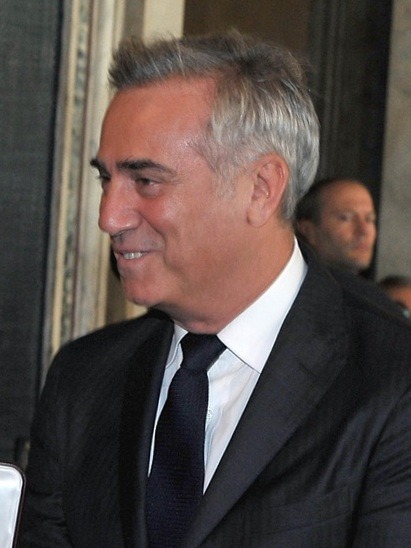
Massimo Ghini, born on October 12, 1954, in Rome, Italy, is one of the most versatile and accomplished actors in the Italian entertainment industry. With a career spanning over four decades, Ghini has made significant contributions to theater, film, and television, earning a reputation as a dependable and talented performer. His work as a voice actor and television host further showcases his wide-ranging talents. This article delves into the life, career, and achievements of Massimo Ghini, exploring how he rose to fame and the highlights that have defined his journey.
Early Life and Political Roots
Massimo Ghini was born into a family deeply influenced by the socio-political movements of the time. His father was a partisan from Parma who endured the horrors of deportation during World War II, being held in the Mauthausen concentration camp. This background profoundly impacted Ghini, instilling in him a strong sense of social justice and a passion for politics. From a young age, Ghini was active in political circles, particularly on the left, where he engaged in activism throughout the 1970s. His commitment to political causes even led to his election as a city councilor in Rome for the PDS (Democratic Party of the Left).
While politics played a significant role in his early life, it was the world of theater and acting that eventually captured Ghini’s heart. Despite his political engagements, Ghini’s passion for acting became increasingly evident, leading him to pursue a career in the performing arts.
Theatrical Beginnings and Early Career
Massimo Ghini’s journey into the world of acting began in the theater. His first experiences on stage were shaped by his work with some of Italy’s most respected directors, including Franco Zeffirelli, Giorgio Strehler, Giuseppe Patroni Griffi, and Gabriele Lavia. These early opportunities allowed Ghini to hone his craft and develop a deep appreciation for the art of performance.
His work in theater was not limited to acting; Ghini also explored roles as a voice actor and radio speaker, demonstrating his versatility early on. His initial forays into acting were complemented by his work as an entertainer in tourist resorts, where he first began to gain recognition for his charisma and talent.
Transition to Film and Television
In 1979, Massimo Ghini made his film debut with a small role in Stelvio Massi’s “C’era una volta la legge,” marking the beginning of his long and successful career in cinema. His performance, although modest, was well-received and opened doors to further opportunities in both film and television.
Throughout the early 1980s, Ghini appeared in various Italian television productions, often referred to as “sceneggiati,” which were serialized dramas popular at the time. His roles in productions like “Anna Kuliscioff” (1981), “Delitto di Stato” (1982), “Il Diavolo di Pontelungo” (1982), and “Tre anni” (1983) helped establish him as a reliable and skilled actor on the small screen.
Ghini’s big break in cinema came in 1984 when he was cast in Giuseppe Bertolucci’s film “Segreti segreti.” His portrayal of Captain Felici in this critically acclaimed movie, where he starred alongside Stefania Sandrelli and Alida Valli, earned him significant attention and praise. This role marked a turning point in his career, leading to more prominent roles in both film and television.
Achieving Fame: The Late 1980s and Iconic Roles
The late 1980s were particularly fruitful for Massimo Ghini. In 1988, he starred in the now-iconic Italian comedy “Compagni di scuola,” directed by Carlo Verdone. Ghini played Mauro Valenzani, a slimy politician, in this cult classic, which has since become a staple of Italian cinema. The film’s ensemble cast, which included Christian De Sica and Nancy Brilli, delivered memorable performances, and Ghini’s portrayal of Valenzani remains one of his most recognized roles.
During this period, Ghini’s personal life also became intertwined with his professional life. He developed a romantic relationship with Nancy Brilli, which led to marriage, though it eventually ended in divorce. Before Brilli, Ghini had been married twice—first to Paola Romano, with whom he had two children, Leonardo and Margherita, and later to Federica Lorrai, with whom he had twins, Lorenzo and Camilla.
Expanding Horizons: 1990s and Voice Acting
As Massimo Ghini’s career progressed, he continued to diversify his roles, both on screen and behind the microphone. In the 1990s, he became one of Italy’s most sought-after voice actors, lending his voice to several Hollywood stars in Italian-dubbed films. One of his most notable voice acting roles was dubbing Nicolas Cage in the 1995 film “Leaving Las Vegas,” for which Cage won the Academy Award for Best Actor.
Ghini’s ability to capture the essence of his characters, whether through physical performance or voice acting, made him a versatile and respected figure in the industry. His work in voice acting complemented his ongoing success in television and film, where he continued to take on a variety of roles.
In 1999, Ghini appeared in Franco Zeffirelli’s “Tea with Mussolini,” acting alongside an impressive cast that included Lily Tomlin, Maggie Smith, Joan Plowright, Cher, and Judi Dench. Although the film received mixed reviews, Ghini’s performance was praised, further cementing his reputation as a capable and adaptable actor.
The 2000s: Continued Success and Television Stardom
The turn of the millennium saw Massimo Ghini solidify his place as a leading actor in Italian television. He starred in numerous popular television films and series, such as “Un sogno per la vita” (2000), “Gli amici di Gesù – Maria Maddalena” (2000), and “Come l’America” (2001). His role in the 2003 mini-series “La cittadella” and the historical drama “Imperium – Augusto” (2003), where he starred alongside Peter O’Toole and Charlotte Rampling, showcased his ability to handle complex and historically significant roles.
Ghini’s involvement in television continued with significant roles in productions like “Commesse” (2002), “Papa Giovanni – Ioannes XXIII” (2002), and “La Omicidi” (2004). His portrayal of Antonio Meucci in the 2005 film “Meucci” was particularly well-received, highlighting his talent for bringing historical figures to life.
In addition to his work in serious dramas, Ghini also became a fixture in the Italian comedy genre, particularly through his involvement in the popular “cinepanettoni” films directed by Neri Parenti. These holiday-themed comedies, including “Natale a Miami” (2005), “Natale a New York” (2006), and “Natale a Rio” (2008), allowed Ghini to reach a broader audience and enjoy commercial success.
Recent Work and Legacy
As Massimo Ghini entered the 2010s, his career showed no signs of slowing down. He continued to take on diverse roles in both film and television, proving his enduring appeal and versatility. In 2010, he starred in “Natale in Sudafrica,” another installment in the “cinepanettoni” series. That same year, he participated in and won the television competition “Lasciami cantare!,” showcasing yet another facet of his talent.
In 2011, Ghini hosted the television program “Delitti Rock,” which focused on unsolved cases in the history of rock music. His ability to engage with different types of content and audiences made him a respected and beloved figure in Italian television.
Throughout his career, Ghini has consistently demonstrated a commitment to his craft, whether on stage, in front of the camera, or behind the microphone. His contributions to Italian entertainment have earned him numerous accolades and a lasting legacy as one of Italy’s most versatile and accomplished actors.
Conclusion: A Multifaceted Talent with Enduring Appeal
Massimo Ghini’s career is a testament to the power of versatility and dedication in the entertainment industry. From his early days in the theater to his success in film, television, and voice acting, Ghini has proven time and again that he is a talent of exceptional range and depth.
His ability to move seamlessly between genres and mediums, whether playing a comedic role in a holiday film or dubbing a Hollywood star, has made him a household name in Italy. As he continues to work in the industry, Massimo Ghini remains a beloved and respected figure, with a legacy that will undoubtedly influence future generations of Italian actors.


