
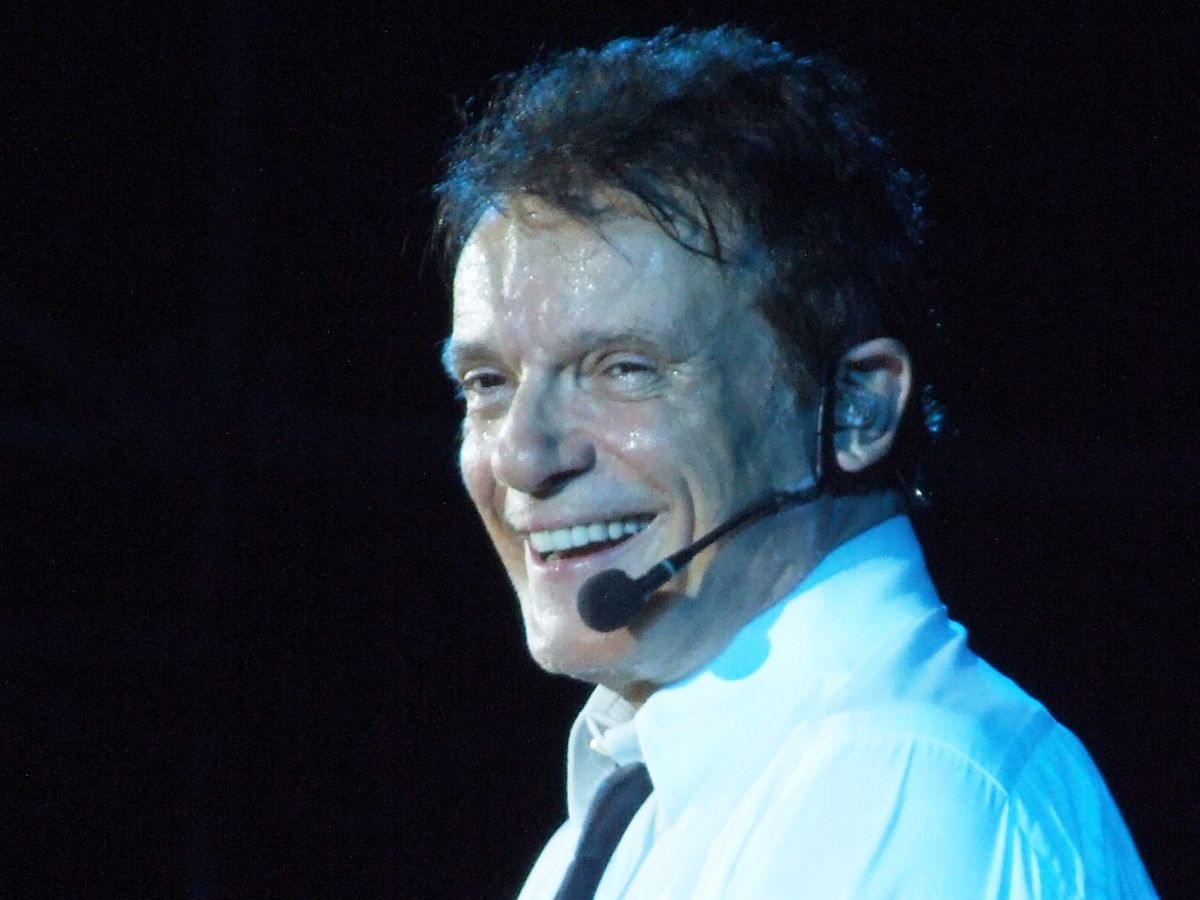
Massimo Ranieri, born Giovanni Calone on May 3, 1951, in Naples, Italy, is a renowned Italian singer, actor, and television presenter who has enjoyed a multi-decade career in the entertainment industry. With a voice that has captured the hearts of millions and a presence that has dominated both the screen and stage, Ranieri is celebrated as one of Italy’s most beloved figures. His journey from a humble upbringing in Naples to international stardom is a story of talent, resilience, and an enduring connection to his cultural roots.
Early Life and Musical Beginnings
Massimo Ranieri grew up in the working-class neighborhood of Pallonetto di Santa Lucia in Naples. He was the fourth of eight children in a family that struggled to make ends meet. From a young age, Ranieri showed an interest in music, performing as a street singer and later working as a “posteggiatore,” singing and playing music in local restaurants to earn tips from patrons. His talent did not go unnoticed; at the age of 13, he was discovered by songwriter Giovanni Polito, who was struck by Ranieri’s powerful and mature voice.
Ranieri’s first significant break came in 1964 when, at just 13 years old, he recorded his debut single and performed in America as part of a tour with the Italian singer Sergio Bruni. This early exposure to the international stage set the tone for his future success, although it would take a few more years before his star truly began to rise.
The 1960s: A Star Emerges
The late 1960s were a pivotal period for Massimo Ranieri. In 1966, he made his television debut on the variety show “Scala Reale,” where he performed “L’amore è una cosa meravigliosa” (“Love is a Wonderful Thing”) at the age of 15. This appearance marked the beginning of his ascent in the Italian music scene.
In 1967, Ranieri participated in the popular television show “Cantagiro,” where he performed the song “Pietà per chi si ama” (“Pity for Those Who Love”). This performance solidified his status as one of Italy’s most promising young talents. The following year, in 1968, Ranieri competed in the prestigious Sanremo Music Festival, performing “Da bambino” (“As a Child”) alongside the band “I Giganti.” His success at Sanremo further propelled him into the limelight.
Ranieri’s breakthrough came in 1969 with the release of the single “Rose rosse” (“Red Roses”), which became a massive hit and stayed at the top of the Italian charts for 13 weeks. This success was followed by another hit, “Se bruciasse la città” (“If the City Were to Burn”), which earned him second place in the 1969 edition of Canzonissima, a popular Italian television music competition.
The 1970s: Expanding Horizons
The 1970s were a decade of significant growth and diversification for Massimo Ranieri. His talent as an actor began to shine through, and he made his film debut in 1970 in Mauro Bolognini’s “Metello,” based on the novel by Vasco Pratolini. Ranieri’s performance was widely praised, earning him the David di Donatello award for Best Actor, Italy’s equivalent of the Academy Award. This marked the beginning of a successful film career, with notable roles in movies such as “Bubù” (1971), “La cugina” (1974), and “Con la rabbia agli occhi” (1976), in which he starred alongside international actors Yul Brynner and Barbara Bouchet.
Ranieri also made a significant impact in the world of theater during the 1970s. He performed in several productions, often working with prominent directors such as Giuseppe Patroni Griffi, Giorgio De Lullo, and Giorgio Strehler. His theater work included roles in plays like “Il malato immaginario” (“The Imaginary Invalid”) and “La dodicesima notte” (“Twelfth Night”).
Despite his success in film and theater, Ranieri never abandoned his music career. He continued to release albums and perform live, often focusing on traditional Neapolitan songs. His 1972 album “O surdato ‘nnammurato” (“The Soldier in Love”) was a tribute to Neapolitan music and was recorded live at the Teatro Sistina in Rome, under the direction of legendary filmmaker Vittorio De Sica. This album, along with subsequent releases like “Napulammore” (1974) and “Meditazione” (1976), reinforced Ranieri’s deep connection to his Neapolitan roots.
The 1980s: A Return to Music and Television
The 1980s saw Massimo Ranieri return to the forefront of the Italian music scene. In 1983, he starred in the musical “Barnum,” where he showcased his versatility as a performer, taking on the role of a circus performer and acrobat. The success of “Barnum” was followed by the release of an album of the same name, further solidifying his place in the Italian music industry.
One of the highlights of Ranieri’s career came in 1988 when he won the Sanremo Music Festival with the song “Perdere l’amore” (“Losing Love”). This victory marked a triumphant return to the top of the Italian music charts and earned him widespread acclaim.
In addition to his music career, Ranieri also found success as a television presenter during the 1980s. In 1989, he co-hosted the popular variety show “Fantastico 10” alongside singer Anna Oxa. His ability to connect with audiences both as a performer and as a host made him a beloved figure in Italian entertainment.
The 1990s and 2000s: Reinvention and New Ventures
The 1990s and 2000s were marked by a period of reinvention for Massimo Ranieri. While he continued to release music and perform live, he also explored new avenues in his career. In 1996, Ranieri ventured into voice acting, providing the Italian voice for Quasimodo in Disney’s animated film “The Hunchback of Notre Dame.” This role introduced him to a new generation of fans and showcased his versatility as a performer.
In 1999, Ranieri won the prestigious Premio Flaiano for his contributions to theater, further cementing his reputation as a multi-talented artist. The early 2000s saw him return to his musical roots with the release of “Oggi o dimane” (2001) and “Nun è acqua” (2003), both of which were well-received by critics and fans alike.
In 2006, Ranieri celebrated 40 years in the entertainment industry with the release of a double album titled “Canto perché non so nuotare…da 40 anni” (“I Sing Because I Can’t Swim…For 40 Years”). The album featured some of his greatest hits as well as new interpretations of classic songs, highlighting his enduring appeal and artistic evolution.
Ranieri also made his debut as a theater director in 2008, directing a stage adaptation of the Italian film “Poveri ma belli” (“Poor but Beautiful”). The production was well-received, and Ranieri’s direction was praised for its sensitivity and attention to detail.
The 2010s and Beyond: Continuing Legacy
The 2010s and 2020s have been a period of continued success and recognition for Massimo Ranieri. In 2010 and 2011, he directed and starred in four television adaptations of plays by the legendary Italian playwright Eduardo De Filippo. These productions, which aired on Italian television, were well-received and demonstrated Ranieri’s deep understanding of the Italian theatrical tradition.
In 2020, Ranieri made a guest appearance at the Sanremo Music Festival, where he performed a duet of “Perdere l’amore” with contemporary Italian singer Tiziano Ferro. This performance was a reminder of Ranieri’s lasting impact on Italian music and his ability to connect with audiences across generations.
In November 2021, Ranieri published his book “Tutti i sogni ancora in volo” (“All the Dreams Still Flying”), a reflection on his life and career. The book provides insights into his experiences in the entertainment industry and his thoughts on the future.
Ranieri continues to be a prominent figure in Italian entertainment. In 2023, he returned to the Sanremo Music Festival as a special guest, performing alongside fellow Italian music legends Gianni Morandi and Al Bano. This performance was a celebration of his enduring legacy and a testament to his influence on Italian culture.
Conclusion: A Legacy of Artistry and Passion
Massimo Ranieri’s life and career are a testament to the power of talent, determination, and a deep connection to one’s cultural roots. From his humble beginnings in Naples to his status as one of Italy’s most beloved entertainers, Ranieri has consistently demonstrated a commitment to his craft and a passion for connecting with audiences. Whether through his music, his acting, or his work in theater, Ranieri has left an indelible mark on Italian culture, and his legacy continues to inspire new generations of artists and fans alike.


