
Introduction
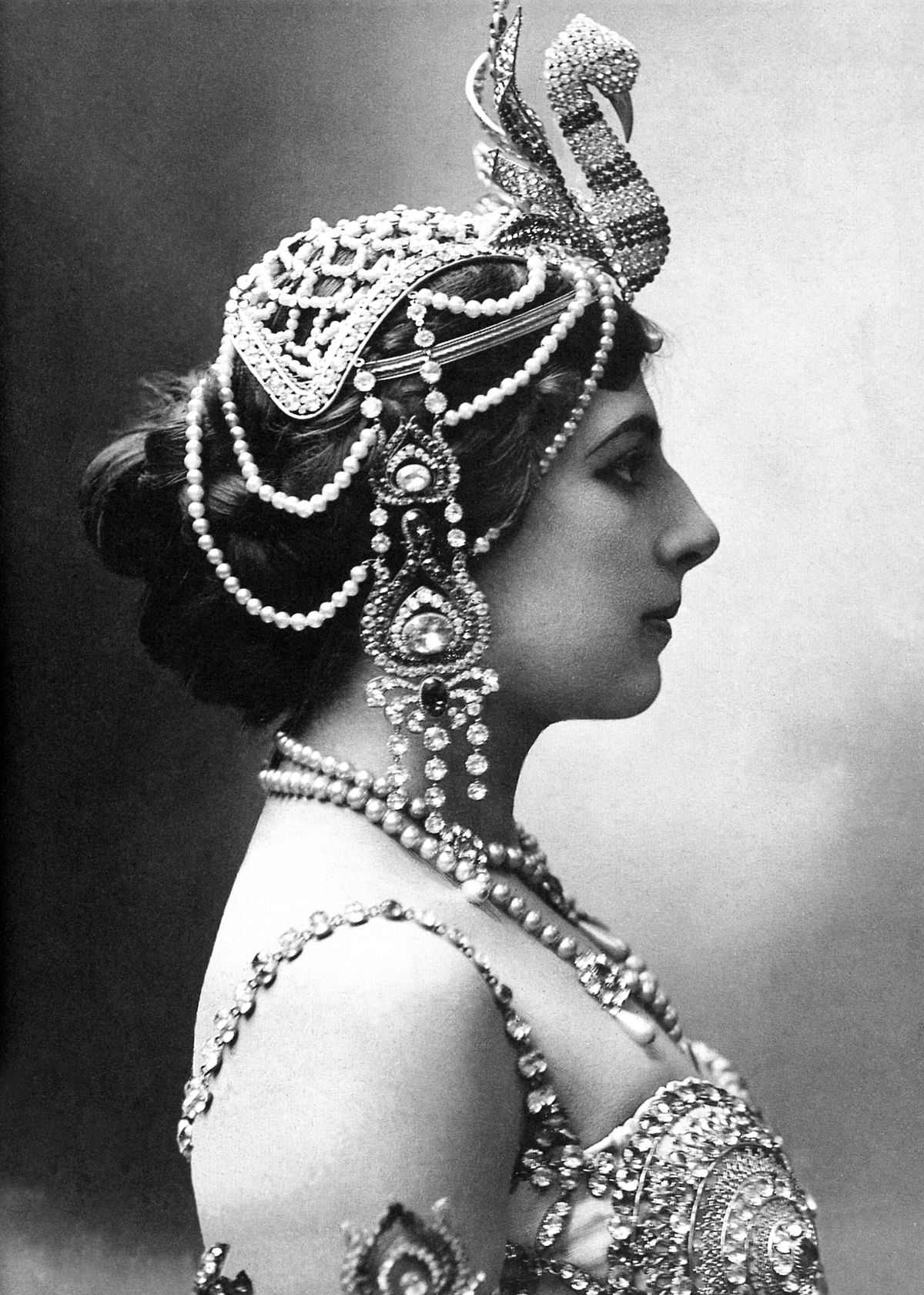
Mata Hari, born Margaretha Geertruida Zelle on August 7, 1876, in Leeuwarden, Netherlands, is one of the most enigmatic figures of the 20th century. Often remembered as the quintessential femme fatale, her life and legacy are shrouded in mystery, intrigue, and controversy. Her journey from a troubled marriage to becoming an exotic dancer in Paris, and ultimately, a notorious spy during World War I, has cemented her place in history. In this comprehensive exploration, we’ll delve into her life, the circumstances that led to her fame, her involvement in espionage, and her tragic end.
Early Life and Marriage
Margaretha Zelle’s early life was far from glamorous. Born to a Dutch father and a Javanese mother, she experienced a comfortable upbringing until her father’s bankruptcy and her mother’s death when she was just 15. These events marked the beginning of a tumultuous life. At 18, she married Rudolf MacLeod, an officer in the Dutch Colonial Army, who was 21 years her senior. The marriage was troubled from the start, marred by infidelity and abuse. The couple had two children, but their son tragically died at a young age, further straining their relationship. In 1902, Margaretha left her husband and returned to the Netherlands, marking the end of her first chapter and the beginning of her transformation into Mata Hari.
Rise to Fame in Paris
After her divorce, Margaretha moved to Paris in 1903, where she reinvented herself as Mata Hari, a name she claimed meant “Eye of the Day” in Malay. She began performing as an exotic dancer, captivating audiences with her provocative and sensuous routines. Her performances were inspired by Javanese and Indian dance traditions, and she often claimed to be a princess from Java, adding an air of mystique to her persona. Her exoticism, combined with her daring dance routines, quickly made her a sensation in Parisian society.
Mata Hari’s fame was not just due to her dancing; it was also a result of her ability to craft an alluring narrative around herself. She carefully curated her image as a mysterious and seductive woman, which fascinated the elite of Paris. She became a sought-after courtesan, involved with high-ranking military officers, politicians, and other influential men. This access to powerful circles would later play a pivotal role in her life as a spy.
World War I and Espionage
With the outbreak of World War I in 1914, Mata Hari’s life took a dramatic turn. The war created a demand for intelligence, and Mata Hari, with her connections to influential men across Europe, was seen as a valuable asset. However, her exact role in espionage remains a matter of debate.
It is widely believed that she was approached by German intelligence and agreed to spy for them, possibly out of a need for money or the allure of excitement. She was given the codename H-21. However, it is also suggested that she may have been working as a double agent, providing information to both the Germans and the French. This double-dealing would eventually lead to her downfall.
In 1917, the French intercepted a German radio message that referred to an agent by the codename H-21, which they believed to be Mata Hari. She was arrested in Paris and charged with espionage. Despite her claims of innocence, she was found guilty and sentenced to death. On October 15, 1917, Mata Hari was executed by a French firing squad. She faced her death with remarkable composure, reportedly blowing a kiss to her executioners before being shot.
Controversy and Legacy
Mata Hari’s trial and execution were controversial from the start. Many historians argue that she was a scapegoat, used by the French government to bolster morale during a difficult period of the war. The evidence against her was circumstantial at best, and it is possible that she was not as deeply involved in espionage as the prosecution claimed. In 2001, her native country, the Netherlands, petitioned the French government to exonerate her, believing that she was unjustly condemned.
Mata Hari’s legacy is a complex one. She has been portrayed in numerous films, books, and plays, often as the ultimate seductress or as a tragic figure caught in the machinations of war. The 1931 film “Mata Hari,” starring Greta Garbo, is perhaps the most famous portrayal, cementing her image as a glamorous and enigmatic spy.
Historical Context and Nuances
Understanding Mata Hari’s life requires a deep dive into the historical context of the early 20th century. The period leading up to World War I was marked by political tension, espionage, and the rise of modern intelligence agencies. The war itself saw unprecedented levels of espionage, as nations sought any advantage they could gain over their enemies. In this environment, spies like Mata Hari became both valuable assets and potential liabilities.
Mata Hari’s gender also played a significant role in her story. As a woman in a male-dominated society, she was both objectified and underestimated. Her sexuality, which she used as a tool in her performances and possibly in her espionage activities, was both her greatest asset and the reason for her downfall. The perception of her as a dangerous seductress likely contributed to the harshness of her sentence.
Moreover, the narrative around Mata Hari has been shaped by the myth-making of the time. The media, eager for sensational stories, painted her as a villainous femme fatale, a narrative that has persisted to this day. In reality, she was a complex figure, driven by the need to survive in a world that offered few opportunities for women like her.
Mata Hari in Popular Culture
Mata Hari’s story has transcended history, becoming a symbol in popular culture. She is often depicted as the archetype of the seductive female spy, a trope that has appeared in countless movies, books, and television shows. However, these portrayals often simplify her character, focusing on her sexuality while neglecting the complexities of her life.
The 1931 film “Mata Hari,” as mentioned earlier, played a significant role in shaping public perception of her. Greta Garbo’s portrayal emphasized Mata Hari’s allure and mystery, qualities that have come to define her legacy. Other films and media have followed suit, often blurring the lines between fact and fiction.
In more recent years, there has been a growing interest in re-examining Mata Hari’s life from a feminist perspective. Scholars and writers have sought to understand her not just as a spy or a seductress, but as a woman navigating the challenges of her time. This re-examination has led to a more nuanced understanding of her motivations and the societal forces that shaped her life.
Conclusion
Mata Hari’s life is a tale of transformation, intrigue, and tragedy. From her early days as Margaretha Zelle to her reinvention as Mata Hari, she lived a life that defied convention and captured the imagination of those around her. Her involvement in espionage during World War I and her subsequent execution made her a symbol of both the dangers and the allure of espionage.
However, Mata Hari’s legacy is more than just the story of a spy. It is a reflection of the complexities of gender, power, and identity in the early 20th century. Her life, shaped by the tumultuous events of her time, continues to fascinate and inspire, reminding us of the enduring power of myth and the complexities of human nature.
In the end, Mata Hari remains an enigmatic figure, a woman who lived on the edge of society and paid the ultimate price for it. Her story is a reminder that history is often as much about the stories we tell as it is about the facts, and that those stories can shape our understanding of the past in profound ways.


