
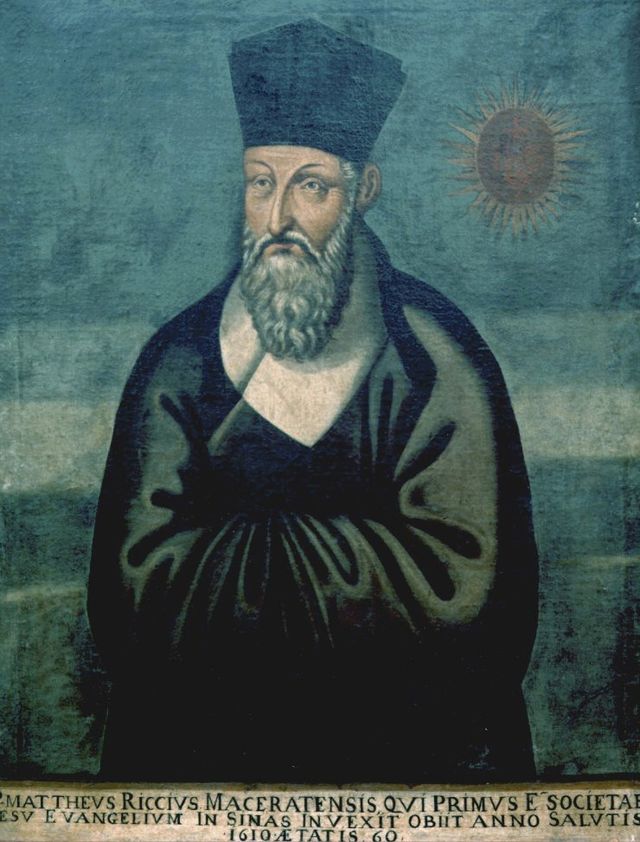
Matteo Ricci, born on October 6, 1552, in Macerata, Italy, is one of the most significant figures in the history of cultural exchange between the West and China. A Jesuit priest, mathematician, cartographer, and pioneering sinologist, Ricci played a crucial role in the introduction of Western science and Christianity to China during the late Ming dynasty. His efforts not only laid the groundwork for future missionary work in Asia but also fostered a deeper understanding between two vastly different civilizations. This article provides a detailed exploration of Ricci’s life, his contributions to both European and Chinese societies, and the lasting impact of his work.
Early Life and Education
Matteo Ricci was born into a relatively well-to-do family in Macerata, a town in central Italy. His early education was rooted in the classics, typical of the Renaissance era. However, it was his entry into the Jesuit Order in 1571 that truly shaped his future. The Jesuits, founded by Ignatius of Loyola, were known for their rigorous intellectual training and missionary zeal. Ricci’s studies included a wide range of subjects, from theology and philosophy to mathematics and astronomy.
Ricci studied under Christoph Clavius, a prominent German Jesuit mathematician who played a key role in the reform of the Gregorian calendar. Clavius’ influence on Ricci was profound, instilling in him a deep appreciation for mathematics and the natural sciences—disciplines that would later prove invaluable in his missionary work in China.
The Call to Mission: From Europe to Asia
Ricci’s desire to engage in missionary work was driven by the Jesuit commitment to spreading Christianity across the globe. In 1578, after completing his studies in Rome, Ricci set sail for Asia, beginning a journey that would eventually take him to the heart of China. His first stop was Goa, a Portuguese colony in India, where he was ordained a priest in 1580. After two years in India, he moved to Macau, a Portuguese outpost on the southern coast of China. It was here that Ricci began to immerse himself in Chinese culture, language, and traditions.
Recognizing the importance of understanding the local culture, Ricci dedicated himself to studying Chinese, a language that was notoriously difficult for Westerners to master. He also familiarized himself with Confucianism, the dominant philosophical and ethical system in China. Ricci’s approach to missionary work was unique: rather than imposing Western values on the Chinese, he sought to engage with them on their own terms, using their language and cultural references to explain Christian concepts.
Establishing a Presence in China: The Early Years
In 1583, Ricci and his fellow Jesuit missionary Michele Ruggieri were granted permission to settle in Shaozhou (now Shaoguan) in Guangdong Province. This was a significant achievement, as foreigners were generally not allowed to live in the interior of China. During his time in Shaozhou, Ricci established relationships with local scholars and officials, impressing them with his knowledge of astronomy, mathematics, and cartography. One of his most notable contributions during this period was the creation of a world map that incorporated Chinese geographical knowledge with Western cartography, offering the Chinese a new perspective on the world.
Ricci’s intellectual pursuits were not merely a means to gain favor with the Chinese elite; they were also integral to his missionary strategy. He believed that by demonstrating the compatibility of Christian doctrine with Confucian values and by showcasing the advancements of Western science, he could make Christianity more appealing to the Chinese. This approach, known as “accommodation,” became a hallmark of the Jesuit mission in China.
Challenges and Successes: The Journey to Beijing
Despite his early successes, Ricci faced numerous challenges in his efforts to expand the Jesuit mission in China. In the late 1580s, he attempted to move northward to the more politically significant cities of Nanjing and Beijing, but his efforts were initially thwarted by local opposition and the ongoing Sino-Japanese War. However, Ricci’s persistence paid off, and by 1595, he had gained permission to reside in Nanjing, where he continued his work of cultural and religious exchange.
Ricci’s ultimate goal was to establish a presence in Beijing, the imperial capital, where he believed he could have the greatest influence. In 1601, after several attempts, Ricci was finally granted an audience at the Ming court. Although he did not meet the Wanli Emperor in person, he was allowed to remain in Beijing, marking a significant milestone in the Jesuit mission in China.
During his time in Beijing, Ricci introduced several European scientific instruments, including clocks and prisms, which fascinated the Chinese court. He also continued his intellectual pursuits, translating key Western texts into Chinese and engaging in philosophical debates with Confucian scholars. Ricci’s work in Beijing laid the foundation for a long-lasting Jesuit presence in the Chinese capital, and his efforts were instrumental in fostering mutual respect and understanding between Europe and China.
The Legacy of Matteo Ricci: Cultural Exchange and Scientific Contributions
Matteo Ricci’s legacy extends far beyond his role as a missionary. He was a pioneering figure in the field of sinology, the study of Chinese language, culture, and history. His translations of Confucian texts into Latin, including the “Four Books,” provided European scholars with their first comprehensive understanding of Confucianism. Conversely, Ricci’s writings introduced Chinese readers to Western philosophical and scientific ideas, contributing to a broader exchange of knowledge between the two cultures.
One of Ricci’s most significant contributions was his “Map of the Myriad Countries of the World,” a world map that combined Chinese and European geographical knowledge. This map was revolutionary in that it depicted China as part of a larger world, challenging the traditional Chinese view of the Middle Kingdom as the center of the universe. Ricci’s map was widely circulated in China and had a profound impact on Chinese perceptions of the world.
In addition to his cartographic work, Ricci made important contributions to the fields of astronomy and mathematics in China. He introduced the Chinese to European methods of calculating the calendar and predicting eclipses, which were more accurate than the traditional Chinese methods. Ricci also worked on a translation of Euclid’s “Elements” into Chinese, a project that was completed by his successor, Xu Guangqi, a prominent Chinese scholar and convert to Christianity.
The Controversy of Accommodation: Ricci’s Approach to Missionary Work
Matteo Ricci’s approach to missionary work was not without controversy. His strategy of accommodation, which involved adapting Christian teachings to align with Confucian values and practices, was met with criticism both in Europe and within the Catholic Church. Some of Ricci’s contemporaries accused him of diluting Christian doctrine in an effort to make it more palatable to the Chinese. They argued that his approach compromised the integrity of the faith by allowing Confucian practices, such as ancestor worship, to coexist with Christian beliefs.
Despite these criticisms, Ricci’s approach was largely successful in the context of his mission. By respecting Chinese customs and presenting Christianity in a way that was compatible with Confucian ethics, Ricci was able to gain the trust and respect of Chinese scholars and officials. His strategy allowed the Jesuit mission to establish a foothold in China and paved the way for future missionaries to build on his work.
However, the debate over the merits of Ricci’s accommodation strategy continued long after his death. In the 18th century, the Catholic Church would eventually condemn the practice of accommodation, leading to a decline in the influence of the Jesuits in China. Nevertheless, Ricci’s legacy as a bridge between East and West remains undeniable.
The Final Years: Death and Legacy
Matteo Ricci spent the last years of his life in Beijing, continuing his work of cultural exchange and missionary outreach. In 1609, he founded the Sodality of the Blessed Virgin Mary, a lay Catholic organization that promoted devotion to the Virgin Mary. He also began the construction of the first Catholic church in Beijing, although he did not live to see its completion.
Ricci died on May 11, 1610, at the age of 57. His death marked the end of an era, but his influence lived on through the Jesuit mission in China and the many Chinese converts he had inspired. Ricci was the first European to be buried in China, a testament to the respect and admiration he had earned from the Chinese people. His tomb, located in the Zhalan Cemetery in Beijing, remains a symbol of the enduring legacy of his work.
Ricci’s writings, including his “Commentaries” and “Letters,” provide valuable insights into his experiences in China and his thoughts on the challenges and opportunities of cultural exchange. These works are considered some of the earliest and most comprehensive accounts of China available to European readers, offering a detailed and nuanced view of Chinese society, culture, and religion.
Conclusion: A Pioneer of East-West Relations
Matteo Ricci’s life and work represent a unique chapter in the history of East-West relations. As a Jesuit missionary, he brought Christianity to China, but his contributions extended far beyond religious conversion. Ricci was a cultural ambassador, a scholar, and a scientist who dedicated his life to bridging the gap between two of the world’s greatest civilizations.
Ricci’s legacy is one of mutual respect and understanding. His willingness to engage with Chinese culture on its own terms, rather than imposing Western values, set a precedent for future generations of missionaries and scholars. His work laid the foundation for a deeper dialogue between East and West, a dialogue that continues to this day.
In a world that is increasingly interconnected, Matteo Ricci’s example serves as a reminder of the importance of cultural exchange and the value of understanding and appreciating different perspectives. His life’s work not only shaped the course of Sino-European relations but also provided a model for how to navigate the complexities of cross-cultural communication with humility, respect, and a commitment to shared knowledge.


