
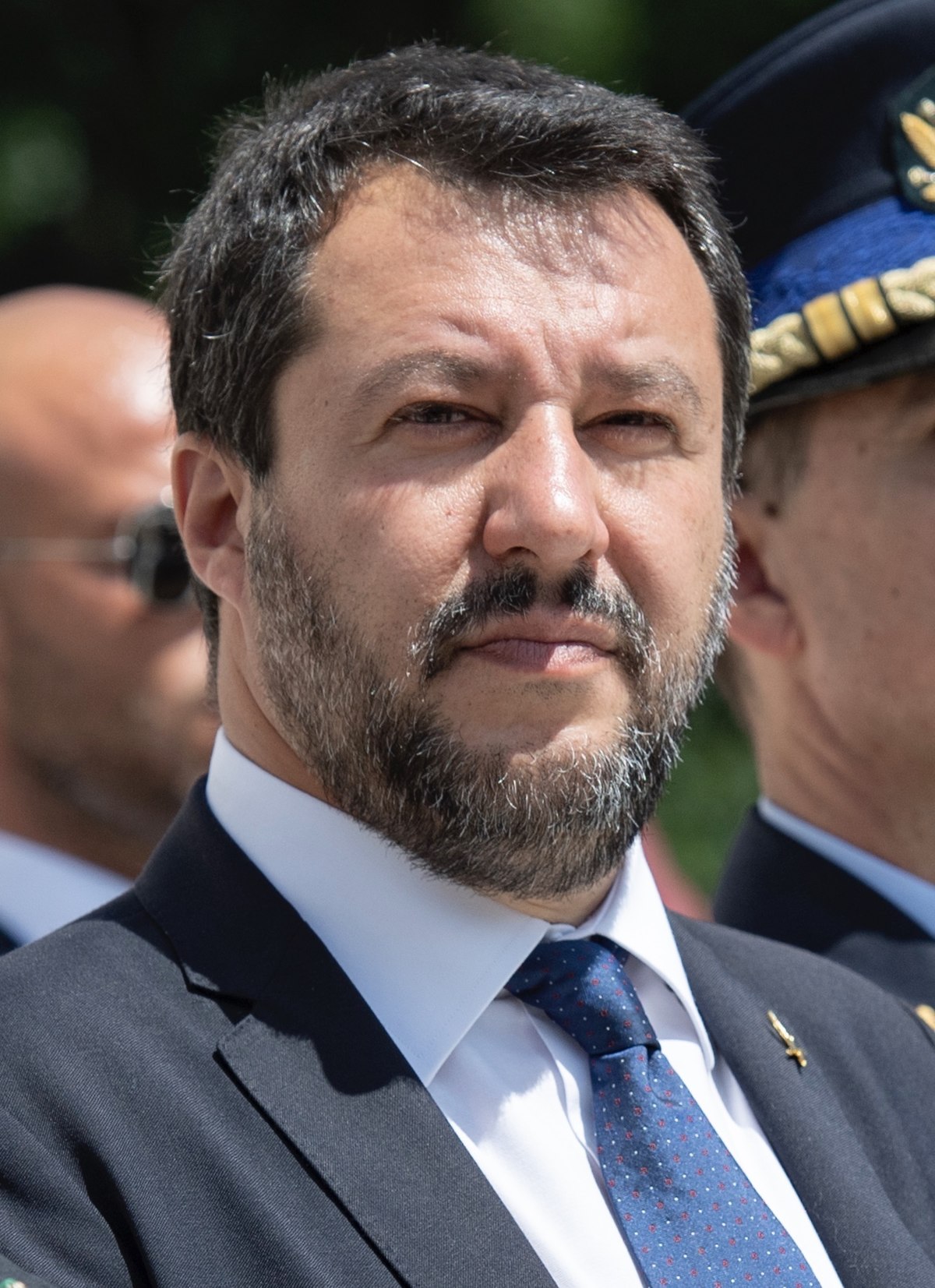
Matteo Salvini is a name that resonates across the political landscape of Italy and beyond. Known for his polarizing rhetoric and staunch nationalism, Salvini has carved out a significant niche in contemporary European politics. Born on March 9, 1973, in Milan, Italy, Salvini’s rise to prominence has been marked by his affiliation with the Lega Nord (Northern League) and later, his transformation of the party into a nationwide political force. This article provides a comprehensive overview of Matteo Salvini’s life, political career, and the key moments that have defined his public persona.
Early Life and Education
Matteo Salvini was born into a middle-class family in Milan, the economic heart of Italy. His father was a business executive, and his mother was a homemaker. Growing up in a bustling city like Milan exposed Salvini to the complexities of urban life, including the economic disparities and social tensions that would later become central themes in his political career.
Salvini attended the prestigious Liceo Classico “Alessandro Manzoni,” where he obtained his high school diploma. He later enrolled at the University of Milan, majoring in History, but he did not complete his degree. During his university years, Salvini supported himself by working various jobs, including delivering pizzas and working at a fast-food restaurant in Milan’s Galleria Vittorio Emanuele II. These experiences contributed to Salvini’s self-image as a man of the people, a narrative he has consistently employed throughout his political career.
Early Political Career: The 1990s
Salvini’s political journey began at a young age. At 17, he joined the Lega Nord, a regionalist political movement that advocated for greater autonomy for Northern Italy, often portraying the South as a drain on the country’s resources. The party’s populist rhetoric and emphasis on Northern pride resonated with Salvini, who quickly rose through its ranks.
In 1993, at just 20 years old, Salvini was elected as a city councilor in Milan. This early success marked the beginning of a long and often controversial political career. Salvini became known for his hardline stances and his alignment with the party’s more radical factions. He was an active member of the “Comunisti Padani” (Padanian Communists), a faction within the Lega Nord that blended leftist economic policies with right-wing regionalism.
In 1997, Salvini was a leading candidate in the “Parlamento della Padania,” a symbolic parliament established by the Lega Nord to represent Northern Italy’s interests. Although the parliament was largely ceremonial, it demonstrated Salvini’s commitment to the cause of regional autonomy and his growing influence within the party.
Rising Influence: The 2000s
The early 2000s saw Salvini’s influence within the Lega Nord continue to grow. In 1998, he became the party’s provincial secretary in Milan, and a year later, he was appointed director of Radio Padania Libera, the party’s official radio station. In this role, Salvini honed his communication skills, using the platform to disseminate the party’s message and build a loyal base of supporters.
Salvini’s public profile was further elevated in 1999 when he made headlines for refusing to shake hands with then-President Carlo Azeglio Ciampi during an official visit to Milan. Salvini justified his actions by stating that he did not feel represented by Ciampi, a statement that reflected his deep-seated regionalist beliefs and his willingness to defy political norms.
In 2004, Salvini was elected as a Member of the European Parliament (MEP), representing the North-West constituency of Italy. His time in Brussels was marked by his involvement in committees related to culture, education, and the environment. However, it was his euroscepticism and advocacy for regional autonomy that defined his tenure. Salvini used his position to criticize the European Union’s policies, particularly those he perceived as detrimental to Italy’s interests.
During this period, Salvini’s personal life also underwent significant changes. In 2001, he married Fabrizia Ieluzzi, a journalist from a private radio station. The couple had a son, Federico, in 2003, but their marriage ended in divorce a few years later. Salvini’s personal experiences, including his divorce, would later be reflected in his political rhetoric, particularly in his views on traditional family values.
Controversies and Leadership: The 2010s
The 2010s were a defining decade for Salvini, marked by both controversy and political success. In 2012, Salvini became the father of a daughter, Mirta, with his new partner, Giulia Martinelli. The same year, he was elected as the secretary of Lega Lombarda, the regional branch of the Lega Nord, defeating his rival Cesarino Monti by a significant margin.
Salvini’s rise to national prominence came in 2013 when he was elected as the federal secretary of the Lega Nord, replacing Roberto Maroni. Salvini’s leadership marked a significant shift in the party’s direction. Under his guidance, the Lega Nord transformed from a regionalist party focused on Northern Italy into a nationalist, eurosceptic movement with a broader appeal across the country. This transformation was symbolized by the party’s rebranding as “Lega,” dropping the “Nord” to signal its new national focus.
One of Salvini’s most controversial moments came in 2013 when he accused Cécile Kyenge, Italy’s first black minister, of promoting illegal immigration. His remarks, which followed a brutal attack in Milan by a Ghanaian immigrant, were widely condemned as racist. However, these comments also solidified Salvini’s reputation as a politician unafraid to take hardline stances on immigration, a theme that would dominate his political agenda in the years to come.
Salvini’s leadership style was characterized by provocative statements and actions. In 2014, he led the Lega in a series of protests against the government’s immigration policies, and he repeatedly clashed with left-wing politicians and the Catholic Church over issues related to immigration and national identity.
The 2018 Political Shift
The 2018 general elections marked a turning point in Salvini’s political career. He rebranded the Lega as “Lega Salvini Premier” and positioned the party as the leading force in a right-wing coalition that included Silvio Berlusconi’s Forza Italia and Giorgia Meloni’s Fratelli d’Italia. The strategy paid off, as the Lega emerged as the dominant party in the coalition, winning a significant share of the vote in both Northern and Southern Italy.
Following the election, Salvini entered into a coalition government with the Five Star Movement (M5S), led by Luigi Di Maio. The coalition, which was formalized after 80 days of negotiations, was an unlikely partnership between two populist forces with differing ideologies. Salvini was appointed Deputy Prime Minister and Minister of the Interior in the government led by Giuseppe Conte.
As Interior Minister, Salvini implemented a series of controversial policies aimed at curbing illegal immigration. He closed Italy’s ports to migrant rescue ships, tightened asylum regulations, and increased deportations of illegal immigrants. These policies were popular among his supporters but drew sharp criticism from human rights organizations and the international community.
Salvini’s hardline stance on immigration was accompanied by a broader campaign to reassert Italy’s sovereignty within the European Union. He frequently clashed with EU officials over issues such as budgetary constraints and migration policies, positioning himself as a defender of Italy’s national interests against what he portrayed as an overbearing European bureaucracy.
European Elections and Political Setbacks
The 2019 European Parliament elections were a significant victory for Salvini and the Lega. The party won over 34% of the vote, making it one of the most successful political forces in Europe. Salvini’s victory was seen as a confirmation of his popularity and the resonance of his nationalist, eurosceptic message.
However, Salvini’s political fortunes took a turn in August 2019 when he attempted to force early elections by withdrawing support for the coalition government. The move backfired when the M5S formed a new coalition with the center-left Democratic Party (PD), leaving Salvini and the Lega in opposition.
Despite this setback, Salvini continued to wield significant influence within Italian politics. He remained a vocal critic of the government and used his platform to advocate for issues such as tax cuts, security, and national sovereignty.
The 2020s: Continuing Influence and Challenges
The 2020s have presented new challenges and opportunities for Salvini. In 2022, following another general election, Salvini joined the government led by Giorgia Meloni as the Minister of Infrastructure and Transport, as well as Deputy Prime Minister. This role marked Salvini’s return to a prominent position within the Italian government and his continued relevance in the country’s political landscape.
Salvini’s role in the Meloni government has been focused on issues related to infrastructure development and transportation, areas critical to Italy’s economic recovery in the wake of the COVID-19 pandemic. His ability to navigate these challenges will be crucial in determining his political future and the legacy of the Lega.
Personal Life and Public Image
Throughout his career, Matteo Salvini has cultivated a public image as a populist leader who is deeply connected to the concerns of ordinary Italians. He is known for his use of social media, particularly Facebook and Twitter, where he regularly engages with supporters and shares his views on current events.
Salvini’s personal life has also been a subject of public interest. He has been in a relationship with several high-profile women, including TV presenter Elisa Isoardi, and his private life has often been featured in the Italian media.
Despite the controversies that have surrounded his career, Salvini remains one of the most influential figures in Italian politics. His ability to galvanize support around issues such as immigration, national sovereignty, and economic reform has ensured his place as a central figure in Italy’s political landscape.
Conclusion
Matteo Salvini’s journey from a young activist in the Lega Nord to one of Italy’s most prominent political leaders is a testament to his resilience and strategic acumen. His career has been marked by a series of bold moves and controversial statements that have both endeared him to his supporters and alienated his critics.
As Italy continues to navigate the challenges of the 21st century, Salvini’s influence is likely to remain significant. Whether as a government minister, party leader, or opposition figure, his role in shaping the future of Italy is far from over. Salvini’s legacy will be defined by his ability to balance the demands of his populist base with the complexities of governing a modern European state.


