
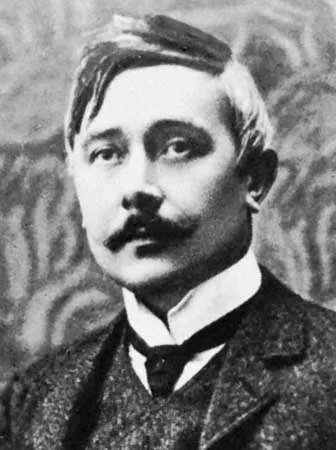
Early Life and Background
Maurice Polydore Marie Bernard Maeterlinck, born on August 29, 1862, in Ghent, Belgium, emerged as a key figure in European literature, particularly in the Symbolist movement. His upbringing in a well-to-do family afforded him the education and cultural exposure that would later influence his literary career. Raised in a French-speaking environment, Maeterlinck developed an affinity for the intricacies of language and the evocative power of words, a passion that would define his life’s work.
Maeterlinck’s early education was rooted in the Jesuit tradition, which instilled in him a sense of discipline and a deep appreciation for the arts and literature. After completing his primary education, he pursued law at the University of Ghent, following in the footsteps of his family’s expectations. However, his true calling was far removed from the legal profession. By the time he graduated, Maeterlinck had already started dabbling in poetry and writing, signaling the beginning of a remarkable literary journey.
The Beginnings of a Literary Career
In 1885, at the age of 23, Maurice Maeterlinck published his first collection of poems and short stories, inspired by the Parnassian movement—a style known for its emphasis on form and emotional restraint. His early works, while modest in scope, were enough to capture the attention of the literary circles in Brussels. These initial writings were featured in the literary journal La Jeune Belgique, marking Maeterlinck’s entry into the literary world.
During his formative years, Maeterlinck was greatly influenced by his encounters with prominent literary figures in Paris, where he spent considerable time. His interaction with Villiers de l’Isle-Adam, a notable playwright and poet, was particularly impactful. Villiers introduced Maeterlinck to Symbolism, a movement that emphasized the expression of ideas and emotions through symbols, rather than direct narrative or description. This influence, coupled with Maeterlinck’s fascination with German Romanticism and medieval mysticism, shaped the thematic and stylistic direction of his future works.
The Rise to Fame
Maurice Maeterlinck’s rise to fame was sudden and extraordinary. In August 1890, the renowned French critic Octave Mirbeau wrote an enthusiastic article in Le Figaro, praising Maeterlinck as “the Belgian Shakespeare.” This accolade was primarily based on Maeterlinck’s play La Princesse Maleine (1889), a dark and atmospheric work that mirrored the sensibilities of the Symbolist movement. Mirbeau’s endorsement catapulted Maeterlinck to literary stardom, establishing him as a leading voice in European theater.
Following the success of La Princesse Maleine, Maeterlinck quickly became a prolific writer, producing a series of plays that further solidified his reputation. L’Intruse (1890), Les Aveugles (1890), and Pelléas et Mélisande (1893) are among his most notable works from this period. These plays are characterized by their haunting atmospheres, exploration of fate and destiny, and a deep sense of mystery—hallmarks of Maeterlinck’s Symbolist style.
Symbolism and Thematic Exploration
Maeterlinck’s work is deeply rooted in the principles of Symbolism, a literary and artistic movement that sought to express the ineffable and the mystical through the use of symbols, allegories, and abstract representations. In contrast to the Realist movement, which focused on the tangible and the observable, Symbolism was concerned with the spiritual, the metaphysical, and the subconscious.
One of the central themes in Maeterlinck’s work is the concept of fate and the inevitable nature of death. His plays often feature characters who are unaware of the forces that control their lives, emphasizing the powerlessness of humanity in the face of destiny. This exploration of the unknown and the unseen is evident in Les Aveugles (The Blind), where a group of blind people are left in the wilderness, unable to perceive the dangers surrounding them. The play is a poignant metaphor for human existence, highlighting the fragility of life and the uncertainty of the future.
Another significant theme in Maeterlinck’s work is the idea of mysticism and the search for spiritual truth. Influenced by medieval mystics and German Romanticism, Maeterlinck often delved into the realm of the supernatural, exploring the boundaries between the material and the spiritual world. His plays frequently feature symbolic elements that suggest a deeper, hidden meaning, inviting the audience to look beyond the surface and contemplate the mysteries of existence.
Personal Life and Relationships
Maurice Maeterlinck’s personal life was as intriguing as his literary works. In the early 1890s, he began a long-term relationship with Georgette Leblanc, a French opera singer. Their partnership was both romantic and professional, as Leblanc often performed in Maeterlinck’s plays and brought his characters to life on stage. Their relationship lasted for over two decades and was marked by a deep intellectual and creative connection.
In 1897, Maeterlinck left Belgium and moved to France, where he continued to write and produce plays. This period of his life was marked by a series of successful works, including Ariane et Barbe-Bleue (1901), which was later adapted into an opera by composer Paul Dukas. Maeterlinck’s relocation to France also coincided with a shift in his writing style, as he began to explore themes of wisdom and destiny in more philosophical terms, as seen in works like La Sagesse et la Destinée (Wisdom and Destiny, 1898).
In 1919, Maeterlinck married Renée Dahon, a French actress. The couple traveled extensively, visiting places such as Hollywood, Spain, Italy, Palestine, Greece, and Egypt. These travels influenced Maeterlinck’s later works, as he began to incorporate elements of his experiences and observations into his writing.
Nobel Prize and Later Works
Maurice Maeterlinck’s contributions to literature were recognized in 1911 when he was awarded the Nobel Prize in Literature. The Nobel Committee praised him for his “many-sided literary activities, and especially for his dramatic works, which interpret in a novel and imaginative manner the psychological and spiritual aspects of life.” This prestigious award solidified Maeterlinck’s status as one of the foremost writers of his time.
Following his Nobel win, Maeterlinck continued to write, producing a wide range of works that included plays, essays, and philosophical treatises. His later works often explored themes of death, the afterlife, and the mysteries of the natural world. La Mort (Death), Marie-Magdeleine, L’Hôte Inconnu (The Unknown Guest), and Le Grand Secret (The Great Secret) are some of the notable works from this period.
In addition to his literary pursuits, Maeterlinck developed an interest in natural history and began writing essays on various subjects related to nature. In 1901, he published La Vie des Abeilles (The Life of the Bee), a detailed and poetic account of the behavior and social organization of bees. This work was followed by La Vie des Termites (The Life of the Termites) in 1926, which stirred controversy due to allegations of plagiarism from the work of South African naturalist Eugène Marais.
Maeterlinck’s fascination with the natural world continued with La Vie des Fourmis (The Life of the Ants) and L’Araignée de Verre (The Glass Spider). These works reflect his ongoing interest in the interplay between nature and the spiritual, as well as his belief in the presence of a hidden, mystical order in the universe.
Later Years and Legacy
In his later years, Maurice Maeterlinck’s life took on a more serene and contemplative tone. In 1932, he purchased a castle in Nice, France, which he named “Orlamonde,” a reference to his earlier play Quinze Chansons. The castle became a sanctuary where Maeterlinck could write and reflect on his life’s work.
Maeterlinck’s contributions to literature were further recognized when he was made a count by King Albert I of Belgium and was awarded the French Legion of Honor. These honors were a testament to his impact on both Belgian and French culture.
During World War II, Maeterlinck moved to the United States, where he lived until 1947. While in America, he continued to write, producing works such as L’Autre Monde ou le Cadran Stellaire (The Other World or the Star Dial). After the war, he returned to France, where he spent his final years.
Maurice Maeterlinck passed away on May 6, 1949, in Nice, at the age of 86. His death marked the end of an era, but his legacy as a pioneering figure in the Symbolist movement and a profound thinker in both literature and philosophy endures. His works continue to be studied and performed, and his influence can be seen in the writings of later generations of playwrights and poets.
Conclusion
Maurice Maeterlinck’s life and work offer a fascinating glimpse into the intellectual and artistic currents of late 19th and early 20th century Europe. From his early influences in Paris to his exploration of mysticism, fate, and the natural world, Maeterlinck’s writings reflect a deep engagement with the mysteries of existence. His contributions to Symbolism and his ability to evoke profound emotions and ideas through his plays and essays have left an indelible mark on world literature.
As a Nobel laureate and a cultural icon, Maurice Maeterlinck’s legacy is one of innovation, introspection, and a relentless pursuit of truth—qualities that continue to resonate with readers and audiences around the world.


