
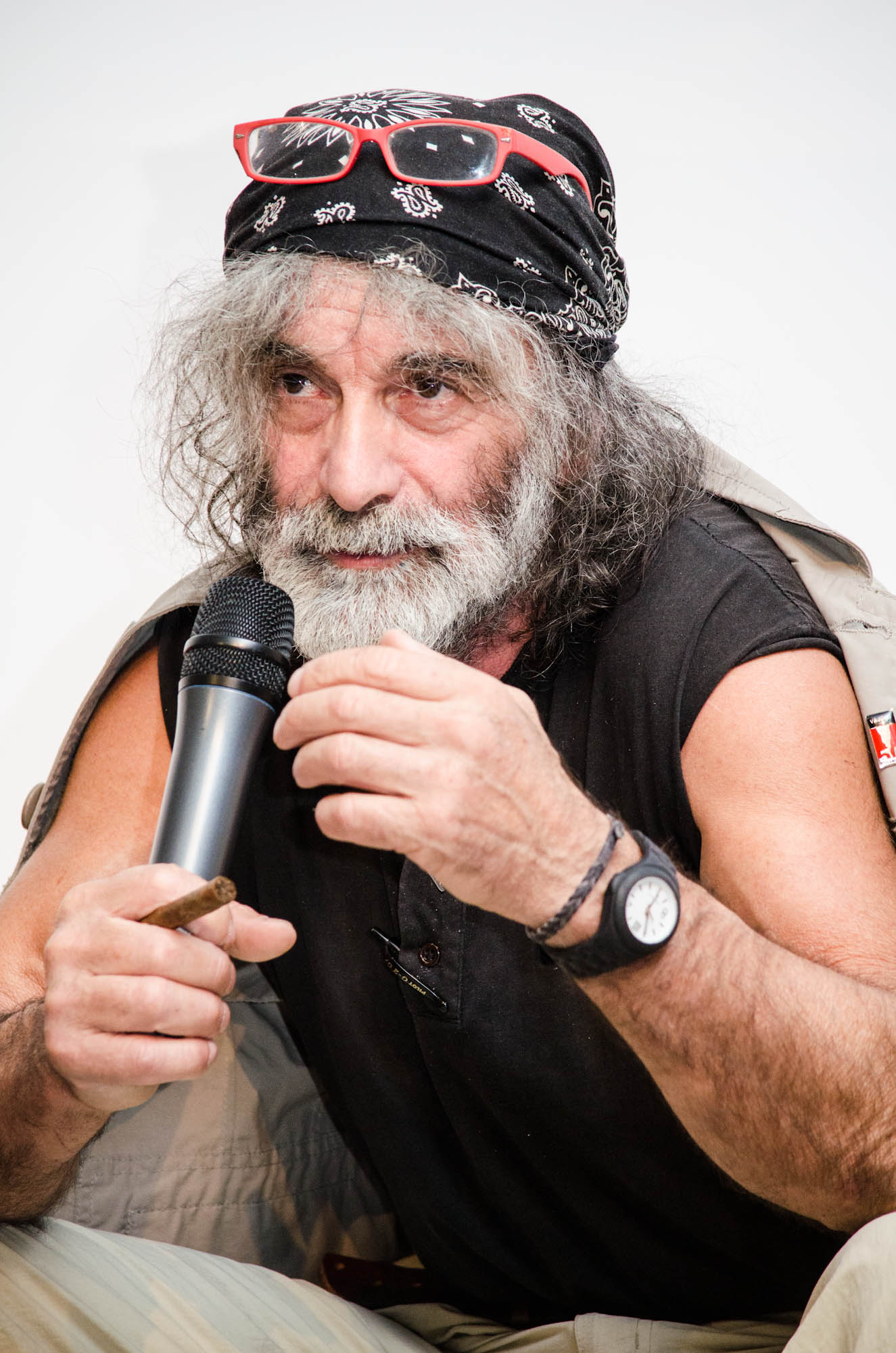
Mauro Corona, born on August 9, 1950, in Piné, Italy, is a multifaceted personality known for his skills as a sculptor, mountaineer, and author. His life story is one of resilience, creativity, and a deep connection to nature. Over the years, Corona has become a prominent figure in Italian culture, with his works resonating well beyond the borders of Italy. This article delves into the life, achievements, and enduring legacy of Mauro Corona, offering detailed insights into the events and experiences that have shaped his journey.
Early Life and Background
Mauro Corona’s early life was marked by hardship and adventure, setting the stage for his later pursuits in life. Born to a family of itinerant traders in Piné, a small town in the province of Pordenone, Corona’s birth was as unconventional as his life would later become. According to Corona, he was born on a cart en route from Piné to the city of Trento—a dramatic entrance into a life filled with unique experiences.
His parents, Domenico and Lucia, were traveling vendors who struggled to make ends meet. When Mauro was just six years old, the family moved back to their hometown of Erto in the Vajont Valley, a place that would profoundly influence his life and work. Growing up in the shadow of the Dolomites, Corona was immersed in nature from an early age. It was in Erto that his grandfather, Felice, taught him the art of wood carving—a skill that would later define his career as a sculptor.
The mountains surrounding Erto also fostered in Mauro a love for alpinism, which was further nurtured by his father, who took him on hunting trips in the high peaks. This early exposure to the rugged beauty of the Dolomites and the craftsmanship of wood carving laid the foundation for Corona’s dual passions: art and mountaineering.
Tragedy and Resilience: The Vajont Disaster
Mauro Corona’s life took a tragic turn on October 9, 1963, when the Vajont Dam disaster struck. The disaster, caused by a massive landslide into the reservoir behind the Vajont Dam, unleashed a deadly wave of water that destroyed several towns, including Longarone, where Mauro had attended middle school. The disaster claimed the lives of nearly 2,000 people, including many of Corona’s friends and neighbors. Mauro himself survived the disaster, but the traumatic event left an indelible mark on his psyche.
In the aftermath of the disaster, Corona was sent to the Don Bosco boarding school in Pordenone, where he was encouraged by Salesian priests to pursue his interest in literature and study. However, his heart remained with the mountains and forests of his youth. The sense of loss and displacement he felt during this time would later permeate his literary work, as he often explored themes of nature, survival, and the human connection to the land.
The Path to Art and Alpinism
After surviving the Vajont disaster, Corona returned to Erto, where he aspired to attend the Art School of Ortisei to further his skills in sculpture. However, financial constraints forced him to enroll at the Marinoni Institute for Geometers in Udine, a decision that did not align with his true passions. After two years, he dropped out and returned to Erto, where he took up work as a stonemason in a marble quarry on Monte Buscada.
Despite the physically demanding nature of his work, Corona never abandoned his love for wood carving. In his spare time, he continued to sculpt, using wood he found in the forests around Erto. His dedication to his craft paid off in 1975 when a local businessman, Renato Gaiotti, noticed his work and purchased all of his pieces. Gaiotti also commissioned Corona to create a Via Crucis (Stations of the Cross) for the Church of San Giovanni in Sacile, a project that earned him two million lire—a significant sum in the 1970s.
With the money he earned from this commission, Corona was able to invest in better tools and materials, allowing him to turn his passion for wood carving into a full-time profession. Around the same time, he began studying under the renowned sculptor Augusto Murer, who became both a mentor and a friend. Under Murer’s guidance, Corona refined his technique and developed his unique artistic style, characterized by a deep respect for the natural forms of the wood he worked with.
In addition to his burgeoning career as a sculptor, Corona pursued his passion for alpinism. In 1963, at the age of 13, he completed his first significant climb, scaling Monte Duranno. Five years later, in 1968, he opened his first route on the Palazza, marking the beginning of his career as a mountaineer. Over the years, Corona would go on to open more than 300 new rock climbing routes on the Dolomites and other mountains in Europe and beyond, including in Greenland and the legendary Yosemite Valley in California.
Literary Career: A Voice from the Mountains
Mauro Corona’s literary career began in the late 1990s, adding another dimension to his already diverse creative output. His first book, Il volo della martora (The Flight of the Marten), was published in 1997 by Mondadori. The book, a collection of stories set in the mountains of his childhood, was well-received and established Corona as a talented writer with a unique voice. His writing, much like his sculpture, is deeply rooted in his love for nature and his experiences growing up in the rugged landscape of the Dolomites.
Following the success of his debut, Corona continued to write, producing a series of books that explored themes of nature, tradition, and the passage of time. Some of his most notable works include Le voci del bosco (The Voices of the Forest, 1998), Gocce di resina (Drops of Resin, 2001), and La montagna (The Mountain, 2002). These books, like much of his work, reflect Corona’s deep connection to the natural world and his belief in the importance of preserving the traditions and stories of his ancestors.
Corona’s literary work is characterized by a straightforward, unpretentious style that resonates with readers. His stories are often centered around the simple, yet profound, experiences of life in the mountains—experiences that are becoming increasingly rare in the modern world. His ability to capture the essence of rural life and the beauty of nature has earned him a dedicated following, and his books have been translated into several languages, including German and Chinese.
In addition to his work as a novelist, Corona has also written non-fiction, including Vajont: quelli del dopo (Vajont: The Aftermath, 2006), a book that revisits the tragedy of the Vajont disaster and its impact on the survivors. The book, like much of his work, is a testament to his ability to blend personal narrative with broader social and environmental themes.
Fame and Cultural Impact
Mauro Corona’s fame extends beyond his work as a sculptor, mountaineer, and writer. He has become a cultural icon in Italy, known for his rugged persona and his outspoken views on a range of social and environmental issues. His appearances on Italian television, particularly as a regular guest on talk shows like CartaBianca, have made him a household name. Corona’s candid, often provocative, commentary on contemporary society has endeared him to many, while also sparking controversy.
Despite his fame, Corona remains deeply connected to his roots in Erto. He continues to live and work in the village, drawing inspiration from the same mountains and forests that shaped his childhood. His commitment to preserving the natural and cultural heritage of his homeland is evident in both his art and his activism. He is a vocal advocate for environmental conservation and has spoken out against the destruction of natural landscapes in the name of progress.
Corona’s influence can also be seen in the broader cultural movement that celebrates a return to nature and a simpler way of life. In an increasingly urbanized and digitized world, his work serves as a reminder of the importance of maintaining a connection to the natural world and preserving the traditions that have sustained communities for generations.
Personal Life and Philosophy
Mauro Corona’s personal life is as complex and multifaceted as his work. He has faced numerous challenges, including the death of his brother Felice, who drowned in a swimming pool in Germany at the age of 17. This loss had a profound impact on Corona and is reflected in the themes of loss and resilience that permeate his work.
Corona’s philosophy is deeply influenced by his experiences in the mountains and his belief in the importance of living in harmony with nature. He advocates for a life of simplicity, self-sufficiency, and respect for the environment. This philosophy is evident not only in his writing and art but also in the way he lives his life—eschewing the trappings of modern consumerism in favor of a more sustainable and meaningful existence.
Corona is also a family man, and his wife and children play a central role in his life. Despite the demands of his various careers, he has always prioritized his family, ensuring that they too are connected to the traditions and values that have guided his own life.
Conclusion
Mauro Corona is a true Renaissance man—an artist, writer, and mountaineer whose work is deeply rooted in the natural world and the traditions of his homeland. His life and career are a testament to the power of resilience, creativity, and a deep connection to the environment. From his early days as a woodcarver in Erto to his current status as a cultural icon, Corona has remained true to his values and his vision.
His contributions to Italian culture, both through his art and his writing, have left a lasting impact, inspiring others to reconnect with nature and to preserve the traditions that define their communities. As Mauro Corona continues to create and explore, his work will undoubtedly continue to resonate with audiences around the world, offering a glimpse into the rugged beauty of the mountains and the enduring spirit of those who call them home.


