
Introduction: The Journalist Who Challenged the Mafia
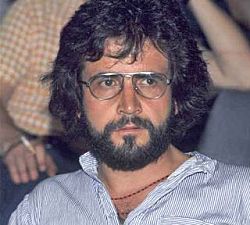
Mauro Rostagno, born on March 6, 1942, in Turin, Italy, was a journalist, sociologist, and activist who became a symbol of resistance against the mafia in Sicily. His life was marked by his unwavering commitment to social justice, truth, and the fight against organized crime. Rostagno’s story is one of courage and tragedy, as he used his platform as a journalist to expose the dark underbelly of mafia activity in Italy, a stance that ultimately cost him his life.
Early Life and Education: The Formative Years
Mauro Rostagno was born into a working-class family in Turin, where his parents were employees at the Fiat automobile company. Growing up in post-war Italy, Rostagno was exposed to the social and economic challenges that shaped his worldview and fueled his desire for social change. He was a bright and inquisitive student, earning his high school diploma in the sciences before marrying at the young age of 19. His early marriage led to the birth of his daughter, Maddalena, but soon after, Rostagno decided to leave his wife and Italy to explore new opportunities abroad.
Rostagno’s early years were marked by a restless pursuit of purpose. He traveled to Germany and later to England, taking on various menial jobs to make ends meet. However, his true passion was journalism, and he eventually returned to Italy with the dream of making a difference through his writing. Despite the challenges he faced, Rostagno’s determination to pursue a career in journalism led him to re-enroll in academic studies, this time at the University of Trento, where he pursued a degree in sociology.
The Student Movement and Political Activism
Mauro Rostagno’s time at the University of Trento in the 1960s coincided with a period of intense political and social upheaval in Italy and across the world. As a sociology student, Rostagno became deeply involved in the student movement, quickly emerging as one of its key leaders. His passion for social justice and his ability to articulate the frustrations and aspirations of his generation made him a prominent figure in the Italian New Left.
In 1966, Rostagno became one of the founders of Lotta Continua, a leftist political movement that sought to mobilize workers and students in the fight against the oppressive structures of capitalism and the state. Lotta Continua played a significant role in the protests and strikes of the late 1960s and early 1970s, advocating for workers’ rights, social equality, and the redistribution of power. Rostagno’s activism during this time was characterized by his strong anti-establishment stance and his belief in the power of grassroots organizing.
In 1970, Rostagno graduated with honors from the University of Trento, completing a thesis on the relationship between political parties, trade unions, and mass movements in Germany. His academic achievements, combined with his leadership in the student movement, positioned him as an influential voice in the Italian left-wing politics of the era.
The Cultural Experiment: Macondo and the Search for Alternatives
After the dissolution of Lotta Continua in 1976, Mauro Rostagno shifted his focus to exploring alternative forms of social and political organization. He moved to Milan, where he became one of the driving forces behind Macondo, a cultural center that aimed to provide a space for the development of leftist ideas and alternative lifestyles. Named after the fictional town in Gabriel García Márquez’s novel “One Hundred Years of Solitude,” Macondo was envisioned as a hub for intellectual and artistic experimentation.
However, Macondo soon attracted the attention of law enforcement, who suspected the center of being a front for drug trafficking and other illicit activities. In February 1978, the police raided Macondo and shut it down, marking the end of this particular experiment in countercultural living. Despite the setback, Rostagno’s commitment to social change remained undiminished, and he continued to seek new avenues for his activism.
The Indian Journey: Spiritual Exploration and the Bhagwan Community
Disillusioned with the political landscape in Italy, Mauro Rostagno and his partner, Chicca Roveri, embarked on a journey to India in search of spiritual enlightenment. In 1979, they joined the followers of Bhagwan Shree Rajneesh (later known as Osho), a controversial spiritual leader who attracted a large international following. In the ashram at Poona, Rostagno adopted the name Anand Sanatano, embracing the teachings of Bhagwan and the communal lifestyle of his followers.
Rostagno’s time in India was a period of deep introspection and personal transformation. The experience broadened his perspective on life and introduced him to new ways of thinking about community, spirituality, and personal fulfillment. However, the allure of the ashram eventually faded, and in 1981, Rostagno and Roveri returned to Italy, bringing with them the lessons they had learned in India.
Return to Italy: Founding Saman and the Fight Against the Mafia
Upon returning to Italy, Mauro Rostagno and Chicca Roveri settled in Sicily, a region plagued by deep-seated social issues, including widespread poverty and the pervasive influence of the mafia. Determined to make a difference, Rostagno co-founded the Saman community in the province of Trapani. Saman was established as a therapeutic community dedicated to the rehabilitation of individuals struggling with drug addiction and alcoholism. The community’s mission was to provide a safe and supportive environment where people could rebuild their lives and overcome the challenges of addiction.
At the same time, Rostagno rekindled his passion for journalism, joining the local television station RTC (Radio Tele Cine) in Trapani. He quickly became known for his hard-hitting reports that fearlessly exposed the connections between local politicians, business interests, and the mafia. Rostagno’s reporting on the mafia’s activities in Sicily was groundbreaking, as he used his platform to bring to light the crimes and corruption that were often ignored or downplayed by mainstream media.
Rostagno’s work with RTC earned him both admiration and enmity. His fearless pursuit of the truth and his willingness to challenge the status quo made him a target for those who sought to maintain the power structures in Sicily. Despite the risks, Rostagno continued to use his voice to advocate for justice and accountability, becoming a symbol of resistance against the mafia’s stranglehold on the region.
The Tragic End: Assassination and Legacy
Mauro Rostagno’s life was tragically cut short on the evening of September 26, 1988. As he was returning to the Saman community, Rostagno was ambushed and shot dead in his car by mafia hitmen. The assassination sent shockwaves throughout Italy and underscored the deadly consequences of challenging the mafia. Rostagno’s death was a stark reminder of the dangers faced by those who dare to confront organized crime in Italy.
The investigation into Rostagno’s murder was marred by delays, inconsistencies, and obstructions, leading to years of uncertainty about who was responsible for his death. It wasn’t until years later that two members of the Trapani mafia, Vincenzo Virga and Vito Mazzara, were convicted for their roles in Rostagno’s assassination. The trial revealed that Rostagno’s reporting on mafia activities had made him a marked man, and his killers sought to silence him before he could expose more of their crimes.
Mauro Rostagno’s legacy lives on as a symbol of courage and integrity in the face of overwhelming adversity. His work as a journalist and activist continues to inspire others to speak out against injustice and to fight for a more equitable and just society. In 2011, his daughter, Maddalena Rostagno, published a book titled “Il suono di una sola mano. Storia di mio padre Mauro Rostagno” (The Sound of One Hand Clapping: The Story of My Father Mauro Rostagno), which chronicles his life, his work, and the impact he had on those around him.
Historical Context and Cultural Significance
To fully appreciate the significance of Mauro Rostagno’s life and work, it is essential to understand the broader historical and cultural context in which he operated. Italy in the 1970s and 1980s was a country grappling with profound social, political, and economic challenges. The rise of leftist movements like Lotta Continua reflected widespread disillusionment with the established political order and a desire for radical change.
At the same time, the mafia’s grip on southern Italy, particularly in regions like Sicily, was tightening. The mafia’s influence extended into all aspects of society, including politics, business, and law enforcement. Those who dared to challenge the mafia’s power often found themselves isolated, threatened, or, like Rostagno, assassinated.
Rostagno’s work as a journalist in this environment was nothing short of revolutionary. By exposing the connections between the mafia, local elites, and the state, he helped to break the code of silence that allowed organized crime to flourish unchecked. His death, while tragic, served as a catalyst for greater public awareness of the mafia’s activities and the need for concerted action to dismantle its power.
Conclusion: The Enduring Legacy of Mauro Rostagno
Mauro Rostagno’s life was a testament to the power of truth and the importance of standing up for what is right, even in the face of overwhelming odds. His work as a journalist and activist left an indelible mark on Italian society, and his legacy continues to inspire those who fight for justice and accountability.
Rostagno’s story is a reminder that the fight against organized crime is not just a matter of law enforcement, but also a struggle for the soul of society. His commitment to exposing the truth, no matter the cost, serves as a powerful example of the impact that one person can have in the battle against corruption and injustice.
As we remember Mauro Rostagno, we honor the courage and conviction that defined his life. His legacy lives on in the continued fight against the forces of darkness that he so bravely confronted, and in the hope that one day, his vision of a just and fair society will be realized.


