
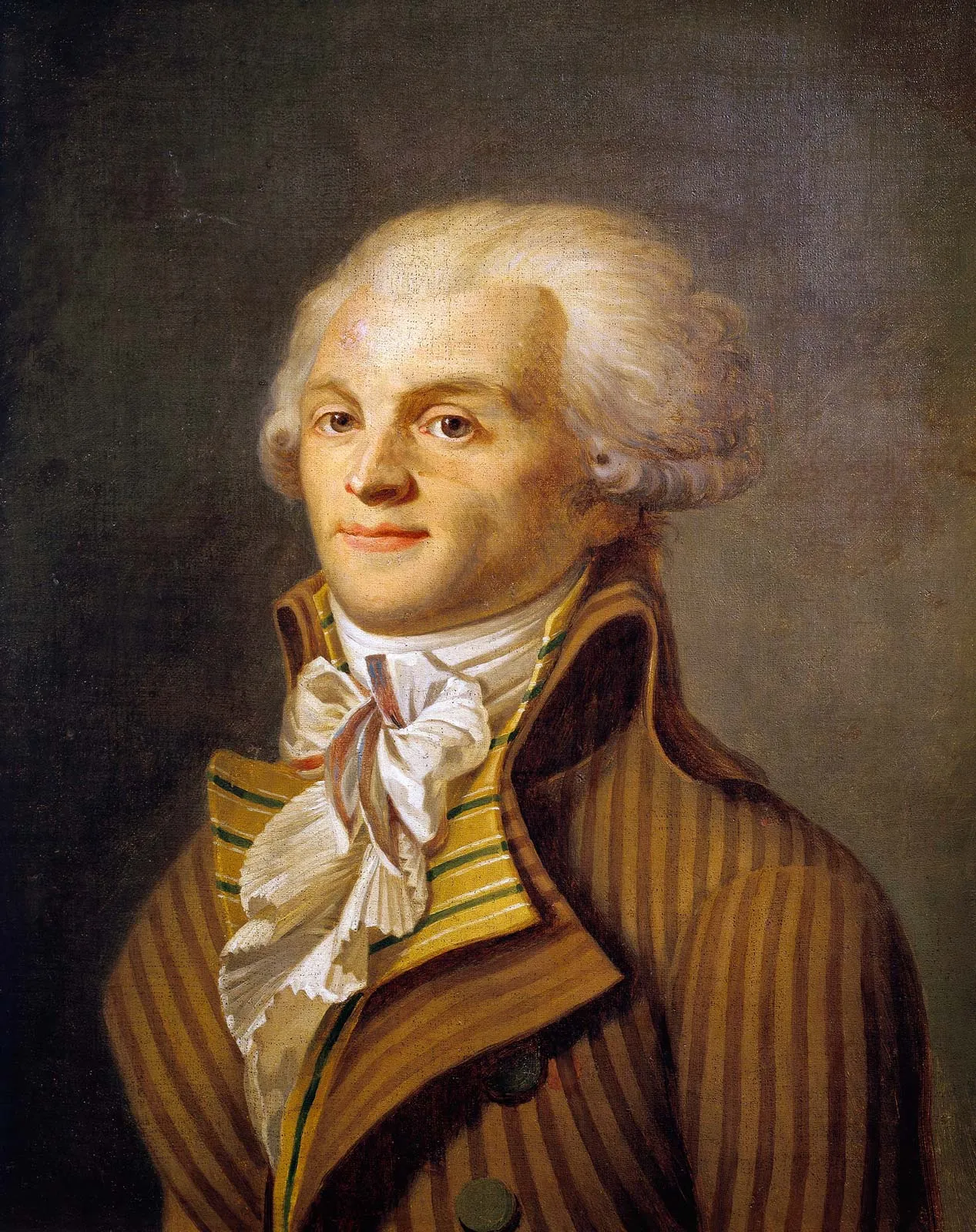
Maximilien-François-Marie-Isidore de Robespierre, often simply known as Maximilien Robespierre, is one of the most complex and polarizing figures in history. Born on May 6, 1758, in Arras, France, Robespierre rose to prominence during the French Revolution, a period of significant upheaval that permanently altered the political and ideological landscape of Western civilization. Known as “The Incorruptible,” Robespierre’s name is inextricably linked with the Reign of Terror, a period marked by extreme political purges and widespread executions. His legacy remains contentious, with historians divided over whether to remember him as an idealistic visionary or a ruthless dictator.
Early Life and Education
Maximilien Robespierre was born into a family of the notarial nobility, a class of professionals who occupied a unique space between the aristocracy and the common people. His father, François de Robespierre, was a lawyer, while his mother, Jacqueline Marguerite Carraut, came from a well-respected family in Arras. Tragically, Robespierre’s early years were marked by personal loss. His mother died in 1764, shortly after giving birth to her youngest child, and his father abandoned the family soon after, leaving Maximilien and his siblings to be raised by their maternal grandparents and aunts.
Despite these hardships, Robespierre excelled academically. He attended the prestigious Louis-Le-Grand College in Paris, where he received a scholarship due to his academic excellence. It was here that Robespierre first encountered the works of Enlightenment philosophers, particularly Jean-Jacques Rousseau, whose ideas would profoundly influence his political ideology. Robespierre’s education at Louis-Le-Grand laid the foundation for his future career as a lawyer and a revolutionary, imbuing him with a strong sense of justice and a deep commitment to the principles of equality and liberty.
Legal Career and Early Political Involvement
After completing his studies, Robespierre returned to his hometown of Arras to practice law. He quickly gained a reputation for his eloquence and his dedication to defending the rights of the common people. One of his earliest notable cases involved opposing the arbitrary arrest and execution of a peasant, which showcased his commitment to justice and his opposition to the death penalty—a stance that would later become paradoxical as he rose to power.
Robespierre’s legal career was marked by his growing involvement in local politics. In 1786, he was appointed as a judge in the Arras criminal court, a position he held briefly before resigning in protest against the imposition of the death penalty. His disillusionment with the existing legal system, combined with his admiration for Rousseau’s philosophy, fueled his desire to bring about political change. He became increasingly involved in the intellectual circles of Arras, eventually becoming the director of the local Academy of Arts and Letters.
Robespierre’s political activities gained momentum with the onset of the French Revolution in 1789. As the Ancien Régime began to crumble, Robespierre was elected as a deputy to the Estates-General, representing the Third Estate, which comprised the common people. This marked the beginning of his ascent to national prominence, as he quickly became one of the leading voices of the revolutionary movement.
The French Revolution and Rise to Power
The French Revolution, which began in 1789, was a period of immense social, political, and economic upheaval. It aimed to dismantle the feudal system and establish a society based on the principles of liberty, equality, and fraternity. Robespierre emerged as a key figure during this time, known for his unwavering commitment to the revolutionary cause and his ability to articulate the aspirations of the people.
Robespierre’s rise to power was swift. He was a vocal critic of the monarchy and an advocate for the rights of the common people. His speeches at the National Assembly were marked by their clarity and moral conviction, earning him the nickname “The Incorruptible” for his perceived integrity and dedication to the revolution’s ideals. By 1790, he had become the leader of the Jacobin Club, a political group that played a central role in the revolution.
As the revolution progressed, Robespierre became increasingly influential. He was a driving force behind several key revolutionary measures, including the Declaration of the Rights of Man and of the Citizen, which laid the groundwork for modern human rights. He also championed the abolition of the monarchy and the establishment of a republic, arguing that the king’s continued existence was incompatible with the principles of liberty and equality.
The Reign of Terror
The Reign of Terror, which lasted from September 1793 to July 1794, is the most controversial period of Robespierre’s life. During this time, the revolutionary government, led by the Committee of Public Safety (of which Robespierre was a prominent member), implemented a series of draconian measures aimed at defending the revolution from its enemies, both real and perceived. The Reign of Terror was characterized by mass arrests, summary trials, and executions, with tens of thousands of people being sent to the guillotine.
Robespierre’s role in the Reign of Terror has been the subject of intense debate among historians. On one hand, he is seen as a staunch defender of the revolution, willing to take extreme measures to protect it from internal and external threats. On the other hand, he is criticized for his authoritarianism and his role in the mass executions that took place during this period.
One of the most significant actions of Robespierre during the Reign of Terror was his involvement in the execution of King Louis XVI. Robespierre argued that the king’s death was necessary to solidify the revolution and to prevent the return of the monarchy. The execution of the king marked a turning point in the revolution, signaling the end of the monarchy and the beginning of a more radical phase of the revolution.
As the Reign of Terror intensified, Robespierre’s influence grew. He became increasingly dictatorial, using his power to eliminate political rivals and suppress dissent. His former allies, including Georges Danton and Camille Desmoulins, were among those who were arrested and executed during this period. Robespierre’s insistence on maintaining the revolutionary government’s strict policies, coupled with his increasing paranoia, alienated many of his supporters and led to his eventual downfall.
The Cult of the Supreme Being
One of the more controversial aspects of Robespierre’s leadership was his introduction of the Cult of the Supreme Being, a state-sponsored deistic religion intended to replace Catholicism and promote republican virtues. The cult was inspired by Rousseau’s ideas and sought to unify the French people under a common belief system that emphasized morality and civic duty.
The Cult of the Supreme Being was officially inaugurated on June 8, 1794, with a grand festival in Paris. Robespierre, dressed in a toga, presided over the ceremonies, which included a procession, speeches, and the burning of symbolic effigies. The event was intended to demonstrate the moral and spiritual superiority of the revolutionary government. However, it was met with skepticism and ridicule by many, who saw it as an attempt by Robespierre to establish himself as a quasi-religious leader.
The establishment of the cult further isolated Robespierre from other revolutionary leaders, many of whom viewed it as evidence of his growing megalomania. The combination of Robespierre’s religious zeal and his ruthless enforcement of revolutionary principles led to increasing discontent within the revolutionary government.
Downfall and Death
By the summer of 1794, Robespierre’s position had become increasingly precarious. His relentless pursuit of revolutionary purity had alienated many of his former allies, and his role in the Reign of Terror had made him numerous enemies. The tipping point came on July 27, 1794 (9 Thermidor, according to the revolutionary calendar), when members of the National Convention turned against him.
Robespierre was arrested along with several of his closest associates, including Louis Antoine de Saint-Just and Georges Couthon. The following day, on July 28, 1794, Robespierre and his supporters were executed by guillotine in what became known as the Thermidorian Reaction. His death marked the end of the Reign of Terror and the beginning of a more moderate phase of the revolution.
Robespierre’s execution was greeted with widespread relief and celebration in Paris, as many believed that his death would bring an end to the violence and repression of the Terror. However, Robespierre’s legacy would continue to be a subject of intense debate and analysis for centuries to come.
Legacy and Historical Interpretation
Maximilien de Robespierre remains one of the most enigmatic and divisive figures in history. His role in the French Revolution has been interpreted in various ways, with some viewing him as a champion of the people and a defender of democratic ideals, while others see him as a tyrant who betrayed the principles of the revolution in his pursuit of power.
Robespierre’s influence on modern political thought is undeniable. His ideas about social justice, the role of the state, and the relationship between morality and politics continue to resonate in contemporary debates. However, his legacy is also a cautionary tale about the dangers of ideological extremism and the potential for revolutionary movements to devolve into violence and repression.
In the years following his death, Robespierre was both vilified and idolized. For some, he became a symbol of the dangers of unchecked power and the perils of radicalism. For others, he was a martyr who sacrificed himself for the ideals of the revolution. Today, historians continue to grapple with the complexities of Robespierre’s life and legacy, acknowledging both his contributions to the revolutionary cause and the darker aspects of his rule.
Conclusion
Maximilien de Robespierre’s life is a study in contrasts. He was a man of principle, deeply committed to the ideals of liberty, equality, and fraternity. Yet, his pursuit of these ideals led to some of the most brutal and repressive actions in the history of the French Revolution. His story is a reminder of the thin line between revolution and tyranny, and the ways in which power can corrupt even the most well-intentioned individuals.
As we reflect on Robespierre’s life, we are reminded of the complexities of history and the challenges of interpreting the actions of those who lived in times of great upheaval. Robespierre’s legacy is one of both inspiration and caution, offering valuable lessons for those who seek to understand the dynamics of power, revolution, and the human condition.


