
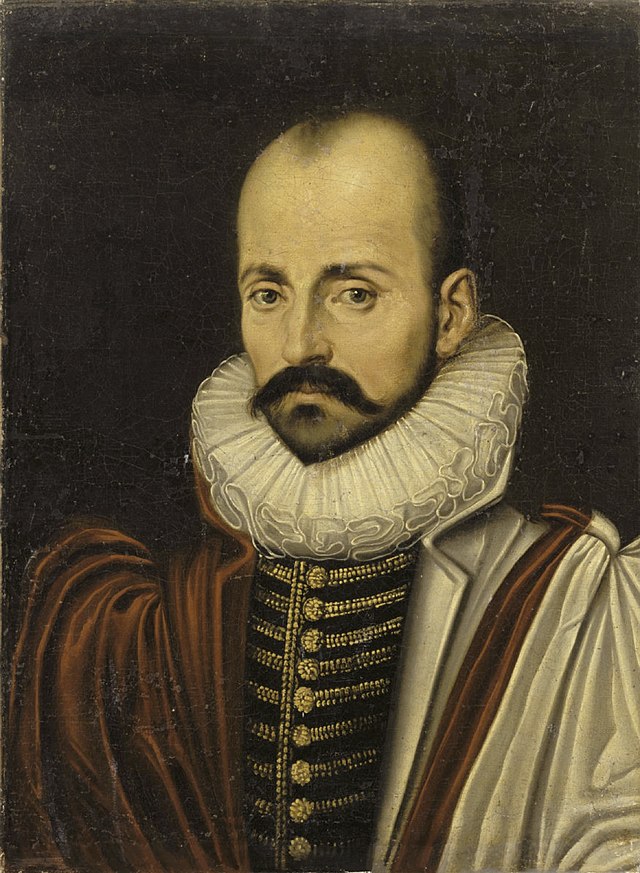
Michel de Montaigne is a name that resonates throughout the annals of philosophy, literature, and moral thought. Born on February 28, 1533, in the château of Montaigne in the Périgord region of France, Montaigne is widely recognized as one of the most significant figures in the development of modern thought. His life, work, and ideas have had a profound impact on generations of thinkers, and his influence continues to be felt in various fields of human knowledge.
Early Life and Education
Michel de Montaigne was born into a noble family, and his early life was shaped by his father, who provided him with an education that was both unorthodox and liberating. His father believed in a free and natural approach to learning, which led to Montaigne being educated in Latin from an early age, even before he learned French. His education was overseen by a tutor who spoke only Latin, ensuring that Montaigne would master the language as if it were his mother tongue. This classical education laid the foundation for his later works, which are filled with references to ancient texts and ideas.
Montaigne’s early career saw him studying law and serving as a counselor in the Bordeaux Parliament in 1557. However, his true calling was not in law or politics but in the realm of ideas. He began to explore the world of literature and philosophy, eventually translating the work of the Catalan theologian Raimond Sebond, Theologia Naturalis. This work, known as the Book of Creatures, sought to demonstrate the truth of Catholic faith through the study of nature and humanity rather than relying solely on the sacred texts of the Church.
The Retreat to Montaigne’s Tower
In 1571, at the age of 38, Montaigne retired to his family’s château, where he would dedicate himself to the life of a scholar. He transformed a tower in the château into his personal library and retreat, where he spent most of his time reading, writing, and reflecting. It was here that Montaigne began to compose his most famous work, Essays (Essais in French), a collection of writings that would eventually revolutionize the genre of essay writing.
Montaigne’s Essays are unique in that they are deeply personal, reflecting his thoughts, experiences, and observations on a wide range of topics. From the nature of human knowledge to the art of living, Montaigne’s writings delve into the complexities of the human condition. His essays are not systematic treatises but rather explorations of his own mind, thoughts, and experiences, which he often refers to as a “painting of the self.”
The first two books of Essays were published in 1580, and Montaigne continued to revise and expand them throughout his life. The final edition, published in 1588, consists of three books that cover a wide array of subjects, from education and friendship to death and the limits of human knowledge.
Montaigne’s Travels and Political Career
In addition to his scholarly pursuits, Montaigne was also a traveler and a public servant. In 1580, shortly after the publication of the first edition of his Essays, Montaigne embarked on a journey across Europe, visiting Switzerland, Germany, and Italy. During this journey, he spent time in Rome, where he was warmly received by the intellectual and political elite of the city. His travels provided him with new insights and experiences, which he later incorporated into his writings.
In 1581, upon his return to France, Montaigne was appointed mayor of Bordeaux, a position he held for two terms. His time as mayor was marked by political instability, as France was in the midst of the Wars of Religion, a series of conflicts between Catholics and Protestants that ravaged the country. Despite the challenges, Montaigne managed to navigate the turbulent political landscape with pragmatism and diplomacy, earning the respect of both his contemporaries and later historians.
The Philosophical Legacy of Montaigne
Montaigne’s philosophical outlook is characterized by skepticism, a questioning attitude toward knowledge and belief that was revolutionary in his time. He lived during a period of profound change in European thought, as the certainties of the medieval world were being challenged by new discoveries in science, geography, and culture. The fall of geocentrism, the critiques of Aristotle’s principles, and the medical innovations of the time all contributed to a sense of uncertainty and flux.
Montaigne’s skepticism is not a form of nihilism but rather a recognition of the limitations of human reason and the impossibility of attaining absolute certainty. He was critical of the Stoic philosophy, which claimed that reason could lead to human liberation. Montaigne argued that reason itself is influenced by customs, geographical circumstances, and historical context, making it unreliable as a universal guide.
This skeptical approach led Montaigne to advocate for a kind of intellectual humility, a recognition that human knowledge is always provisional and subject to change. He famously wrote, “What do I know?” (Que sais-je?), a question that encapsulates his philosophical outlook. Montaigne’s essays often explore the tension between the desire for knowledge and the awareness of its limitations, a theme that resonates with modern readers who live in an age of information overload and uncertainty.
Montaigne’s Influence on Later Thinkers
Montaigne’s influence extends far beyond his own time, shaping the thoughts and works of many later philosophers and writers. Among his most famous admirers was Friedrich Nietzsche, who praised Montaigne for his ability to embrace life with a sense of joy and curiosity. Nietzsche wrote that Montaigne had “increased our pleasure in living on this earth,” a testament to the enduring appeal of Montaigne’s ideas.
Montaigne’s impact can also be seen in the development of modern essay writing. His personal, reflective style paved the way for later essayists like Ralph Waldo Emerson and Virginia Woolf, who drew inspiration from Montaigne’s ability to blend the personal with the philosophical. Montaigne’s essays are still read and studied today, not only for their literary quality but also for their insights into the human condition.
The End of Montaigne’s Life and His Lasting Legacy
Montaigne continued to revise his Essays until his death on September 13, 1592. His work was left unfinished, with the final edition of his Essays published posthumously. Despite the incomplete nature of his work, Montaigne’s Essays have stood the test of time, remaining a cornerstone of Western literature and philosophy.
The lasting legacy of Michel de Montaigne lies in his ability to capture the complexity and richness of human experience. His writings offer a window into the mind of a man who was deeply reflective, intellectually curious, and unafraid to question the accepted truths of his time. Montaigne’s Essays continue to inspire readers to this day, encouraging them to engage in the same kind of self-exploration and critical thinking that he exemplified.
In the final analysis, Michel de Montaigne was a man who sought to understand himself and the world around him through the lens of reason, experience, and introspection. His work remains a testament to the enduring power of the written word to illuminate the human condition and to inspire future generations to think deeply about their own lives and the world in which they live.


