
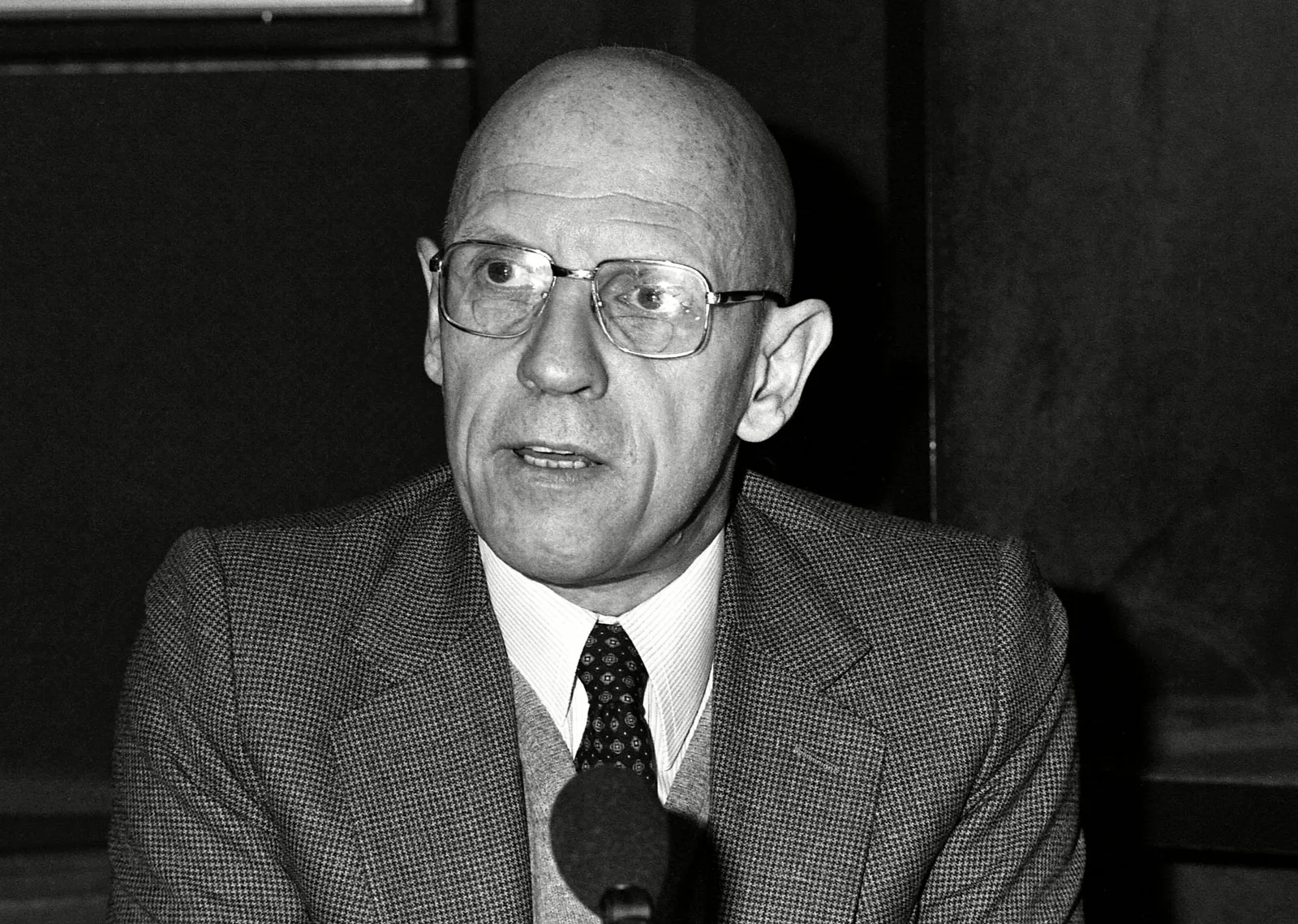
Michel Foucault, born Paul-Michel Foucault on October 15, 1926, in Poitiers, France, was a philosopher, historian of ideas, social theorist, and literary critic. His work profoundly impacted multiple fields, including philosophy, sociology, literary criticism, and cultural studies. Foucault is best known for his critical studies of social institutions, especially those related to power, knowledge, and sexuality. His theories about the relationship between power and knowledge, and how they are used as a form of social control through societal institutions, have been influential across a wide range of academic disciplines. This article delves into his life, his intellectual journey, and the lasting impact of his ideas.
Early Life and Intellectual Formation
Michel Foucault was born into a well-established family in Poitiers, a small town in western France. His father, Paul Foucault, was a prominent surgeon, and it was expected that Michel would follow in the family tradition. However, Foucault’s interests diverged early on, leading him towards history and philosophy rather than medicine. His intellectual journey began in earnest during his secondary education at the prestigious Lycée Henri-IV in Paris, where he developed an interest in philosophy under the guidance of Jean Hyppolite, a prominent French philosopher.
During his university years, Foucault studied under some of the most influential French intellectuals of the time, including Maurice Merleau-Ponty and Louis Althusser. These experiences were crucial in shaping his philosophical outlook. However, Foucault’s early life was also marked by personal struggles. He was a solitary and somewhat eccentric figure, grappling with his homosexuality in a society that was not accepting of such differences. These internal conflicts led to several suicide attempts, and Foucault also battled with depression and alcoholism. Despite these challenges, his academic career flourished.
Foucault’s early academic work was heavily influenced by existentialism, phenomenology, and structuralism. He immersed himself in the works of Friedrich Nietzsche, whose ideas about power, history, and the “genealogy” of concepts would profoundly influence his later work. Although he initially avoided a public intellectual role, preferring to engage with ideas in a more private and reflective manner, Foucault’s growing body of work began to attract attention.
The Birth of a Critical Thinker: Early Works and Ideas
Foucault’s first major work, “Madness and Civilization” (1961), explored the history of madness in Western society. It was here that he began to develop his ideas about how societal norms and institutions define and control behavior. Foucault argued that madness was not a natural phenomenon but a social construct that had been shaped by historical forces. This work marked the beginning of Foucault’s exploration of how power operates through institutions and knowledge.
In “The Birth of the Clinic” (1963), Foucault examined the history of medicine and how the clinical gaze—how doctors see and treat patients—had evolved over time. He argued that the rise of the clinic represented a new form of power over the body, as medical professionals began to see patients as objects of study rather than as individuals. This idea would later be central to Foucault’s concept of biopower, the control of populations through medical and scientific knowledge.
Foucault’s next major work, “The Order of Things” (1966), examined the development of the human sciences, such as biology, economics, and linguistics. He introduced the concept of “episteme,” a framework of knowledge that defines what is considered true and false in a given era. Foucault argued that each historical period has its own episteme, which shapes how people understand the world. This work cemented Foucault’s reputation as a leading thinker in the field of structuralism, although he later distanced himself from the label.
Foucault and Power: The Archaeology and Genealogy of Knowledge
The concept of power became central to Foucault’s later work. He argued that power is not just something that is held by a few individuals or institutions but is diffused throughout society. Power is everywhere, and it operates through discourse—the way that knowledge and language are used to shape reality. Foucault explored these ideas in his books “Discipline and Punish” (1975) and “The History of Sexuality” (1976).
In “Discipline and Punish,” Foucault traced the history of punishment from the brutal public executions of the pre-modern era to the more subtle forms of discipline used in modern prisons. He argued that modern society is characterized by a shift from sovereign power, which is exercised through direct control, to disciplinary power, which operates through surveillance and normalization. Foucault’s concept of the panopticon, a prison design that allows guards to observe prisoners without being seen, became a powerful metaphor for modern surveillance societies.
“The History of Sexuality” is a multi-volume work that explores how sexuality has been constructed and regulated by society. Foucault argued that rather than repressing sexuality, modern societies have developed complex systems of knowledge and power that shape how people understand and experience their own sexuality. This work introduced the concept of biopower, the control of populations through the regulation of bodies and sexuality. Foucault’s ideas about power and sexuality have had a profound impact on feminist theory, queer theory, and studies of race and colonialism.
The Public Intellectual: Activism and Later Life
Despite his reluctance to take on a public role, Foucault became increasingly involved in political activism during the late 1960s and 1970s. He was an outspoken critic of the French government and supported various radical causes, including the rights of prisoners, the anti-psychiatry movement, and the struggle against colonialism. Foucault’s activism was closely linked to his intellectual work, as he sought to apply his ideas about power and resistance to real-world struggles.
Foucault’s time in Tunisia during the late 1960s, where he taught at the University of Tunis, exposed him to the political upheavals of the region and deepened his engagement with issues of power and resistance. He returned to France during the student protests of May 1968, which he supported, and this period marked a turning point in his career. His involvement in these movements led to his appointment to the prestigious Collège de France in 1970, where he held the Chair of History of Systems of Thought until his death.
Foucault’s later work focused increasingly on the concept of governmentality, the ways in which modern states regulate their populations through techniques of governance. He explored how governments seek to shape the conduct of individuals and populations, not just through laws and regulations but through practices of self-regulation and normalization. These ideas were further developed in his lectures at the Collège de France, which have been published posthumously.
Foucault’s Legacy: A Lasting Impact on Thought and Culture
Michel Foucault’s work has had a profound and lasting impact on a wide range of academic disciplines, including philosophy, sociology, political science, and cultural studies. His ideas about power, knowledge, and discourse have influenced countless scholars and continue to be the subject of debate and discussion. Foucault’s work is characterized by its interdisciplinary approach, drawing on history, philosophy, psychology, and literature to explore the ways in which power operates in society.
Foucault’s influence can be seen in the development of critical theory, post-structuralism, and postmodernism. His ideas have been particularly influential in feminist theory, where scholars have used his concept of biopower to explore how women’s bodies have been regulated and controlled by patriarchal institutions. Queer theory has also drawn on Foucault’s work to challenge normative understandings of sexuality and identity.
Foucault’s legacy extends beyond academia. His ideas have been taken up by activists and policymakers who seek to challenge systems of power and oppression. His work on prisons, psychiatry, and sexuality has inspired movements for social justice and human rights. Foucault’s emphasis on the importance of critique and resistance continues to resonate with those who seek to challenge the status quo and envision alternative futures.
Despite his death in 1984 from complications related to HIV/AIDS, Michel Foucault’s work remains highly relevant today. His ideas about the relationship between power, knowledge, and society continue to inform contemporary debates about governance, identity, and social justice. Foucault’s work challenges us to think critically about the ways in which power operates in our lives and to resist the forces that seek to shape our thoughts and actions.
In conclusion, Michel Foucault was not just a philosopher but a revolutionary thinker whose ideas continue to shape our understanding of the world. His work on power, knowledge, and discourse has transformed the way we think about social institutions and the ways in which they control and regulate human behavior. Foucault’s legacy is one of critical inquiry, intellectual rigor, and a commitment to challenging the structures of power that shape our lives. His influence will undoubtedly continue to be felt for generations to come.


