
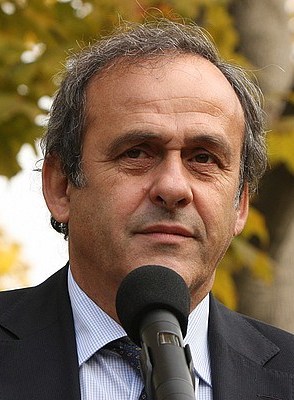
Michel François Platini is a name that resonates profoundly within the world of football. Born on June 21, 1955, in Joeuf, France, Platini’s journey from a small-town boy to one of the most revered footballers and influential sports administrators in history is nothing short of extraordinary. His story is not just about his on-field prowess but also about the legacy he built off the pitch, shaping the future of football in various capacities.
Early Life and Roots
Michel Platini was born into a family with Italian roots, his parents being restaurateurs who had migrated from Italy. His early exposure to football came through his father, Aldo Platini, who was not only the captain of a local team but also a passionate advocate of the sport. This familial influence played a significant role in nurturing Michel’s love for football from a tender age.
Young Michel started honing his skills by participating in his father’s training sessions, gradually developing into a player of immense promise. His talent was evident early on, and it wasn’t long before he was playing for the local club, Joeuf. Michel Platini’s rise was swift, and by the age of 18, he was already making headlines as a potential future star of French football.
Rise to Prominence: Club Career
Platini’s professional career began in 1972 when he joined AS Nancy, a club in the French top tier. His debut season in 1972-73 saw him playing as a left-winger, but it was soon apparent that his true potential lay in a more central role. As a midfielder, Platini was unparalleled in his vision, technique, and ability to control the game’s tempo.
By 1976, Platini had established himself as a key player for Nancy and had already caught the eye of national team selectors. That year marked his debut on the international stage, where he scored his first goal for France in a match against Czechoslovakia. His performances for both club and country were turning heads across Europe, and he soon became one of the most sought-after players.
In 1979, after a successful stint with Nancy, which included a French Cup victory, Platini moved to Saint-Étienne. It was here that he truly flourished, leading the team to a French championship in 1981. His time at Saint-Étienne solidified his reputation as one of the best players in the world.
International Glory
While Platini’s club career was thriving, it was on the international stage that he truly became a legend. He made his World Cup debut in 1978 in Argentina, showcasing his exceptional skills even though the French team did not progress far in the tournament.
The 1982 World Cup in Spain was a pivotal moment in Platini’s career. Leading the French national team, he played a crucial role in their journey to the semifinals, where they were narrowly defeated by West Germany in a match that is still remembered as one of the greatest in World Cup history.
However, it was the 1984 UEFA European Championship that defined Platini’s international career. Held in France, Platini captained the French team to their first major international trophy. He was the tournament’s top scorer with nine goals, a record that still stands. His performances earned him the Ballon d’Or that year, an accolade he would win three times consecutively from 1983 to 1985.
Juventus and the Pinnacle of Club Success
In 1982, Platini made a high-profile move to Juventus, one of Italy’s most prestigious clubs. This transfer was not just about the money—Juventus paid 880 million Lire for him—but also about the opportunity to compete at the highest level in European football.
His time at Juventus was nothing short of spectacular. In his first season, Platini faced challenges, including injuries and adaptation to Italian football, but he quickly overcame them. By the 1983-84 season, Platini had led Juventus to victory in the UEFA Cup Winners’ Cup and the Italian league, establishing himself as the best player in the world.
The following season, 1984-85, was bittersweet for Platini and Juventus. While they won the European Cup, the victory was overshadowed by the tragic Heysel Stadium disaster, where 39 fans lost their lives. Despite this, Platini’s influence on the pitch was undeniable, and he was again awarded the Ballon d’Or.
In 1986, Platini won the Intercontinental Cup with Juventus and played in his third World Cup, where France reached the semifinals before being eliminated by West Germany. After the 1986-87 season, Platini decided to hang up his boots, ending his playing career on a high note.
Post-Retirement: Leadership and Controversy
Retirement did not mark the end of Michel Platini’s involvement with football. Far from it, his post-playing career was as influential, if not more so, than his time on the pitch. He transitioned seamlessly into football administration, bringing the same vision and strategic thinking that characterized his playing days.
Platini’s first major role was as the vice-president of AS Nancy, his first club. However, his ambitions extended far beyond the local level. In 1988, he took on the role of the French national team’s manager, a position he held until 1992. Although his tenure ended in disappointment with France failing to qualify for the 1992 European Championship, it did little to tarnish his reputation.
Platini’s influence grew when he was appointed co-president of the organizing committee for the 1998 FIFA World Cup, which was held in France. The tournament was a massive success, both in terms of organization and for the French national team, which won the World Cup for the first time.
In 2007, Platini was elected president of UEFA, the governing body of European football. His tenure was marked by significant reforms, including the introduction of Financial Fair Play regulations, aimed at ensuring the financial stability of football clubs across Europe. He also played a key role in expanding the European Championship to 24 teams, a move that increased the tournament’s global appeal.
However, Platini’s administrative career was not without controversy. In 2015, he was implicated in a corruption scandal involving a payment from FIFA, which led to his suspension from football-related activities. Despite his defense that the payment was legitimate, Platini was banned from all football activities for eight years, later reduced to four. This marked a dramatic fall from grace for a man who had once been considered a potential successor to FIFA President Sepp Blatter.
Legacy and Influence
Despite the controversies, Michel Platini’s legacy in football is secure. On the pitch, he was a player of rare genius, capable of turning a game with a single moment of brilliance. His vision, creativity, and technical skills made him one of the greatest players of his generation, often compared to the likes of Pelé and Diego Maradona.
Off the pitch, his contributions to football administration, while marred by scandal, were significant. His reforms at UEFA had a lasting impact on European football, and his role in organizing the 1998 World Cup helped elevate France’s status in the football world.
Platini’s influence also extends beyond his achievements. He remains a symbol of excellence in football, a benchmark against which future generations of players are measured. His story is one of triumph and tragedy, brilliance and controversy, making him one of the most complex and fascinating figures in the history of the sport.
Conclusion
Michel Platini’s life and career are a testament to the power of talent, determination, and vision. From his early days in Joeuf to his rise as one of football’s greatest players, and later as a significant figure in football administration, Platini’s impact on the sport is undeniable. His legacy is a rich tapestry of success, innovation, and controversy, making him a figure of enduring interest and significance in the world of football.


