
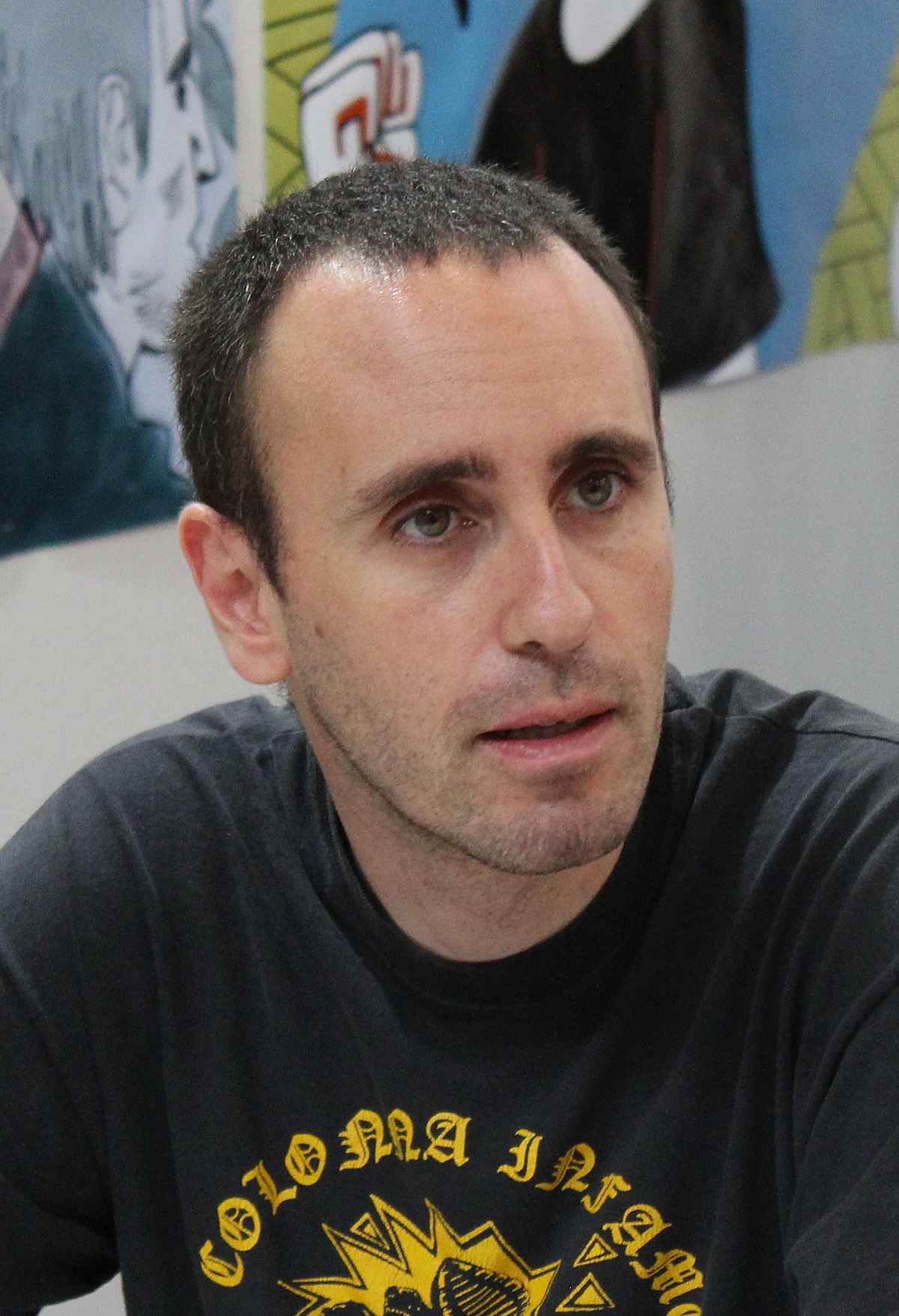
Michele Rech, born on December 12, 1983, in Cortona, Italy, is better known by his pen name, Zerocalcare. He is one of Italy’s most acclaimed cartoonists and illustrators, recognized for his unique style and ability to capture the zeitgeist of contemporary society. With a career spanning over a decade, Zerocalcare has emerged as a significant voice in the world of graphic novels, using his art to comment on social issues, personal struggles, and the complexities of modern life. This article delves into Michele Rech’s life, his rise to fame, and the highlights of his career, providing detailed insights into the man behind the pseudonym.
Early Life and Background
Michele Rech was born to a Roman father and a French mother in the picturesque town of Cortona, located in the province of Arezzo, Tuscany. His early years were split between Italy and France, giving him a multicultural background that would later influence his work. Rech eventually settled in Rome, in the neighborhood of Rebibbia, which would become a recurring setting in his comics and a significant part of his identity as an artist.
Growing up, Rech was drawn to art from a young age. He attended the Lycée Chateaubriand in Rome, where he began to explore his passion for drawing and storytelling. His early experiences in the Italian and French educational systems exposed him to diverse cultural perspectives, which would later inform the themes and narratives in his work.
Rech’s interest in comics was sparked by his exposure to various graphic novels and animated series during his childhood. However, it wasn’t until the early 2000s that he began to seriously consider a career as a cartoonist. His experiences as a young adult, particularly the events surrounding the G8 summit in Genoa in 2001, deeply impacted him and became the subject of some of his earliest comics. These formative years were crucial in shaping his voice as an artist, characterized by a blend of humor, social commentary, and personal reflection.
The Birth of Zerocalcare
The pseudonym “Zerocalcare” was born out of a spontaneous moment. Rech, needing a username for an online forum, happened to see a commercial for an anti-limescale product on TV. The name stuck, and what began as a whimsical choice became the identity under which he would produce some of Italy’s most beloved comics.
Zerocalcare’s early works were deeply rooted in the underground comic scene. He started gaining attention through his contributions to various fanzines and self-published magazines, where his satirical and often politically charged content resonated with a growing audience. His distinct style—combining sharp wit with poignant observations on life and society—began to garner him a dedicated following.
One of his earliest breakthroughs came when he began working with established publications such as Liberazione and La Repubblica XL. These platforms allowed him to reach a wider audience and solidify his reputation as a talented cartoonist. His work during this period often focused on themes of identity, social justice, and the everyday struggles of young people in a rapidly changing world.
The Rise to Fame: La Profezia dell’Armadillo
Zerocalcare’s first major success came in 2011 with the publication of his graphic novel La Profezia dell’Armadillo (The Armadillo’s Prophecy). The story, which blends autobiographical elements with surreal fantasy, revolves around the character of the Armadillo, a manifestation of the protagonist’s conscience. The Armadillo, who serves as a recurring character in Zerocalcare’s work, embodies the inner thoughts and anxieties of the protagonist, offering a humorous yet insightful commentary on the challenges of modern life.
La Profezia dell’Armadillo was an instant hit, resonating with readers for its relatable themes, including the struggles of youth, friendship, and the process of coming to terms with loss. The book’s success marked Zerocalcare’s transition from an underground artist to a mainstream figure in the Italian comic scene. The graphic novel was reprinted multiple times and later adapted into a film, further cementing its status as a cultural touchstone.
Following the success of La Profezia dell’Armadillo, Zerocalcare continued to publish a series of graphic novels that explored various aspects of contemporary life. His work often delves into personal experiences, but always with a broader social context, making his stories both intimate and universally relevant.
Exploring Social and Political Themes
Throughout his career, Zerocalcare has been known for his ability to address complex social and political issues through his comics. His work is characterized by a deep empathy for marginalized communities and a commitment to social justice. This is particularly evident in his 2015 graphic novel Kobane Calling, which is based on his experiences traveling to the Syrian border to document the Kurdish resistance against ISIS.
Kobane Calling is not just a reportage but a powerful statement on the human cost of conflict and the resilience of those who fight for their freedom. The book received widespread acclaim for its honest portrayal of the situation in Kobane and its ability to convey the gravity of the conflict while maintaining the humor and humanity that are hallmarks of Zerocalcare’s style. The success of Kobane Calling established him as not only a gifted storyteller but also a significant voice in contemporary political discourse.
In addition to Kobane Calling, Zerocalcare has tackled a variety of other issues in his work, from the impact of austerity measures in Europe to the personal toll of economic instability. His comics often reflect the concerns of a generation grappling with uncertainty and disillusionment, making his work particularly resonant with younger readers.
Rebibbia and the Connection to Rome
Rome, particularly the neighborhood of Rebibbia, plays a central role in Zerocalcare’s work. Rebibbia, known for its working-class roots and the infamous Rebibbia prison, serves as both a literal and metaphorical backdrop for many of his stories. It is in Rebibbia that Zerocalcare’s characters navigate the complexities of modern life, confronting the challenges of adulthood, relationships, and societal expectations.
The neighborhood’s influence is so integral to his work that it became the focal point of one of his most significant contributions to the city: a 40-square-meter mural at the Rebibbia metro station. The mural, completed in 2014, is a tribute to the people of Rebibbia and serves as a reminder of the community’s resilience and spirit. It also stands as a symbol of Zerocalcare’s deep connection to his roots and his commitment to using his art to reflect and uplift the community.
Rebibbia’s significance in Zerocalcare’s work extends beyond its physical presence. It represents a microcosm of the broader societal issues that he explores in his comics, from economic hardship to social alienation. Through his portrayal of Rebibbia, Zerocalcare gives voice to the experiences of those often overlooked in mainstream narratives, making his work both a celebration of and a critique of contemporary life.
The Evolution of Zerocalcare’s Style and Themes
As Zerocalcare’s career has progressed, so too has the evolution of his style and thematic focus. While his early work was heavily influenced by his personal experiences and the social and political climate of Italy, his later work has shown a greater willingness to experiment with narrative structure and artistic techniques.
This evolution is perhaps most evident in his 2017 graphic novel Macerie Prime (Shattered Stones). The book, which was published in two volumes, is a meditation on the passage of time, the fragility of friendships, and the inevitability of change. Macerie Prime is notable for its introspective tone and its exploration of more abstract themes, marking a departure from the more straightforward storytelling of his earlier work.
Zerocalcare’s willingness to push the boundaries of his craft is also reflected in his 2020 project A Babbo Morto (Dead Santa). The book, which blends traditional comic elements with prose, is a darkly satirical take on the commercialization of Christmas and the social inequalities that underpin the holiday season. A Babbo Morto is both a departure from and a continuation of the themes that have defined Zerocalcare’s work, showcasing his ability to tackle serious issues with his signature blend of humor and insight.
Strappare Lungo i Bordi and Mainstream Success
Zerocalcare’s transition from the world of comics to mainstream media was solidified with the release of the animated series Strappare Lungo i Bordi (Tear Along the Dotted Line) on Netflix in November 2021. The series, which is based on Zerocalcare’s life and work, quickly became a hit, reaching audiences in over 150 countries.
Strappare Lungo i Bordi is a deeply personal exploration of Zerocalcare’s life, touching on themes of mental health, social anxiety, and the search for meaning in a chaotic world. The series, like much of his work, is rooted in the experiences of his generation, offering a poignant and relatable commentary on the challenges of navigating adulthood in the 21st century.
The success of Strappare Lungo i Bordi marked a new chapter in Zerocalcare’s career, introducing his work to a global audience and solidifying his status as one of Italy’s most important contemporary artists. The series’ widespread acclaim also demonstrated the universal appeal of his storytelling, proving that his unique blend of humor, social commentary, and personal reflection resonates far beyond the borders of Italy.
Personal Life and Philosophy
Despite his fame, Zerocalcare has remained remarkably private about his personal life. He continues to live in Rebibbia, maintaining close ties to the community that has played such a significant role in his work. His commitment to his craft and his principles is evident in his adherence to the straight edge lifestyle, which involves abstaining from alcohol, tobacco, and other drugs. This lifestyle choice reflects Zerocalcare’s broader philosophy of living a life of integrity and purpose, values that are deeply embedded in his work.
Zerocalcare’s personal philosophy is also evident in his approach to fame and success. He has consistently used his platform to advocate for social justice and to highlight the struggles of marginalized communities. Whether through his comics, his public appearances, or his collaborations with other artists, Zerocalcare remains committed to using his voice to effect positive change in the world.
Conclusion: The Legacy of Michele Rech
Michele Rech, under the pseudonym Zerocalcare, has carved out a unique and influential space in the world of comics and beyond. His work, characterized by its wit, empathy, and incisive social commentary, has resonated with readers both in Italy and around the world. From his early days as an underground artist to his current status as a mainstream cultural figure, Zerocalcare has remained true to his roots, using his art to reflect the world around him and to give voice to those who might otherwise go unheard.
As Zerocalcare continues to explore new avenues for his creativity, there is no doubt that his work will continue to inspire and challenge audiences. His ability to blend the personal with the political, the humorous with the serious, ensures that his legacy will endure for years to come. Whether through his comics, his animated series, or his public engagements, Michele Rech—Zerocalcare—stands as a testament to the power of art to illuminate the human experience and to bring about meaningful change.


