
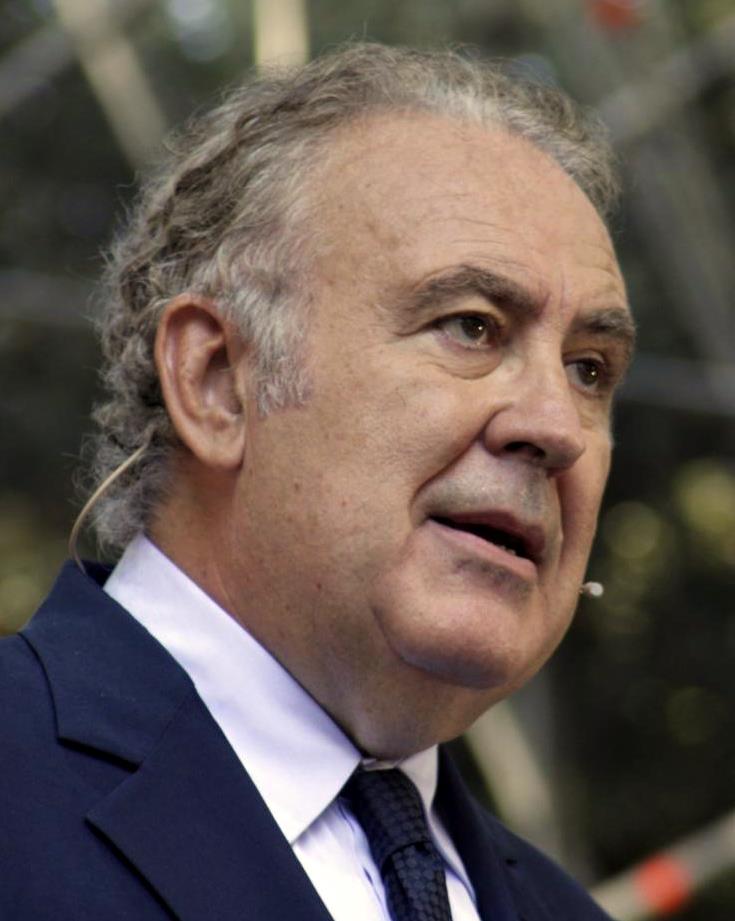
Michele Santoro is a prominent Italian journalist, television presenter, and media figure known for his incisive and often controversial approach to journalism. Born on July 2, 1951, in Salerno, Italy, Santoro has carved out a significant space in the Italian media landscape with his unique style of reporting and broadcasting, which has often sparked debate and divided public opinion. This article delves into the life, career, and achievements of Michele Santoro, providing a comprehensive look at the man behind some of Italy’s most talked-about television programs.
Early Life and Education
Michele Santoro was born in the southern Italian city of Salerno. His early life in this region, known for its rich history and cultural diversity, likely influenced his later work, which often explores the complexities of Italian society and politics. Santoro pursued higher education at the University of Salerno, where he graduated with a degree in Philosophy. His academic background in philosophy would later inform his journalistic style, characterized by deep analysis and a commitment to uncovering the truth.
Entry into Journalism
Santoro’s career in journalism began in the 1970s when he started working for various local newspapers. His early work as a journalist was marked by a dedication to investigative reporting, a trait that would define his career. He gained experience at several prestigious Italian newspapers, including “Il Mattino,” “L’Unità,” “Rinascita,” “Prima Comunicazione,” and “Epoca.” His work at these publications established him as a rising star in Italian journalism.
Before joining RAI, the Italian state broadcaster, in 1982, Santoro also worked in radio, where he honed his skills as a communicator. He hosted and produced radio programs such as “Via le odiate macchine” on RadioUno, which showcased his ability to engage with listeners and convey complex ideas in an accessible manner.
Breakthrough in Television
Michele Santoro’s move to television marked the beginning of his rise to national prominence. Initially, he worked on international news segments for TG3, the third channel of RAI’s news division. However, it was his work on a series of television programs that truly established him as a household name. Among these were “Tre sette,” “Oggi dove,” “Specialmente sul Tre,” and “Tg terza.” His innovative approach to television journalism, which often combined in-depth analysis with dramatic storytelling, set him apart from his peers.
Santoro’s reputation as a formidable journalist was solidified with the creation of “Samarcanda,” a television program that aired in the late 1980s and early 1990s. “Samarcanda” became a symbol of Santoro’s approach to journalism—bold, investigative, and unafraid to tackle controversial subjects. The program covered a wide range of issues, from political scandals to social injustices, and was known for its in-depth reporting and hard-hitting interviews.
Notable Television Programs
Throughout his career, Michele Santoro has been associated with several landmark television programs, each of which has left a significant impact on Italian media. Some of the most notable include:
Samarcanda
“Samarcanda” was one of Santoro’s earliest and most influential television programs. It aired on RAI from 1987 to 1992 and was known for its investigative journalism and willingness to confront powerful figures. The program was a critical and commercial success, earning Santoro a reputation as one of Italy’s most fearless journalists.
Rosso e Nero
Following the success of “Samarcanda,” Santoro created “Rosso e Nero,” another investigative journalism program that continued to push the boundaries of what was possible on Italian television. “Rosso e Nero” tackled a wide range of topics, from political corruption to social issues, and was known for its uncompromising approach to journalism.
Temporeale
In the mid-1990s, Santoro launched “Temporeale,” a program that further cemented his status as a leading figure in Italian television. “Temporeale” was notable for its use of reportage in a dramatic or narrative function, a technique that allowed Santoro to create powerful and impactful television. The program was widely praised for its ability to delve into the heart of the issues facing Italy at the time.
Sciuscià
“Sciuscià” was another significant program in Santoro’s career, airing in the early 2000s. The show combined documentary filmmaking with investigative journalism to create a unique and compelling format. “Sciuscià” was praised for its cinematic style and its ability to tell stories that resonated with the Italian public. The program’s success was also marked by controversy, particularly accusations of bias in favor of the center-left political spectrum, which led to intense debates in the media.
AnnoZero
In 2006, Santoro returned to RAI with “AnnoZero,” a program that ran until 2011. “AnnoZero” was known for its panel discussions, which often featured heated debates between politicians, journalists, and public figures. The program was a ratings success and further solidified Santoro’s reputation as a journalist who was unafraid to tackle the most contentious issues of the day.
Servizio Pubblico
After leaving RAI, Santoro launched “Servizio Pubblico” in 2011, a program that represented a new chapter in his career. “Servizio Pubblico” was notable for its use of a multiplatform model, combining traditional television with streaming on the internet and local television stations. This innovative approach allowed Santoro to reach a broader audience and continue his work as one of Italy’s most influential journalists. The program aired on La7 from 2012 to 2014 before Santoro moved on to other projects.
Controversies and Criticism
Michele Santoro’s career has been marked by numerous controversies, many of which stem from his outspoken nature and willingness to challenge the status quo. He has often been accused of bias, particularly in his coverage of political issues. Critics have claimed that his programs favored the center-left political spectrum, leading to accusations of partisanship. However, Santoro has always defended his work, arguing that his primary commitment is to the truth and that his journalism is guided by a desire to expose injustice and hold those in power accountable.
One of the most notable controversies in Santoro’s career occurred in the early 2000s when he was accused of being too sympathetic to the center-left during the heated political climate following Silvio Berlusconi’s rise to power. This led to tensions with RAI, which eventually decided not to renew his contract. Despite these challenges, Santoro continued to produce groundbreaking journalism, demonstrating his resilience and commitment to his craft.
Awards and Recognition
Michele Santoro’s contributions to journalism have been widely recognized both in Italy and internationally. Throughout his career, he has received numerous awards, including the “Premio Giornalistico Europa” as Journalist of the Year in 1989, the “Premio Spoleto” in 1991, and the prestigious Telegatto award for “Samarcanda” in 1992. He has also won the “Premio Regia Televisiva” four times, highlighting his influence on Italian television.
In addition to these accolades, Santoro has been honored for his work as an investigative journalist. In 1993, he received an award at the Mystfest for his contributions to investigative journalism. He was also awarded the “Premio Flaiano” and the “Palma della popolarità” in 1996. His program “Moby Dick” earned him the “Premio Internazionale Ibla” in 1998, and in 1999, he received the “Premio giornalistico Mario Francese” and the XLVIII Maschera d’Argento.
Later Career and Recent Work
In recent years, Michele Santoro has continued to innovate in the field of journalism. After leaving La7 in 2014, he focused on new projects, including the acquisition of a 7% stake in “Il Fatto Quotidiano,” a leading Italian newspaper. This move demonstrated Santoro’s ongoing influence in the Italian media landscape and his commitment to shaping public discourse.
In 2016, Santoro returned to television with a special program on Rai 2 titled “M,” which explored historical events through a mix of investigative journalism, theater, and talk show formats. The program was well-received and marked a return to form for Santoro, who continued to push the boundaries of what was possible in television journalism.
Santoro’s collaboration with “Il Fatto Quotidiano” ended in 2018 due to differences in vision, but his impact on the publication and Italian media as a whole remains significant. As of today, Santoro continues to be a prominent figure in Italian journalism, with a legacy that spans over four decades.
Conclusion
Michele Santoro’s career is a testament to the power of journalism to challenge authority, expose injustice, and shape public opinion. His work has left an indelible mark on Italian media, and his influence continues to be felt today. Whether through his groundbreaking television programs or his fearless investigative reporting, Santoro has consistently demonstrated a commitment to the truth and a willingness to confront the most difficult issues facing society. As he continues to innovate and adapt to the changing media landscape, Michele Santoro remains a vital voice in the world of journalism.


