
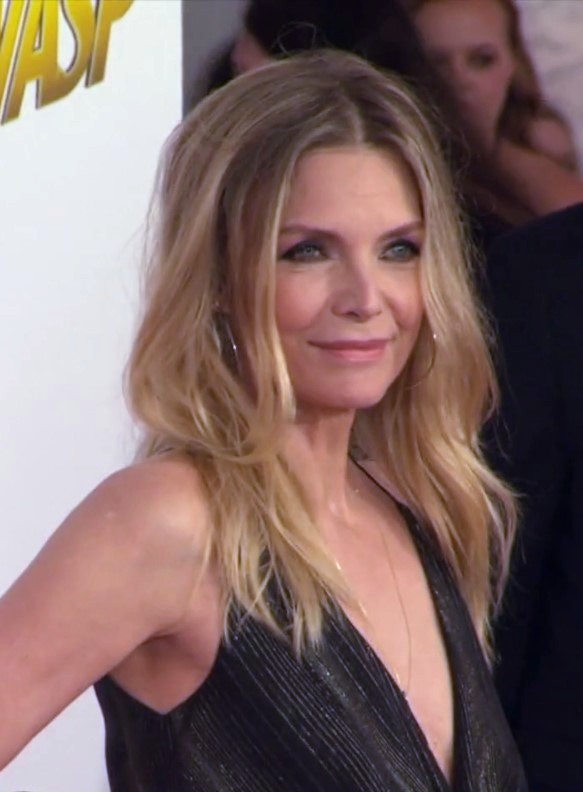
Michelle Pfeiffer, born on April 29, 1958, in Santa Ana, California, is a quintessential Hollywood star whose illustrious career has left an indelible mark on the film industry. Known for her captivating beauty, versatility, and extraordinary acting talent, Pfeiffer has become one of the most celebrated actresses of her generation. This comprehensive exploration delves into her early life, rise to fame, significant achievements, and the enduring impact she has made on cinema.
Early Life and Background
Michelle Pfeiffer was born to Dick and Donna Pfeiffer as the second of four children. Growing up in Orange County, California, she initially harbored dreams of becoming a journalist. However, her trajectory took a dramatic turn when she entered the world of entertainment. Her early ambitions were evident when she won a local beauty pageant, which paved the way for her entry into acting.
The Beginning of a Career
Pfeiffer’s first foray into the entertainment industry was relatively modest. In 1977, she appeared in an episode of the popular TV series “C.H.i.P.s,” a show about two Los Angeles motorcycle cops. This initial role was followed by another TV appearance in the series “Fantasy Island,” where she began to attract attention for her striking presence.
Her breakthrough in film came in 1980 with the movie “Hollywood Knights.” Despite the film’s mixed reception, Pfeiffer’s performance began to capture the industry’s interest. Her early career, however, was marked by a series of roles that, while significant, did not yet elevate her to stardom.
The Rise to Stardom
Pfeiffer’s breakthrough role came in 1983 with Brian De Palma’s “Scarface.” Playing the role of Elvira Hancock, the glamorous wife of a drug lord, Pfeiffer’s performance was noted for its intensity and sophistication. This role was pivotal in showcasing her ability to command the screen and established her as a serious actress in Hollywood.
Major Films and Career Highlights
Following “Scarface,” Pfeiffer’s career saw a series of impressive roles that further solidified her reputation. In 1985, she starred in “Ladyhawke,” a fantasy film that highlighted her versatility. Her role in “The Witches of Eastwick” (1987), where she played one of three witches with supernatural powers, was another critical success, demonstrating her range as an actress.
Pfeiffer’s portrayal of a troubled woman in “Frankie and Johnny” (1991) and her role as Catwoman in Tim Burton’s “Batman Returns” (1992) continued to showcase her dynamic range. In “Batman Returns,” her interpretation of Catwoman was particularly notable for its complexity and depth, offering a fresh take on a well-known comic book character.
Her work in “The Fabulous Baker Boys” (1989) earned her an Academy Award nomination for Best Actress, a testament to her remarkable skill and dedication. This film, along with others like “Dangerous Minds” (1995) and “What Lies Beneath” (2000), reinforced her status as a leading actress.
Personal Life and Interests
Outside of her professional achievements, Michelle Pfeiffer’s personal life has been as dynamic as her career. She was married to actor Peter Horton from 1981 to 1988. Subsequently, she entered into a relationship with Fisher Stevens before marrying television producer David E. Kelley in 1993. Together, they have one biological son, John Henry Kelley, born in 1994, and Pfeiffer also adopted a daughter, Claudia Rose, in 1993.
Pfeiffer’s life beyond acting includes significant philanthropic work and a keen interest in producing. She established her own production company, Via Rosa Productions, which has produced several of her films, including “Something’s Gotta Give” (2003) and “The Family” (2013). Her involvement in production reflects her deep engagement with the film industry and her commitment to contributing to its evolution.
Challenges and Criticisms
Despite her success, Pfeiffer’s career has not been without its challenges. She has faced criticism for rejecting roles in high-profile films, such as “Thelma & Louise,” which went to Geena Davis, and “Basic Instinct,” which went to Sharon Stone. Additionally, she was initially considered for roles in “The Silence of the Lambs,” which eventually went to Jodie Foster. These decisions have been subjects of speculation and discussion among fans and critics alike.
Legacy and Influence
Michelle Pfeiffer’s impact on cinema is profound. Her ability to transition between different genres, from drama and romance to fantasy and thriller, demonstrates her versatility as an actress. Her performances have not only garnered critical acclaim but have also endeared her to audiences worldwide.
Cultural Impact
Pfeiffer’s role as Catwoman in “Batman Returns” has become iconic, influencing various portrayals of the character in subsequent adaptations. Her unique interpretation added depth and complexity to the character, setting a high bar for future portrayals.
Moreover, Pfeiffer’s enduring presence in the industry serves as an inspiration for aspiring actors. Her journey from a beauty pageant winner to a respected actress highlights the importance of talent, perseverance, and adaptability in achieving success in Hollywood.
Conclusion
Michelle Pfeiffer’s career is a testament to her remarkable talent, dedication, and resilience. From her early beginnings in television to her celebrated film roles, she has carved out a distinguished place in the world of entertainment. Her contributions to cinema and her personal achievements continue to resonate, making her a significant figure in Hollywood’s history.
Her story is not just about the roles she has played but also about her impact on the industry and her ability to remain relevant and respected over decades. As she continues to evolve as an actress and producer, Michelle Pfeiffer remains a beacon of excellence and an enduring symbol of Hollywood’s golden age.


