
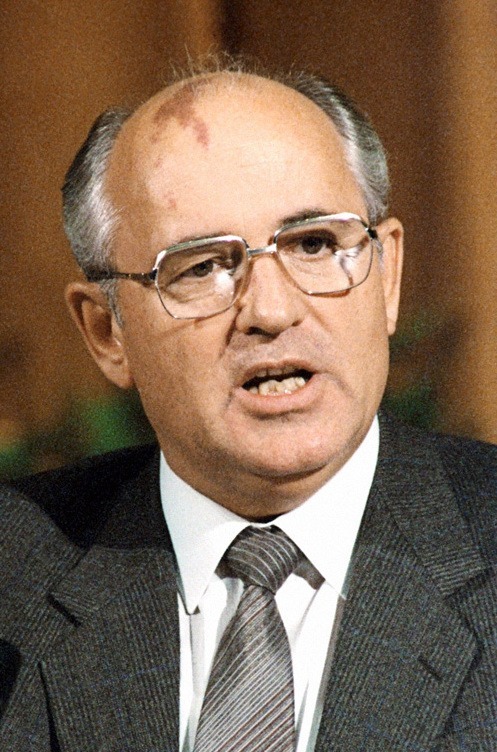
Mikhail Gorbaciov, a name that echoes through the corridors of history, is recognized as one of the most pivotal figures of the 20th century. His leadership of the Soviet Union during a time of immense change not only reshaped his nation but also had far-reaching impacts on the global stage. Born on March 2, 1931, in Privolnoye, a small village in the Stavropol region of the then Soviet Union, Gorbaciov’s journey from a peasant family to the helm of one of the world’s superpowers is a story of ambition, reform, and, ultimately, transformation.
Early Life and Education
Mikhail Sergeevič Gorbaciov was born into a family of agrarian workers in the southern part of Russia, a region characterized by its rugged terrain and traditional lifestyle. The early years of his life were marked by the hardships typical of rural Soviet life during the era of Stalin’s collectivization. Despite these challenges, Gorbaciov excelled academically, earning a silver medal upon graduation from high school in 1950, a testament to his intellectual abilities and determination.
His academic prowess earned him a place at Moscow State University, one of the most prestigious institutions in the Soviet Union, where he studied law. During his time at university, Gorbaciov not only honed his legal acumen but also developed a deep interest in politics. It was here that he joined the Communist Party of the Soviet Union (CPSU), marking the beginning of his long and complex relationship with Soviet ideology and governance.
While at university, Gorbaciov met Raisa Titarenko, a philosophy student who would become his lifelong partner. Their marriage in 1953 was a union not only of personal commitment but also of intellectual and ideological companionship. Raisa played a significant role in Gorbaciov’s life, both as a confidante and as an influential figure in her own right, accompanying him through the many challenges and triumphs of his political career.
The Rise to Power
After graduating from Moscow State University in 1955, Gorbaciov returned to Stavropol, where he began his career in the Communist Party. His rise within the party ranks was steady and marked by a series of increasingly influential positions. In 1970, Gorbaciov was appointed as the First Secretary of the Stavropol Regional Committee, a role that placed him in charge of the party’s activities in the region. This position allowed him to demonstrate his leadership skills and his commitment to the party’s goals, earning him recognition within the higher echelons of the Soviet political system.
By 1978, Gorbaciov had moved to Moscow and was appointed as a Secretary of the Central Committee of the CPSU. Two years later, in 1980, he ascended to the Politburo, the highest decision-making body in the Soviet Union. His appointment to the Politburo marked a significant step in his political career, placing him in the inner circle of Soviet power and setting the stage for his eventual leadership.
General Secretary and the Perestroika Era
Mikhail Gorbaciov’s appointment as General Secretary of the Communist Party in March 1985 marked the beginning of a new era in Soviet history. At 54, he was the youngest member of the Politburo and the first Soviet leader to be born after the Bolshevik Revolution. His leadership was characterized by a vision of reform and a determination to address the deep-seated problems that had plagued the Soviet Union for decades.
Gorbaciov’s tenure as General Secretary is most famously associated with the policies of Perestroika (restructuring) and Glasnost (openness). These reforms were aimed at revitalizing the Soviet economy, which had been stagnating under the weight of central planning and inefficiency, and at introducing a degree of political liberalization. Perestroika sought to decentralize economic control and encourage private enterprise, while Glasnost aimed to foster transparency in government institutions and open up the Soviet political system to greater public scrutiny.
These reforms represented a radical departure from the policies of Gorbaciov’s predecessors, who had maintained a rigidly controlled economy and suppressed political dissent. Gorbaciov, however, recognized that the Soviet Union could not continue on its current trajectory without significant changes. His willingness to confront these challenges head-on earned him both praise and criticism, as the consequences of his reforms began to unfold.
The End of the Cold War
One of the most significant aspects of Gorbaciov’s leadership was his role in ending the Cold War, the decades-long geopolitical tension between the Soviet Union and the United States. His approach to foreign policy, known as “New Thinking,” emphasized diplomacy over confrontation and sought to reduce the risk of nuclear conflict through negotiations and arms reduction.
A key moment in this process was the Reykjavik Summit in October 1986, where Gorbaciov met with U.S. President Ronald Reagan. Although the summit did not result in a comprehensive arms reduction agreement, it paved the way for future negotiations and demonstrated Gorbaciov’s commitment to reducing the nuclear threat. This culminated in the signing of the Intermediate-Range Nuclear Forces (INF) Treaty in 1987, which eliminated an entire class of nuclear weapons from Europe and significantly reduced the risk of nuclear war.
Gorbaciov’s efforts to ease tensions with the West were also reflected in his decision to withdraw Soviet troops from Afghanistan, where they had been engaged in a costly and unpopular war since 1979. His willingness to engage in dialogue with the West and his efforts to reduce the military burden on the Soviet Union were crucial factors in the thawing of Cold War hostilities.
The Collapse of the Soviet Union
Despite his efforts to reform the Soviet Union, Gorbaciov’s policies inadvertently set in motion forces that would lead to the dissolution of the Soviet state. The economic difficulties that Perestroika aimed to address were deep-rooted, and the transition to a more market-oriented economy proved to be far more complex and disruptive than anticipated. Additionally, the political liberalization brought about by Glasnost unleashed a wave of nationalist and separatist movements across the Soviet republics.
By the late 1980s, the Soviet Union was facing a series of crises on multiple fronts. The Eastern Bloc countries, inspired by Gorbaciov’s reforms, began to push for greater independence, leading to the fall of communist governments across Eastern Europe in 1989. The Berlin Wall, the most potent symbol of the Cold War, fell in November 1989, marking the beginning of the end for Soviet influence in Eastern Europe.
Within the Soviet Union itself, the pressures of economic hardship, nationalist movements, and political instability were reaching a breaking point. In August 1991, a group of hardline communists attempted a coup to oust Gorbaciov and reverse his reforms. Although the coup failed, it severely weakened Gorbaciov’s position and accelerated the collapse of the Soviet Union.
On December 25, 1991, Mikhail Gorbaciov resigned as President of the Soviet Union, marking the official dissolution of the Soviet state. The Union of Soviet Socialist Republics, which had once been one of the two superpowers in the world, ceased to exist, and 15 independent republics emerged in its place.
Post-Soviet Life and Legacy
After his resignation, Gorbaciov remained active in international affairs and continued to advocate for democratic reforms and nuclear disarmament. In 1992, he founded the Gorbaciov Foundation, an organization dedicated to studying socio-economic and political issues in Russia and promoting global dialogue. He also established Green Cross International in 1993, an environmental organization aimed at addressing ecological issues and promoting sustainability worldwide.
Gorbaciov’s contributions to global peace were recognized in 1990 when he was awarded the Nobel Peace Prize. The Nobel Committee praised him for his role in ending the Cold War and his efforts to reduce the threat of nuclear conflict, acknowledging that his leadership had fundamentally altered the course of world history.
Despite these accolades, Gorbaciov’s legacy remains complex and contested, particularly within Russia. While he is celebrated internationally as a visionary leader who helped bring about the end of the Cold War, many Russians view him as the man responsible for the collapse of the Soviet Union and the economic hardships that followed. The transition to a market economy was chaotic, leading to widespread poverty, corruption, and a significant decline in living standards for many Russians. As a result, Gorbaciov’s popularity in his home country remains low, with many blaming him for the turmoil of the 1990s.
Gorbaciov’s Writings and Intellectual Contributions
Throughout his life, Mikhail Gorbaciov was an active writer and thinker, contributing to the intellectual discourse on politics, international relations, and reform. His works provide valuable insights into his thought process and the principles that guided his leadership. Some of his notable writings include:
-
Perestroika: New Thinking for Our Country and the World (1987): In this book, Gorbaciov outlines the principles of Perestroika and his vision for the future of the Soviet Union and the world. It serves as a manifesto for his reform agenda and a call for greater cooperation and understanding in international relations.
-
The August Coup: Its Causes and Consequences (1991): This work reflects on the failed coup attempt against Gorbaciov in August 1991, providing a detailed account of the events and the factors that led to the collapse of the Soviet Union.
-
On My Country and the World (1998): In this book, Gorbaciov reflects on his life, his time in power, and the changes that took place in the Soviet Union and the world during his leadership. It is a candid and personal account of the challenges he faced and the decisions he made.
-
Moral Lessons of the 20th Century (1999): Co-authored with Daisaku Ikeda, this book is a dialogue between Gorbaciov and the Japanese Buddhist philosopher, focusing on the moral and ethical lessons that can be drawn from the events of the 20th century.
Conclusion: Gorbaciov’s Enduring Impact
Mikhail Gorbaciov passed away on August 30, 2022, at the age of 91, leaving behind a legacy that continues to shape the world. His leadership during a time of profound change in the Soviet Union and the international system helped to bring about the end of the Cold War, reduce the threat of nuclear conflict, and pave the way for a more open and interconnected world.
Gorbaciov’s life is a testament to the power of ideas and the importance of leadership in times of crisis. His commitment to reform, peace, and dialogue has left an indelible mark on history, even as the consequences of his actions continue to be debated and analyzed.
As we reflect on Gorbaciov’s legacy, it is clear that his influence extends far beyond the borders of Russia and the Soviet Union. He was a global statesman whose vision for a more peaceful and cooperative world remains relevant today. Whether celebrated or criticized, Mikhail Gorbaciov’s contributions to world history are undeniable, and his story serves as a reminder of the complex and often unpredictable nature of political leadership.


