
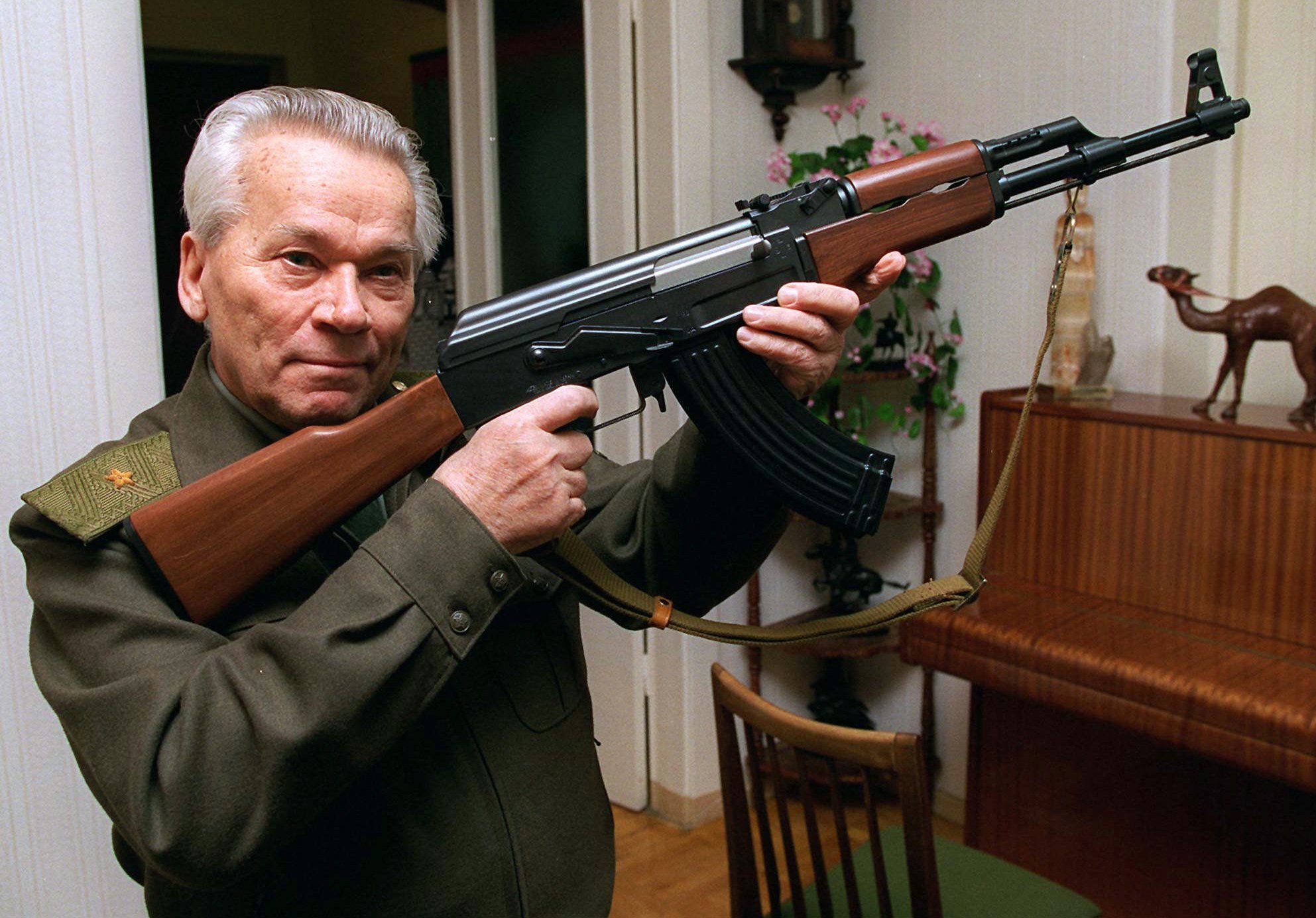
Mikhail Kalashnikov is a name that resonates across the globe, particularly in the realm of military history and engineering. Born on November 10, 1919, in the small town of Kurya, in the Altai region of Russia, Kalashnikov would go on to invent one of the most iconic and widely recognized firearms in history—the AK-47. This assault rifle, known for its simplicity, durability, and efficiency, has become synonymous with both revolution and controversy. This article delves into the life, achievements, and legacy of Mikhail Kalashnikov, exploring the complexities and contradictions of a man whose invention has had a profound impact on modern warfare and global geopolitics.
Early Life and Formative Years
Mikhail Timofeevich Kalashnikov was born into a large peasant family, the seventeenth of nineteen children. His early life was marked by hardship, as his family struggled with the economic challenges of post-revolutionary Russia. Despite these difficulties, Kalashnikov showed an early aptitude for mechanics and engineering, a talent that would eventually shape his future career.
Kalashnikov’s formal education was limited, as was common for many rural children in the Soviet Union at the time. However, his natural curiosity and mechanical skills were evident from a young age. He spent much of his childhood tinkering with various mechanical devices, and by the time he was a teenager, he had developed a deep interest in machinery and firearms. This interest was further fueled by his experiences working in a railway depot, where he gained practical experience in mechanics and engineering.
In 1938, at the age of 19, Kalashnikov was drafted into the Red Army, where he served as a tank commander. His military service played a crucial role in shaping his future as a weapons designer. It was during World War II, after being severely wounded in combat, that Kalashnikov first began to seriously consider the need for a new type of infantry weapon—one that would be both reliable and easy to use under the harshest conditions.
The Birth of the AK-47
Kalashnikov’s moment of inspiration came during his recovery from his injuries. As he lay in a hospital bed, he began to sketch out ideas for a new type of automatic rifle, one that could withstand the rigors of combat and be operated by soldiers with minimal training. He was motivated by the shortcomings of the existing Soviet weaponry, which he had witnessed firsthand during his time on the front lines.
The result of Kalashnikov’s ingenuity was the “Avtomat Kalashnikova model 1947,” more commonly known as the AK-47. The design was revolutionary in its simplicity and effectiveness. The AK-47 combined the firepower of a submachine gun with the accuracy and range of a rifle, making it a versatile and deadly weapon. Its design also emphasized ease of use and maintenance, which made it ideal for mass production and deployment in various environments.
By 1947, the prototype was completed, and within two years, the AK-47 was officially adopted by the Soviet Armed Forces. Its success was immediate and widespread, not only within the Soviet Union but also in numerous countries around the world. The AK-47 became the weapon of choice for both national armies and insurgent groups, earning a reputation for its reliability in adverse conditions, including extreme cold, heat, and mud.
The AK-47’s Global Impact
The global proliferation of the AK-47 is a testament to both its engineering excellence and the geopolitical climate of the 20th century. The Soviet Union, keen to support revolutionary movements and communist allies worldwide, distributed millions of AK-47s to various factions during the Cold War. As a result, the weapon became a symbol of liberation struggles and armed resistance in countries across Africa, Asia, and Latin America.
However, this widespread distribution also meant that the AK-47 became associated with violence and conflict. The rifle’s durability and ease of use made it a favored weapon in civil wars, insurgencies, and even criminal activities. It is estimated that there are currently over 100 million AK-47s and its variants in circulation worldwide, making it the most widely used firearm in history.
The AK-47’s influence extends beyond the battlefield. It has become a cultural icon, appearing in countless films, books, and even national flags. The weapon’s silhouette is instantly recognizable, and it has been adopted as a symbol of both defiance and oppression, depending on the context.
Kalashnikov’s Legacy and Controversy
Mikhail Kalashnikov’s invention brought him fame and recognition, but it also brought a heavy burden. As the death toll associated with the AK-47 continued to rise, Kalashnikov was forced to confront the moral implications of his creation. In interviews later in life, Kalashnikov expressed mixed feelings about the weapon’s impact. While he was proud of his technical achievement, he was troubled by the knowledge that his invention had been used to take so many lives.
In a poignant reflection on his legacy, Kalashnikov once remarked, “I am proud of my invention, but I am sad that it is used by terrorists. I would prefer to have invented a machine that people could use and that would help farmers with their work, for example a lawnmower.” This statement encapsulates the complex legacy of a man who revolutionized modern warfare but was haunted by the unintended consequences of his creation.
Despite his reservations, Kalashnikov remained a loyal patriot and a symbol of Soviet and Russian ingenuity. He received numerous honors throughout his life, including the prestigious Hero of Socialist Labor award twice and the Order of Lenin. In 1998, he was also awarded the title of Hero of the Russian Federation, the highest honor in the country.
Kalashnikov’s contributions were not limited to the AK-47. Over his long career, he designed numerous other firearms, including the PK machine gun and the RPK light machine gun, both of which have also seen widespread use. However, none of these designs achieved the same level of fame as the AK-47.
The Later Years and Final Reflections
In his later years, Mikhail Kalashnikov lived a relatively modest life, despite the global impact of his invention. He continued to work as an engineer and remained active in the defense industry well into his 80s. Kalashnikov’s name became a brand, not only in the context of firearms but also in other commercial ventures. For instance, in 2004, a vodka bearing his name, “Kalashnikov Vodka,” was launched, capitalizing on the international recognition of his name. The branding of Kalashnikov’s name on consumer products underscored the paradox of his legacy—an engineer who created a weapon of war, yet whose name was also associated with everyday consumer goods.
Kalashnikov passed away on December 23, 2013, at the age of 94. His death marked the end of an era, but his legacy lives on, both in the continued use of the AK-47 and in the ongoing debates about the ethics of arms manufacturing.
Ethical Considerations and Global Implications
The story of Mikhail Kalashnikov is not just a tale of engineering brilliance; it is also a story that raises profound ethical questions. The AK-47 is credited with changing the face of modern warfare, making it easier for smaller, less organized groups to challenge more powerful adversaries. This democratization of firepower has had far-reaching consequences, contributing to the prolongation of conflicts and the escalation of violence in many parts of the world.
Kalashnikov’s own reflections on his invention highlight the ethical dilemmas faced by those who work in the defense industry. While he designed the AK-47 with the intention of defending his country, the weapon’s global proliferation and misuse were beyond his control. This raises important questions about the responsibilities of inventors and the unintended consequences of technological innovation.
The AK-47’s role in conflicts around the world has also prompted discussions about arms control and the regulation of firearms. Despite efforts to curb the spread of small arms, the AK-47 remains widely available on the black market, contributing to the ongoing challenge of controlling the global arms trade. The weapon’s ubiquity has made it a focal point in debates about disarmament and the ethics of weapon manufacturing.
Conclusion
Mikhail Kalashnikov’s life and work represent a complex legacy, one that is inextricably linked to both the technological advancements of the 20th century and the ethical challenges of modern warfare. His invention, the AK-47, stands as a testament to human ingenuity, yet it also serves as a reminder of the devastating impact that technology can have when used for destructive purposes.
As we reflect on the life of Mikhail Kalashnikov, we are confronted with the dual nature of his legacy—a legacy of innovation and destruction, of fame and infamy. Kalashnikov’s story is a powerful illustration of the moral complexities faced by those who create tools of war, and it prompts us to consider the broader implications of technological progress in our world today.
In the end, Mikhail Kalashnikov will be remembered not just as the inventor of the AK-47, but as a man whose life and work continue to provoke important questions about the role of technology in society, the responsibilities of inventors, and the enduring impact of human innovation on the course of history.


