
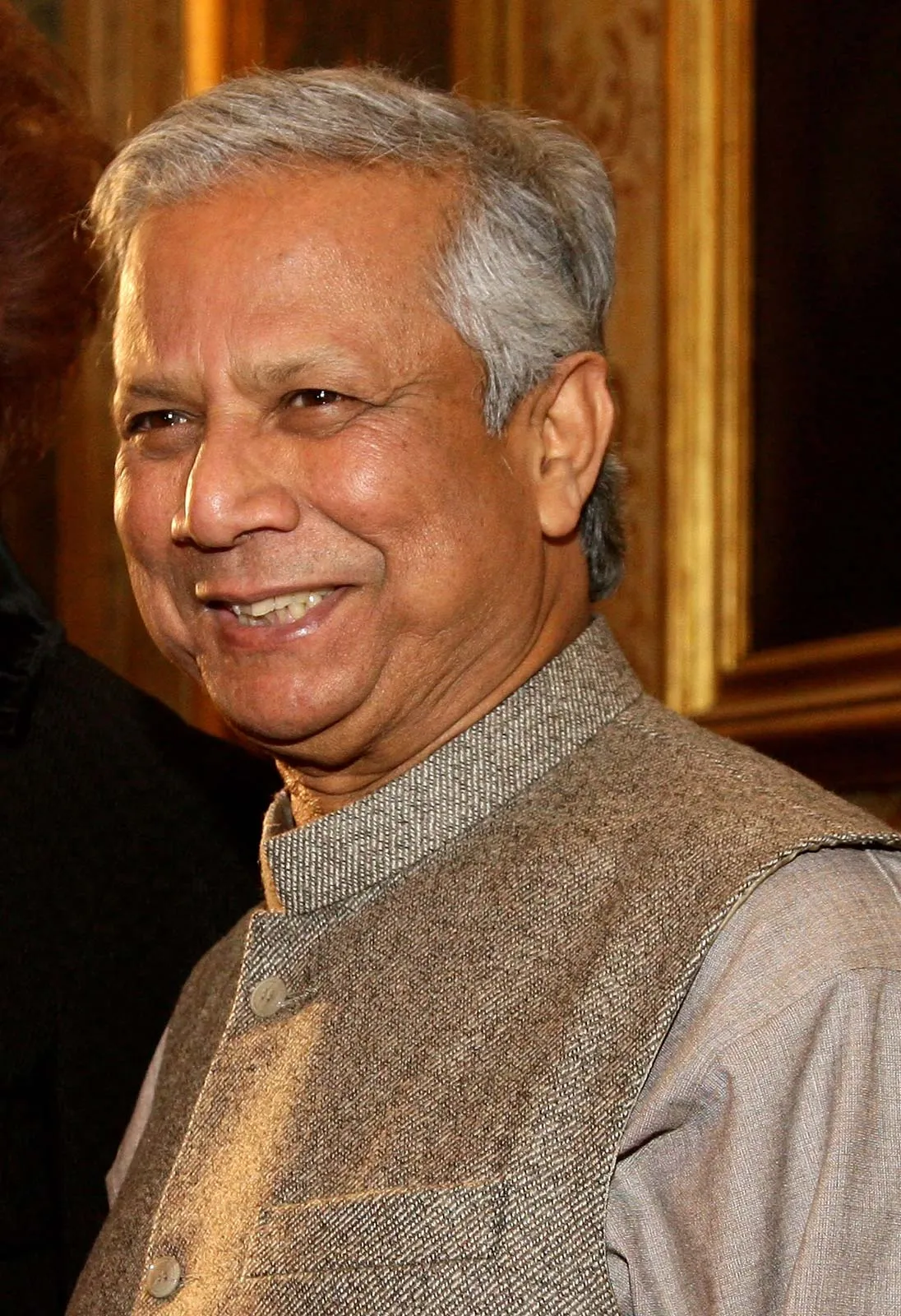
Muhammad Yunus is a name that resonates with innovation, compassion, and transformative change in the world of finance and social entrepreneurship. Born on June 28, 1940, in Chittagong, Bangladesh, Yunus grew up to become an economist, a visionary, and a Nobel Peace Prize laureate. His life’s work has centered around the empowerment of the poor, particularly through the concept of microcredit—a revolutionary idea that has lifted millions out of poverty.
Early Life and Education
Muhammad Yunus was the third of 14 children in his family, though five of his siblings tragically died in childhood. Despite these early hardships, Yunus excelled academically. He pursued a degree in economics at the University of Dhaka and later obtained a Ph.D. in Economics from Vanderbilt University in Nashville, Tennessee. Unlike many of his peers who chose to remain in the United States, Yunus returned to Bangladesh after his studies, driven by a deep sense of duty to his homeland.
The Genesis of Grameen Bank
In 1972, Yunus became the head of the Economics Department at Chittagong University. During the early 1970s, Bangladesh was ravaged by a severe famine, a crisis that deeply affected Yunus. He found himself increasingly disillusioned with the traditional economic theories he had been teaching—ideas that seemed disconnected from the harsh realities of poverty surrounding him.
Yunus began visiting the village of Jobra, near the university, with his students. There, he witnessed firsthand the extreme poverty that dominated the lives of the villagers. He discovered that many of them were trapped in a cycle of debt, forced to borrow small amounts of money from local moneylenders at exorbitant interest rates. Traditional banks were unwilling to lend to these impoverished individuals because they lacked collateral.
This revelation was the catalyst for what would become a groundbreaking initiative. In 1976, Yunus lent $27 of his own money to 42 women in Jobra, enabling them to break free from the cycle of debt and start small businesses. This small act of kindness marked the birth of the microcredit movement.
The Establishment of Grameen Bank
The success of this experiment led Yunus to establish the Grameen Bank in 1983. The name “Grameen” means “rural” or “village” in Bengali, reflecting the bank’s focus on serving the rural poor. Unlike traditional banks, Grameen Bank was built on a radically different model. Instead of requiring collateral, the bank relied on mutual trust, accountability, and the concept of group lending, where small groups of borrowers collectively guaranteed each other’s loans.
The bank’s mission was simple but profound: to provide microloans to the poorest of the poor, with a particular focus on women. Yunus believed that women were more likely to use the loans to improve the well-being of their families and communities. This focus on women was revolutionary, especially in a society where women often had limited access to financial resources.
By 1982, just a few years after its founding, Grameen Bank had expanded to three additional districts in Bangladesh. By the mid-1980s, it had become a self-sustaining institution, with its clients—many of whom were women—holding a majority stake in the bank. Today, the Grameen Bank has lent billions of dollars to millions of borrowers, transforming countless lives in the process.
The Nobel Peace Prize and Global Recognition
In 2006, Muhammad Yunus and Grameen Bank were jointly awarded the Nobel Peace Prize. The Nobel Committee recognized Yunus’s efforts to create economic and social development from the grassroots level. The award highlighted the importance of microcredit as a tool for empowering the poor and promoting peace.
The Nobel Prize was a significant milestone in Yunus’s life, but it was far from the end of his journey. Yunus continued to expand his vision, advocating for a “world without poverty” and promoting social business—an idea where businesses are created to solve social problems rather than maximize profits.
Challenges and Controversies
Despite his many successes, Yunus’s journey has not been without challenges. In 2011, he faced criticism and was removed from his position as managing director of Grameen Bank by the Bangladeshi government. The reasons cited included his age (he was past the retirement age of 60) and allegations of financial impropriety—charges that Yunus and his supporters have consistently denied.
The controversy surrounding Yunus’s ousting from Grameen Bank drew international attention and sparked debates about the role of politics in the management of social enterprises. However, Yunus remained undeterred, continuing his advocacy work and launching new initiatives aimed at addressing global challenges such as climate change and unemployment.
Legacy and Impact
Muhammad Yunus’s legacy is profound and far-reaching. His work has not only transformed the lives of millions of people in Bangladesh but has also inspired similar initiatives around the world. The concept of microcredit has been adopted in numerous countries, helping to alleviate poverty and empower marginalized communities globally.
Yunus’s focus on women has also had a lasting impact. By empowering women economically, Grameen Bank has contributed to significant social changes in Bangladesh, including improved education, healthcare, and family planning. Today, women in Bangladesh are more active participants in the economy and in decision-making processes, both within their families and in society at large.
In addition to his work with Grameen Bank, Yunus has been a vocal advocate for social business—enterprises that prioritize social objectives over profit. He believes that social business can play a crucial role in addressing some of the world’s most pressing problems, including poverty, inequality, and environmental degradation.
The Future of Microcredit and Social Business
As the world continues to grapple with issues of poverty and inequality, the ideas pioneered by Muhammad Yunus remain as relevant as ever. Microcredit and social business offer powerful tools for creating a more just and equitable world. However, these tools are not without their limitations.
Critics of microcredit have pointed out that while it can help alleviate poverty, it is not a panacea. Some studies have suggested that microloans can lead to over-indebtedness, particularly when borrowers take out multiple loans from different sources. Moreover, the impact of microcredit on poverty reduction has varied depending on the context in which it is implemented.
Yunus himself has acknowledged these challenges and has called for continuous innovation and improvement in the field of microfinance. He argues that the principles of microcredit—trust, accountability, and social impact—can be applied to other areas of the economy, creating a new kind of capitalism that serves the needs of all people, not just the wealthy.
Conclusion
Muhammad Yunus is a towering figure in the world of social entrepreneurship and economic development. His innovative approach to microcredit has empowered millions of people to break free from the cycle of poverty and build better lives for themselves and their families. Despite facing significant challenges and controversies, Yunus’s work continues to inspire and influence new generations of social entrepreneurs.
As we look to the future, the principles that Yunus has championed—compassion, innovation, and a commitment to social justice—will undoubtedly continue to shape the world for the better. His life and legacy serve as a powerful reminder that even the most intractable problems can be addressed with creativity, determination, and a deep belief in the potential of every human being.


