
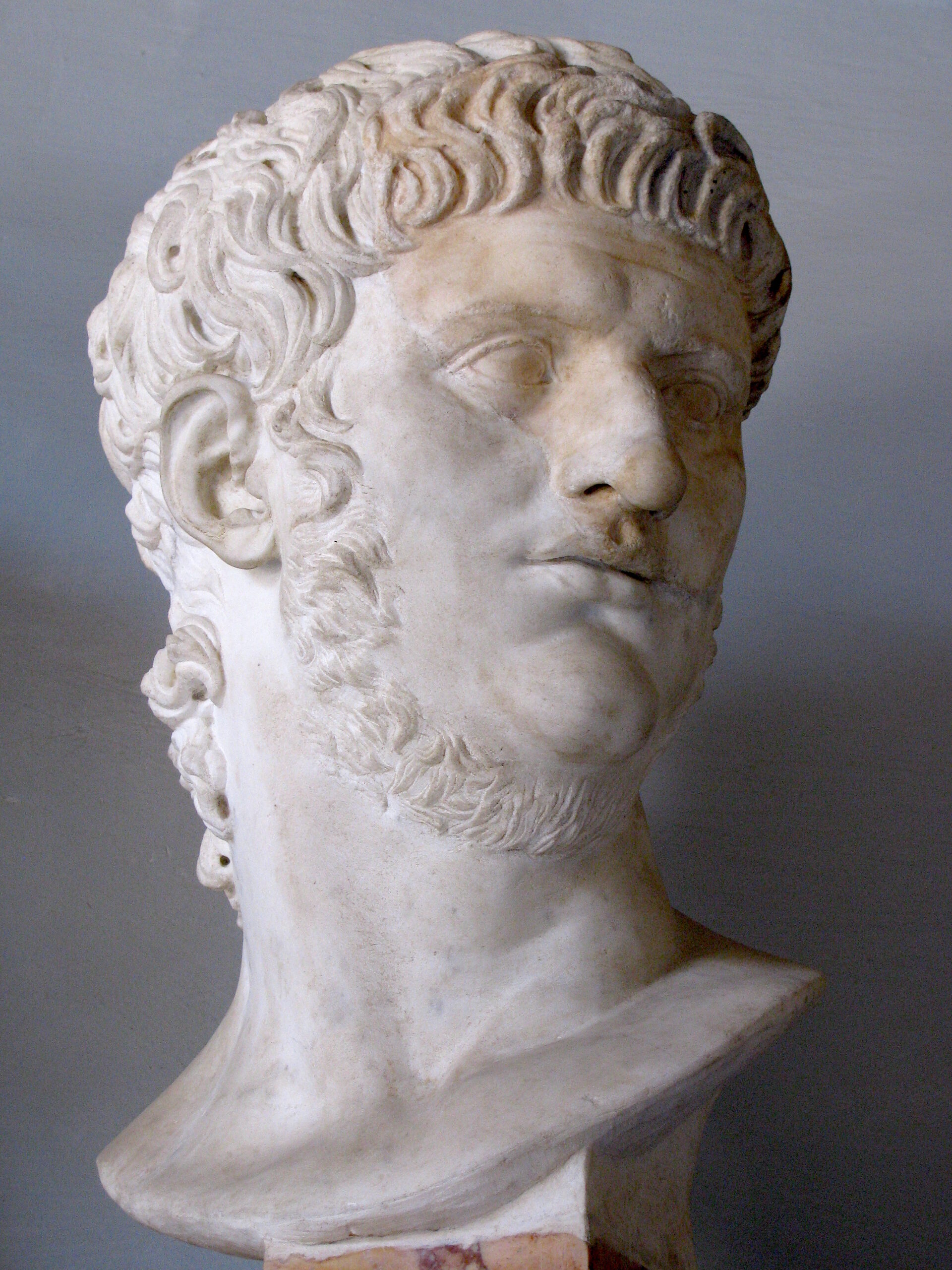
Nero Claudius Caesar Augustus Germanicus, more commonly known as Nero, was one of Rome’s most infamous emperors. Born on December 15, 37 AD, in Anzio, he was the last ruler of the Julio-Claudian dynasty, a lineage that traces its origins to the very foundations of the Roman Empire. Despite his historical notoriety, Nero’s life and reign were complex, marked by moments of brilliance, political intrigue, and personal tragedy.
Early Life and Rise to Power
Nero was born Lucius Domitius Ahenobarbus, the son of Agrippina the Younger and Gnaeus Domitius Ahenobarbus. His father hailed from a family of plebeian nobility, while his mother was the daughter of Germanicus, a celebrated Roman general, and the niece of the emperor Tiberius. Through his mother, Nero was also the great-grandson of Augustus, the first emperor of Rome. This prestigious lineage would set the stage for his eventual rise to power.
Nero’s early life was tumultuous. In 39 AD, when he was just two years old, his mother was implicated in a conspiracy against her brother, Emperor Caligula, and was exiled to the island of Pandataria. His father died the following year, and his family’s wealth was confiscated by Caligula. After Caligula’s assassination in 41 AD, Agrippina returned to Rome and began to secure her son’s future. She married her uncle, Emperor Claudius, in 49 AD, and successfully arranged for Nero to be adopted by Claudius, making him the heir to the throne.
In 54 AD, Claudius died under suspicious circumstances, possibly poisoned by Agrippina to hasten Nero’s ascension. At the age of 17, Nero became emperor, with his mother and his tutor, the philosopher Seneca, serving as his key advisors.
The Reign of Nero: A Complex Legacy
Nero’s reign began with a promise of reform and good governance. Initially, under the guidance of Seneca and the Praetorian Prefect Burrus, Nero’s administration was marked by moderate policies, efforts to reduce corruption, and attempts to improve the lives of ordinary Romans. However, as he grew older, Nero became increasingly autocratic and paranoid, leading to a series of decisions that would tarnish his legacy.
One of the earliest scandals of his reign was his marriage to his stepsister, Claudia Octavia, the daughter of Claudius. The marriage was considered incestuous, and Nero later divorced Octavia to marry Poppaea Sabina, a woman of great beauty who had previously been involved with Nero’s close friend, Marcus Salvius Otho. Poppaea’s influence over Nero was profound, and it is believed that she played a role in orchestrating the murder of Agrippina in 59 AD. After divorcing and exiling Octavia, Nero married Poppaea in 62 AD, further alienating the Roman aristocracy.
The Great Fire of Rome: A Turning Point
In 64 AD, a massive fire broke out in Rome, destroying much of the city. Although Nero was at his villa in Anzio when the fire began, he rushed back to Rome to oversee the relief efforts. According to historical accounts, Nero organized fire-fighting brigades, opened his gardens to shelter the homeless, and arranged for food supplies to be distributed to those in need. Despite these efforts, rumors began to circulate that Nero had deliberately started the fire to clear land for his grand architectural projects, including the construction of the Domus Aurea, a vast and opulent palace complex.
Nero’s decision to blame the fire on the Christian community in Rome led to the first significant persecution of Christians in the empire. Many Christians were arrested, tortured, and executed in the most gruesome ways, serving as a public spectacle in Nero’s gardens. This persecution would later contribute to Nero’s enduring infamy in Christian tradition.
Artistic Aspirations and Public Perception
Nero was not only a ruler but also an artist. He had a deep passion for music, theater, and poetry, often performing in public competitions and recitals. This was highly unconventional for a Roman emperor, as public performances were generally considered unbecoming of someone of his status. Nero’s artistic endeavors were met with mixed reactions; while some appreciated his talents, many in the Roman elite viewed his behavior as scandalous and unbecoming of an emperor.
In 66 AD, Nero embarked on a grand tour of Greece, where he participated in numerous artistic competitions. He declared Greece a free province, exempting it from Roman taxation in gratitude for their appreciation of his artistic talents. This move, however, was unpopular in Rome, as it was seen as a blatant disregard for the economic needs of the empire.
Decline and Fall: The End of Nero’s Reign
By 68 AD, Nero’s relationship with the Roman Senate and the military had deteriorated significantly. His economic policies, including the devaluation of the Roman currency, alienated the aristocracy, while his neglect of the provinces led to widespread unrest. The rebellion led by Gaius Julius Vindex in Gaul and the subsequent revolt by the governor of Hispania, Servius Sulpicius Galba, marked the beginning of the end for Nero.
Facing widespread opposition and the desertion of the Praetorian Guard, Nero fled Rome. On June 9, 68 AD, he committed suicide with the assistance of his secretary, Epaphroditus, famously declaring, “What an artist dies in me!” His death marked the end of the Julio-Claudian dynasty and plunged the Roman Empire into a period of civil war known as the Year of the Four Emperors.
The Legacy of Nero: A Controversial Figure
Nero’s legacy is one of the most controversial in Roman history. Early Christian writers vilified him as the Antichrist, responsible for the persecution of saints Peter and Paul. However, modern historians have sought to re-evaluate Nero’s reign, acknowledging his contributions to Roman architecture, his efforts to aid the victims of the Great Fire, and his attempts to reform the economy.
Despite these reassessments, Nero remains a symbol of tyranny, decadence, and excess. His reign is often cited as an example of the dangers of absolute power and the potential for corruption in even the most promising of rulers. Nero’s life, with its mix of brilliance and brutality, serves as a cautionary tale that continues to resonate in discussions of leadership and governance.
Conclusion
Nero’s life and reign were marked by contradictions. He was an emperor who sought to be an artist, a ruler who aspired to reform but became a symbol of tyranny. His complex legacy, shaped by the political and social upheavals of his time, continues to fascinate historians and the public alike. As with many historical figures, Nero’s true character and motivations may never be fully understood, but his impact on the Roman Empire and his enduring place in history are undeniable.


